Wednesday, May 27, 2009

PicScout - Delusions of Grandeur?
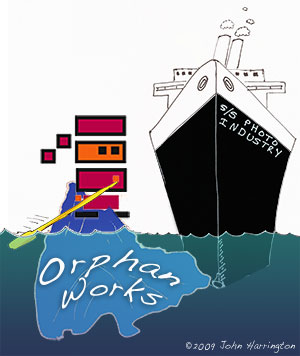
PicScout, one of several image search solutions, has been mis-informing people of late, and it's not sitting well with me. In their latest blog entry, dated May 25th, they have made several statements that are factually inaccurate at best, and misleading at a minimum.

PicScout suggested:

if you don’t register your photos with the US copyright office, your claim against any infringer–with or without the OWA–would be based on calculations that are unaffected by OWA.
This statement is factually inaccurate. Whether or not you registered your images, you can file a Digital Millenium Copyright Act takedown claim and get someone to stop using them if you find out. Under past OWA proposals, you cannot prevent someone from continuing to use the image they found. OWA would severely affect copyright owners regardless of registration, or a desire for money. Further, there is a huge difference between the amount that the rights-holder and infringer would reasonably agree upon (as required in past version of the OWA) as compared to what a rights-holder could have reasonably requested. When an infinger can point to tens of thousands of images selling for $1, when I suggest that I would not have licensed the image that was infringed for less than $1,000, or even $250, my position will appear unreasonable, even were I to be able to point to a history of licensing at those levels.
(Continued after the Jump)


PicScout suggested:
we start with the most specific item: the text of the bill says that if the publisher of the work has done a “diligent search,” then the OWA would provide protection from statutory damages in an infringement claim.
Here's the actual text from the House bill:
"an award for monetary relief (including actual damages, statutory damages, costs, and attorney’s fees) may not be made other than an order requiring the infringer to pay reasonable compensation to the legal or beneficial owner of the exclusive right under the infringed copyright for the use of the infringed work."
In point-of-fact, the infringers protection would be much more than just statutory damages as previously proposed.

PicScout suggested:
since only about 5% of pro photographers or stock photo agencies bother to register their works with the US copyright office, 95% of the photo industry would be almost entirely unaffected by OWA.
There is so much wrong with this statement -- it is so fundamentally inaccurate I don't know where to begin. Suppose you never registered your work, yet you licensed exclusivity to a client who published your work in an ad. Someone scanned that image in, and posted it on the internet, and someone else finds it and wants to use it for an ad. They do so, and you find out about it from an irrate client who thinks you licensed the image to their competition. You contact the infringer, only to find out that they couldn't find your image on a "diligent search", and as such, used it, and now, will pay you a nominal amount which you are required to take. Your acceptance of this income places you in contractual violation with the commissioning client, and they will sue you.'

Currently, whether or not a rights-holder has registered their work before an infringement occurs, the rights-holder may recieve actual damages, disgorged profits, and may force the infringer to halt the infringing activity. Actual damages include not only the fee that the owner could have reasonably required of the infringer, but also compensation for any other damge to the owner's ability to market the work. Many rights holders who have registered their work opt to forfeit statutory damages in favor of actual damages, which would have been an available remedy even if the owner had not registered the work.

Then there is the fact that the proposed OWA would allow anyone to use any image for any purpose, including purposes that are morally or commercially objectionable to the rights-holder, such as advertisements for certain causes, or usages that directly conflict with existing exclusive licenses issued by the rights-holder, or usages that will prevent the rights-holder from monetizing their image in the future. For example, an infringer could use an image on a book cover. This would immediately destroy the rights-holder's ability to license book cover use for that image, and the rights-holder would have no right to stop the infringing activity, even after it is discovered. This is very different from the pre-OWA world, in which every rights-holder is able to prevent and stop objectionable uses of their images.

PicScout suggested:
But this confusion is because they are reading that line by itself. You can’t do that. It’s tied directly to a part of the bill that requires the copyright office to create a “certification process for the establishment of an electronic database to facilitate the search for pictorial … works that are subject to copyright protection under title 17, United States Code....there is only ONE such database!...Some have created a myth that there will be many registries and databases, each containing some subset of copyrighted works."

You're right PicScout, you can't pick and choose which lines you read, and which you ignore. H.R. 5889 includes this language:
(a) ESTABLISHMENT OF DATABASE.— (1) IN GENERAL.—The Register of Copyrights shall undertake a certification process for the establishment of an electronic database to facilitate the search for pictorial, graphic, and sculptural works that are subject to copyright protection under title 17, United States Code.
S. 2913, which was approved by the Senate, had this language:
SEC. 3. DATABASES OF PICTORIAL, GRAPHIC, AND SCULPTURAL WORKS.
The Register of Copyrights shall undertake a process to certify that there exist and are available databases that facilitate a user’s search for pictorial, graphic, and sculptural works that are subject to copyright protection under title 17, United States Code. The Register shall only certify that databases are available under this section if such databases are determined to be effective and not prohibitively expensive...
Thus, they are undertaking a "certification process" (House version), and "a process to certify" (Senate version), NOT establishing their own, and this has been stated;

HOUSE VERSION:
(b) PUBLIC AVAILABILITY.—The Register of Copyrights— (1) shall make available to the public through the Internet a list of all electronic databases that are certified in accordance with this section; and (2) may include any database so certified in a statement of best practices established under section 514(b)(5)(B) of title 17, United States Code.
HOUSE VERSION:
SEC. 4. EFFECTIVE DATE. (b) PICTORIAL, GRAPHIC, AND SCULPTURAL WORKS.—With respect to pictorial, graphic, and sculptural works, the amendments made by section 2 shall— (1) take effect on the earlier of—(A) the date on which the Copyright Office certifies under section 3 at least 2 separate and independent searchable, comprehensive, electronic databases, that allow for searches of copyrighted works that are pictorial, graphic, and sculptural works, and are available to the public through the Internet; or (B) January 1, 2013; and (2) apply to infringing uses that commence on or after that effective date.
SENATE VERSION:
(c) Effective Date- (1) IN GENERAL- The amendments made by this section shall--(A) take effect on the later of--
(i) January 1, 2009; or
(ii) the date which is the earlier of--
(I) 30 days after the date on which the Copyright Office publishes notice in the Federal Register that it has certified under section 3 that there exist and are available at least 2 separate and independent searchable, electronic databases, that allow for searches of copyrighted works that are pictorial, graphic, and sculptural works, and are available to the public; or
(II) January 1, 2013;
What part of that language in either the House or the Senate versions, that suggests there will be fewer than TWO? In point-of-fact, the bill would go into effect once " at least 2 separate and independent searchable, comprehensive, electronic databases" or, the "later of" the above (as cited from the Senate version). Let's highlight the word "at least", since PicScout seems to think that it is "a myth that there will be many registries and databases".

However, perhaps I, and everyone else I know who knows what they're talking about on this got it wrong, and PicScout got it right. So, we put the following questions to Maria Pallante, Associate Register, Policy and International Affairs, for the Copyright Office today, and she stipulates "our answers relate to the language that passed the Senate in 2008." (As you can see above, the language on this issue between the House and Senate versions is essentially identical.)

Q: Does the Copyright Office intend, or are they planning, to create, establish, run, or manage, either internally, or with oversight by any contractor, a single database to facilitate searches for pictorial images, in the event that Orphan Works legislation is enacted?

M.P.: "No."

Q: Does the Copyright Office intend to certify more than one electronic database for searches of copyrighted works that contain pictorial images?

M.P.: "we either have to certify two databases or no databases. In other words, the legislation either becomes effective by a date certain or it becomes effective earlier than the date certain because we have certified that the defined databases exist. The certification process is linked only to the effective date. It is not a separate or ongoing function."

That's pretty clear.  

Thus, in order to make the legislation active prior to the start date they would have to certify a minimum of two, however, the Copyright Office could and likely will certify dozens or even hundreds of databases before the start date, not just two. Further, PicScout's assertion that "contractors that are selected will be paid to create the database itself, at which point, the Copyright Office will put it into operation (including populating it with content and administering it)" is misinformed - if we are to believe the Associate Register for Policy and International Affairs, and I would believe her over the hopes-stated-in-the-form-of-expectation from a potential contractor candidate like PicScout.

Further, the legislation does not place any caps on the number of databases that can be certified. So, if a bill passes the Senate (again) with the same, or similar language, these certified databases -  databases that satisfy the requirements set forth by the Copyright Office - will be approved. Further, once certified, there is no language that requires that any particular database, or a set number of databases, must be included in a diligent search. Thus, an infringer would be able to pick and choose the databases that they wish to search as a part of a diligent search, resulting in rights-holders in effect having to register with every database, since they must, as the Senate legislation stipulated be "independent." Further, since the statutory requirement would be to have two, it would be reasonable, at least at the outset could include only those two databases. While there has been discussion of allowing trade associations and others to create "guidelines" for diligent search, these would at most be guidelines, not legal requirements for a diligent search.

Thus, with a high degree of likelihood, as the number of certified databases grow,  infringers will search the least populated, most poorly designed - yet certified - databases to "complete" their diligent search, and thus be allowed to infringe with immunity under the OWA. Further, I have heard of plans for "themed" databases and databases pertaining only to certain categories of works. The Senate and House versions of the bill both allowed for infringements to begin after only two databases were approved, without any consideration as to whether those databases were photography, film, sculpture, painting, poetry, etc. So, for example, even if there were no approved photography databases, if a sculpture and film database were to be approved, the minimum quantity of 2 would be satisfied, and the infringement floodgates would open.

PicScout suggested:
Relax. The bill doesn’t define a “diligent search” because it doesn’t need to: There is only one copyright database. You only need to search “the one.”
This is like the musicians playing on the deck of the Titanic - lulling people into a false sense that all will be okay. There will not be "only one", there will be "atleast two", and almost certainly dozens of certified databases.

PicScout suggested:
The elephant in the middle of the room is, “Who’s going to index the copyright office’s database?” Since it’d be public, anyone could. And obviously, PicScout could.
Fortunately, the OW bill from last session includes this language:
"...security measures that reasonably protect against unauthorized access to, or copying of, the information and content of the electronic database."
So, technically, if the Copyright Office had a database (which they state above they would not), then perhaps they might employ, say, a contractor to do it? Again, fortunately, when asked if that would be happening, they said "no." It seems, perhaps, that PicScout would like to be that contractor (the one that won't exist), and be awarded a contract that would grant them the right to index all of the content that might be in the hands of the Copyright Office?

Is it possible, that the Congress, or the Copyright Office, would require the company that was awarded that contract to be, say, American? That would certainly put PicScout, and Israeli company and Idee, a Canadian company out of the running. Digimarc is a possible solution and is US-headquartered, and Google, which currently has the ability to search for content by typing, say "bicycle" into a search and finding images with that in them, likely also has comparable (or better) image-matching capabilities they just need to flip the switch on, and they too, are not only US-headquartered, but they also have existing relationships with the Library of Congress, even being a presenter at a technology expo (across the room from PicScout) that took place on Capitol Hill a year or so ago. While this type of protectionist approach to being awarded the contract to index all of the CD's and DVD's (and analog content) that is in the hands of the Copyright Office isn't fair, it was done for the steel industry in the economic recovery act, and other examples abound.

PicScout Suggested:
Once online, your photos can exist anywhere and everywhere in the whole big, fat, wide world. And if someone gets their hands on one, and wants to publish it in a way that would require paying you a license fee, the OWA would compel them to do a “diligent search,” which would instantly lead them directly to you - swoosh! Took all of one second....Big money comes your way.
I return to my previous quote:
"an award for monetary relief (including actual damages, statutory damages, costs, and attorney’s fees) may not be made other than an order requiring the infringer to pay reasonable compensation to the legal or beneficial owner of the exclusive right under the infringed copyright for the use of the infringed work."
Where in there do you see "big money." In point-of-fact, "big money" and "reasonable compensation" are not even close to one another. In an era of $1 microstock, what judge is going to award much more than that, when the infringer can point to tens of thousands of images available for unlimited use for $1. This, even when that rights-holder could demonstrate that typically license similar uses for $10,000. The OWA contained no mechanism for arriving at the reasonable compensation. As such, you can expect a deadlock in almost every instance, and if the infringer delivers what they believe to be a reasonable payment, the infringer wins because the owner is prevented by law and by circumstance from pursuing the infringement.

Further, PicScout, you left out the part where you are responsible for posting all of your images into these databases if they are not registered - in effect, having to "re-register" your images a second time for ALL your past registrations.

PicScout is supposed to be looking out for photographers, and previously, it seemed that they were putting their great technology to use for good. This blog post, full of misinformation about Orphan Works gives every indication that PicScout has re-charted their course into dangerous waters, and they are now intent upon lulling photographers into believing that the previous versions of Orphan Works bills would have been good for them. This is an unfortunate change of strategy at PicScout, and will harm, rather than help, individual photographers and the photography industry at large.

Please post your comments by clicking the link below. If you've got questions, please pose them in our Photo Business Forum Flickr Group Discussion Threads.


[More: Full Post and Comments]

Tuesday, May 26, 2009

Marketing with Twitter, Facebook, LinkedIn, & MySpace


You have a wide swath of options when it comes to getting your name out, creating a following, or otherwise marketing yourself. The problem is, you may not be marketing yourself in ways you want, or thought of, if you are not sensitive to the realities of todays' instant-access world. The key is to stay on the reservation - your reservation.

You are reading this blog, either on Blogspot, or via RSS, so you have a baseline of understanding. However, you may not be aware of how your presence on facebook, LinkedIn, MySpace, or your tweets on Twitter, could be having an adverse effect on you, and your business.

(Continued after the Jump)

Rob Haggert over at A Photo Editor wrote awhile back "Facebook and Twitter Lost Me an Advertising Shoot" (4/22/09), while on the other hand, six days later, Photo Focus wrote "How Photographers Can Use Twitter as a Marketing Tool" (4/28/09), which illustrates the yin and yang of social networking.

Recognizing that you are a business - whom would you allow your employees to "friend" if you had employees? If your full-time office manager lists your most aggressive competition in your area as a "friend", would you be concerned? Would you allow your post-production/retoucher to tweet out things like "OMG, I have this fattie to slim down 50 lbs from a portrait shoot my boss did today"? How about the assistant who, mid-shoot, tweets "I am on this shoot for XYZ Company, and the client is a PITA!" Consider that before the shoot ends, a Google Alert for XYZ Company likely went to the PR department, and you could get a call, or worse yet, fired from the shoot, thanks to your assistant.

Stories abound about people not getting jobs because of what they wrote or photos of them on facebook, or MySpace, just as much as they are out there for people getting fired for the same reason.

Just as you would be blindsided by the responses to the above tweets or facebook status updates, you need to be very conscious about your social-networking presence, and how it reflects on you and your business. Are you tweeting "a photo a day", or maybe sending out an inspirational message, or are you just recounting the trials and tribulations of the day?

If you feel you just have to speak your mind, and If you have an account for "john smith" on twitter and EVERYONE knows you there, try an account that is not connected to you like "js12345abc" which you share only with a few friends you want to be frank with. Also, don't mention business names or other identifiers in your tweets/messages that could get indexed by Google/et al and be sent to that company's PR department. Having a separate, anonymous, twitter account for your closest friends could allow you the ability to be "yourself" without ruining your online reputation as it relates to your business.

Please post your comments by clicking the link below. If you've got questions, please pose them in our Photo Business Forum Flickr Group Discussion Threads.


[More: Full Post and Comments]
Monday, May 25, 2009

iPhone Cover Art

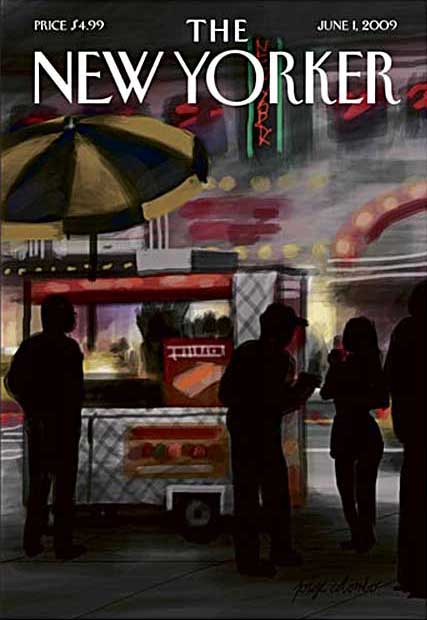
The iPhone is a remarkable tool. Enter the latest incarnation of the technology's fruits, the cover of the New Yorker Magazine:

In this instance, it's not about the megapixels of the camera, because this was a piece of art created entirely in the iPhone's Brushes application, as reported here, and the New York Times wrote about it here. Yet one more example of why it's about the talent, not the tools.

(Comments, if any, after the Jump)


Please post your comments by clicking the link below. If you've got questions, please pose them in our Photo Business Forum Flickr Group Discussion Threads.


[More: Full Post and Comments]
FotoQuote 6: A Worthwhile Upgrade

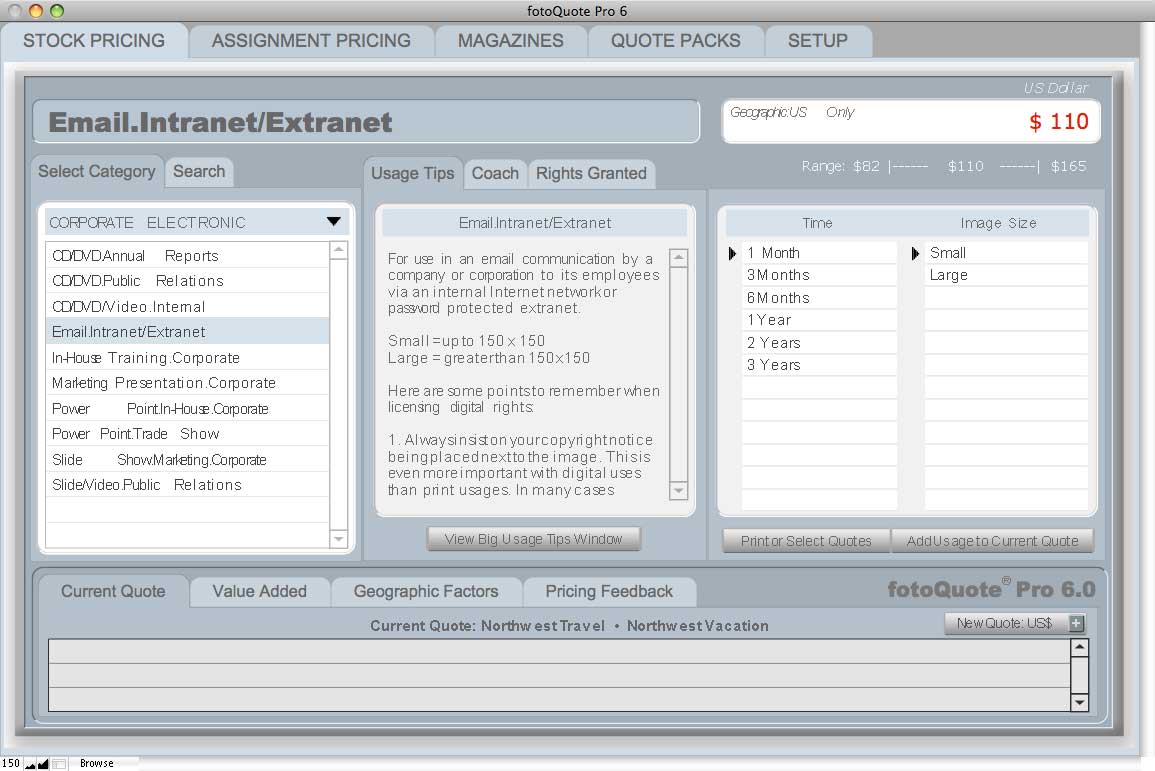
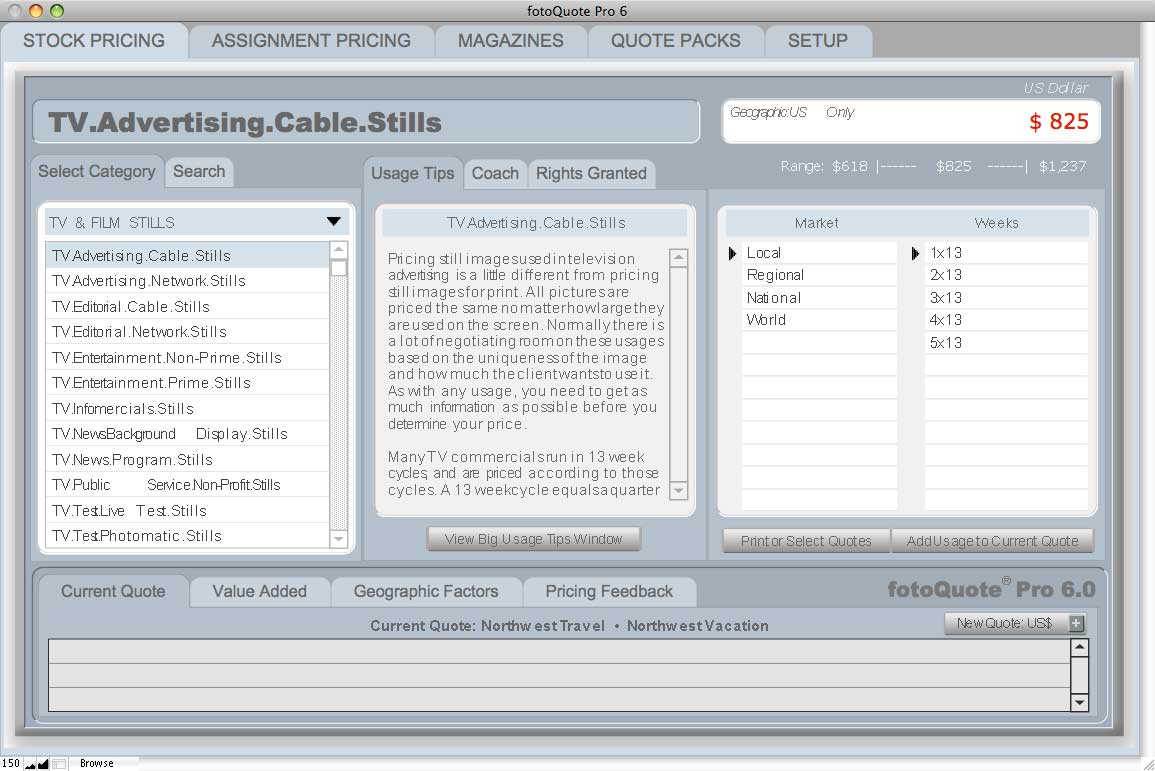
Like fine wine, a new version of FotoQuote has been highly anticipated, but Cradoc, the programs' creator, on the verge of releasing the software last year, opted to do more research and has finally released the fruits of that labor, in FotoQuote 6. (Click images to see larger)

Now with 304 categories, meticulously researched, this software, that was the gold standard already, has reached a new level.

One of the criticisms of FotoQuote whenever someone recommends it is leveled by people who think the rates are too high (they are not), is that the figures in FotoQuote do not take into account the world of microstock pricing. The fact of the matter is, they have and they do.

(Continued after the Jump)

These days, I am seeing more and more inquiries about all manner of digital use. Not to worry - the new version has a huge category of TV variations, as well as the use of the images in e-mails and marketing.


Yes, I know they advertise on this blog, but I would be strongly recommending this software (or the upgrade if you already have it) whether or not that was the case.


Please post your comments by clicking the link below. If you've got questions, please pose them in our Photo Business Forum Flickr Group Discussion Threads.


[More: Full Post and Comments]
Saturday, May 23, 2009

Pricing & Negotiating Photography - One Solution

When I find programs that I think are worthwhile, I send them your direction, and such is the case with Pricing and Negotiating, ASMP's program featuring Susan Carr on pricing, and Blake Discher on negotiating. While the schedule of where they will be can be found here, next weekend - May 30th, they will be in Richmond Virginia giving a Saturday morning presentation. Here are the details for that:

(Continued after the Jump)

What Do I Charge?

Susan Carr presents a candid discussion on licensing and pricing your work.

Seminar topics:
  • What you need to know about copyright.
  • A real world look at how to license photography.
  • Why are copyright, licensing and pricing connected?
  • Pricing models.

  • Learn the steps to determining what to charge.
  • Selling your price.

I Stink At Negotiating

Join Blake Discher for his highly acclaimed “Strictly Business 2” lecture on how to win jobs.

Seminar topics:
  • Learn how to prepare for a negotiation.
  • Researching the client.
  • Increasing your clout.
  • Listening skills.
  • When is it time to walk away?
  • The follow-up is critical.
This will be four hours of packed information that will be well worth your while to attend. You can register by clicking here.


Please post your comments by clicking the link below. If you've got questions, please pose them in our Photo Business Forum Flickr Group Discussion Threads.


[More: Full Post and Comments]

Wednesday, May 20, 2009

Zackary Canepari - NYT Staged Photo Controversy

Zackary Canepari has a pretty big problem. At the ripe old age of 30 or so, he is likely now persona non-grata at the New York Times, and his journalistic ethics will also likely give other editorial publications pause to hire him.

PDNPulse first reported, in New York Times Withdraws Posed News Photo (5/19/08), about the photo above, and the Times' withdrawal of the photograph, including an apology that PDN ran.

What was this photographer thinking when he staged a news photo?

(Continued after the Jump)


While we have not spoken to Zack, his Lightstalkers page shows he's been in and out of India and the Middle East for almost two years, and according to Verve Photo, in this article Zack Canepari - The New Breed of Documentary Photographers (2/27/09), he's been a photographer since 2003. Canepari started doing portraits - making images happen, not standing back and waiting for them to happen.

Unfortunately, when publications pay a pittance for their photographers, and do not pay a living wage, the photographers with the integrity necessary to work for the top publications in the world do other things - their own projects, books, commercial work, and so on. Heck, even a few teach classes and workshops. Because the New York Times has not, well, pardon the pun, kept up with the times, in terms of pay, they have reapt what they have sown. I would not be surprised that there are others they didn't catch, and in an era where photographers are driven to compete, whether Zack's posed photo, which is over the line, to the Reuters photographer with the "enhanced" smoke , which is egregiously over the line, until photographers are paid fairly enough that they can do their jobs - and, it should be said, are staffers with job security, pressures like this will continue to errode the public's trust in journalistic works. The problem is, once people realize this and think about course-correcting, it will be too late, and visual journalism will have been dealt a mortal blow around the world.

If, as Verve Photo suggests, Zack is "the new breed of documentary photography", the world of photojournalism is in dire straits indeed.

Please post your comments by clicking the link below. If you've got questions, please pose them in our Photo Business Forum Flickr Group Discussion Threads.


[More: Full Post and Comments]

Monday, May 18, 2009

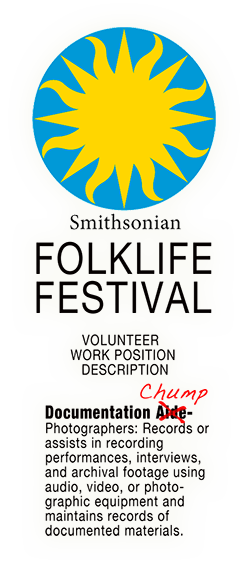
Smithsonian Folklife Festival Mis-Steps


The Smithsonian is responsible for a lot of amazing things. This year, they're responsible for one thing that is, frankly, an abomination - the devaluation of intellectual property - at the annual 2009 Folklife Festival.

A call when out recently, which read, in part:

We are specifically looking for volunteers with experience in audio, video, and photo documentation. As a documentation volunteer you will be asked to assist with recording performances, interviews, and presentations in different program areas. In addition, photography volunteers will be asked to take photos of specific subjects
along with general happenings at the festival.


Really?
(Continued after the Jump)


So, the Smithsonian is looking for a few good men...err....chumps? Rubes? It's one thing to ask a fan of golf who would have paid to attend a golf tournament as one of those guys that holds up the "Quiet" signs, since there are no professional sign holders like that. The Smithsonian has an amazing team of photographers that work diligently in their museums, and who not only look forward to getting outside during the festival, but no doubt also enjoy the overtime or comp-time they get from doing all that extra work. Further, they are professionals, who know what they're doing, and how to do it.

They've solicited for photographers on Craigslist, and overall are looking for people for a total of ten days worth of work. Who's going to screen these people for the right gear? The right skill-set? Who's going to manage the intake of all the images, with proper and accurate captions? What all-rights-in-perpetuity-without-pay contract will they be asked to sign?

Photographers....err...Documentation Aides, will be asked to attend a pre-production meeting volunteer orientation on Saturday during the late morning. Then, they will be assigned things and places to photograph. Yes, this is work.

James Smithson, who founded the Smithsonian, for the purposes of an "increase and diffusion of knowledge", is probably rolling over in his sarcophagus right now in the castle in DC. He died in 1829, and ten years later Daguerre made the first ever photo of a person, making his "daguerreotype" showing a city street with a man getting a shoe shine in Paris, and heck, France agreed to pay Daguerre a pension for his formula, provided he declare his discovery as being a gift to the World from France, which he happily did, in 1839. The Smithsonian Folklife Festival is clearly not honoring the French this year - they are honoring "The Power of Words in African American Culture"; "The Americas: A Musical World"; and "Wales Smithsonian Cymru highlights the creative culture of this dynamic country". Nothing like celebrating amazing creativity on one hand, while stamping on the value and intellectual property of the visual creative community with both feet, like so many fragile grapes, destined for a wine bottle. Yet, after the fact, the photographs, lack of solid captions, great-pictures-if-it-weren't-for-the-fact-that-it-was-shot-on-small-jpeg, and so many other professional-level services will be the swill that the organizers will be tasting. Sure, there will be a few gems - even a blind squirrel finds a nut once in awhile, but how many things that should have been documented, will be lost to the mis-steps of amateur hobbyists who will try to fill the shoes of professional photographers?

It's one thing to ask people to send in their favorite photos, or even for the Smithsonian folks to browse Flickr looking for great folklife festivals, and then having the museum encapsulate them in some way, but to be looking for day-in and day-out volunteers to work (yes, Documentation Aide appears under "Work Descriptions" on the Volunteer Questionaire, so it will be work), is just plain wrong. It may be well-intentioned, but as my mom tells me - the road to hell is paved with good intentions. The Smithsonian Folklife Festival should utilize it's talented in-house team of photographers, and leave the one-chance-only documentation of this event to the professionals.


Please post your comments by clicking the link below. If you've got questions, please pose them in our Photo Business Forum Flickr Group Discussion Threads.


[More: Full Post and Comments]
Wednesday, May 13, 2009

Speedlinks & Commentary - 5/13/09

It's been some time since we've done Speedlinks, so I thought I'd compile several that I thought note-worthy, and I'll add in a bit of commentary to each, so, enjoy today's speedlinks.

  • Awkward Family Photos - This site is not only good for a barrel full of laughs, it is also a variation on the website Photoshop Disasters, because it shows so many photos that are just plain bad. Take for example, this one - Mothers Day, and this one - Too Close for Comfort - which makes me think the photographer had a backdrop that was too small, and he kept telling the subjects to move closer together, then there's this one, and here are "The Cling-Ons", the over-use of white in Whiteout (I mean, doesn't that photographer understand that this is over-the-top, and borderline Stepford?), and as someone who is 6'7", this - Big Love - is just composed poorly, an over-use of a primary color in Into the Blue, and lastly, - Family Tree - that photographer just isn't right in the head. So, take a spin, laugh a little (ok, a lot!), but most importantly, learn a few lessons - the first one I'll suggest: 1) It takes actual talent to be a photographer, not any "Joe" can do it!
  • Starting Over - As an Entrpreneur - Here is one more story that tells people that when they lose their job, being a freelance photographer is the solution. A few tips for the intrepid photographer who lost her PR agency job and decided to freelance - 1) Don't pose with an outdated film camera, and if you are going to, make it a Hasselblad and not a Mamiya 645 (yes, Mamiya fans, bring it on), 2) "faux borders" on images is so 2001, and 3) get a separate wedding site. Mixing commercial marketing and wedding work is not good for getting commercial work. You take a good picture Tarah, but your marketing plan needs some polishing - what did you learn at Mortar?

(Continued after the Jump)

  • The Gravediggers of Photojournalism - Jahreszeiten publishing is using Stalinist tactics to try to force photographers to surrender a broad swath of photographers rights for next to no additional revenue while the "publisher Thomas Ganske professes to be a protector or champion of intellectual property rights. For instance, he was a prominent signatory of the so-called Heidelberg Appeal, according to which: “Authors and publishers reject all attempts and practices to undermine the fundamental intellectual property rights to literature, art and science, the fundamental right to freedom of research and teaching as well as freedom of the press and publication.” Hmmm, this sure sounds a lot like Conde Nast's attempts to secure, and I quote "All rights throughout the universe...". Where were all these photographers when ASMP and others were fighting the assinine Conde Nast(y) contracts? (Conde Nast Contact: Introduction, 5/26/08). There are over 3,000 signatures, which the publisher will laugh at unless they get an EP-like group to actually refuse to work under those conditions. That is, until the iStockphoto hobbyists, looking to get validated by being in these magazines, see Jahreszeiten as their own Mount Everest. Paging Seth Resnick and Paula Lerner....

  • PDNPulse - Mrs. California Blames Photographer - I agree with Mrs. California - the photographer has released what really looks like outtakes that caught her either inbetween shots or otherwise affected by the wind. Further, since when do tasteful images of the human form raise legitimate objections? take a look back at the historical statues of nude women or famous paintings by all caliber of artists from the middle ages, where the nude female form was celebrated. Lastly, I am damn tired of people being chastised for their own personal opinions - especially when they are expressedly solicited. Her keeping her title is just, and just like I dislike celebrities using the Oscars for the espousing of anti-whatever sentiments when they should just be thanking people for their award, so too do I dislike it when someone hijacks an event for their own personal agenda. It doesn't help that he has no qualms about infringing on copyrights with reckless abandon (alledgedly), as detailed here.

  • Alamy Mis-Steps - It seems that a bunch of Alamy contributors are (rightfully) upset about the agency mis-licensing RM photos at lowball rates to "preferred customers", with one person reporting a sale of $10 for an image that priced out at $600.00 using Alamy's own calculator. Seems something's afoot over at Alamy, and it might just be some smelly socks.
So, with all of the above feel free to fill the comments with all manner of opinion, just keep it civil, or you'll get deleted, and remember, my opinion or commentary doesn't have to match yours, but you should respect mine even if you don't agree with it, since you did choose to come here and read it of your own volition.

Please post your comments by clicking the link below. If you've got questions, please pose them in our Photo Business Forum Flickr Group Discussion Threads.


[More: Full Post and Comments]

Monday, May 11, 2009

Answering the Phone 'After Hours'

It's 9pm on a Monday. My Office Manager and Post Production Manager, and intern have all been long gone. At 7pm, my phone rang. It seems a major public relations firm, which had originally thought they could just snap some photos of attendees at a Senate hearing with their office digital camera. Then, they scrambled for a last minute photographer. They got a photographer I knew was less than experienced on the assignment (I asked whom they got, and they told me), and the person on the other end of the phone was that PR firms' client, and she was very upset. I talked to her for about 20 minutes, and the assignment wasn't just the coverage of the hearing, it was also several portraits of people coming in from out of town for use in marketing and advertising, and while this photographer was less than experienced covering the hearing, he would have been out of his element completely in producing a quantity portraits that were advertising quality in several settings.

What to do?

(Continued after the Jump)

I opted first not to bad mouth the other photographer, bad karma. She tried to corner me into reassuring her she would get what she needed. I started outlining the logistics of the project, interspersing several general ideas about how I would have done it, and then I closed with - "with all those portraits, and the hearing, it will be a challenge for sure." I didn't want to lie, but I did want her to know it was not going to be smooth sailing. She felt as if she had no choice and was locked into the other photographer, and she asked how much I would have charged and I gave her a figure that was over twice what that photographer had quoted her. (I asked, and she told me.) She assured me that next time she would call me directly, and not farm out the photography request to her PR firm. The beauty of this is that not only would she have paid double what the other photographer quoted, but it is now reinforced in her eyes that I am a premium brand photographer (and thus, am billing at a premium rate.) I closed the conversation saying that I would be up fairly late this evening, and if she decided she really wanted me to take on the assignment, I would do what I could to make that happen, even on short notice.

Even though I would have like the assignment for tomorrow, it wasn't meant to be. Yet, at 7 o'clock at night, I was able to have a conversation with this prospective client, as if it was 2pm in the afternoon.

Returning to the 9 o'clock hour, my phone rings again. Before my caller ID delivers to me the name of the party calling, I say to myself "oh, nice, she's calling back. Guess I'm doing that project after all...", and then, up comes a very regular clients' number, and I say to myself "hmm, that's odd." (this all happened in about 2 rings). Answering the phone, it is another client, "Hi John, what are you doing answering the phone at this hour?" I respond "I am working on some paperwork and so on, but I am happy to be talking to you. What's up?" The client says "well, I am at an event the continues on tomorrow, and it was just mentioned that they want a photographer for a luncheon, are you available?" I respond "sure thing, I am happy to take care of that for you tomorrow, consider it done." He says, "it's really going to be about 10 minutes of work, but I know you have a minimum, so just bill me for that." I say "Yes, we do have a minimum that would apply, and I'll get that paperwork off to you in the morning, but we're all set for you, have a great evening." Now, this client can turn to his superiors on site there and say "I've just secured a photographer for you for tomorrow." They will look at him and be impressed and possibly even pay him a compliment or two about his ability to get things done so quickly, and he will garner cache akin to the hotel concierge who secures two orchestra tickets to the sold out performance at the city opera at the last minute. Thus, he looks good, I look good in his eyes because I was available and able to confirm for him, and, oh yeah, I have a paying assignment tomorrow.

As photographers, it is important to realize that we don't have hours, really. When you can answer the phone at 1am, with a cheery face, and acknowledge that you can be on hand at a 7:30am breakfast, because either A) they forgot to book a photographer, B) their photographer that was traveling with the group missed their flight/lost their luggage with the gear in it, or C) their photographer got sick and they just got the voicemail, you not only earned that assignment and the revenue that goes with it, but also a client who will stick with you in the future, or who is reaffirmed that you are their go-to person for their photography needs.


Please post your comments by clicking the link below. If you've got questions, please pose them in our Photo Business Forum Flickr Group Discussion Threads.


[More: Full Post and Comments]

Sunday, May 10, 2009

Photo and Negative Scanning: The ScanCafe Solution

Converting your analog images to digital is a time-consuming process. From first-hand experience, I can tell you how much time and energy it takes. Over the past decade, I have migrated all of my best images from analog to digital, and that process has been completed. It was completed at a huge economic cost in terms of real dollars spent paying in-house people to do it, as well as the economic cost of not having them scanned earlier.

I can't imagine how I would have felt if my images had been damaged in a flood or fire, and not scanned. Several psychology resources we looked at in thinking about the importance of analog conversions for the non-pro photographer, turned up top-of-mind items to take when being evacuated from an unsafe area, items like wedding or family photo albums. On news broadcasts where families are combing through their destroyed homes, time and time again, we see them finding a family photo, or photo album, and being so grateful that it survived.

For the family happy-snapper, and the seasoned professional, the film archives need conversion, and ScanCafe is at the forefront of providing the best service in preserving your memories, or your pro archives.

(Continued after the Jump)

I remember a business like Nancy Scans, about a decade ago, would charge $40+ for scans, and that was a deal. I compared the costs of staffing an in-house position against outsourcing it just a few years ago, and for medium format, outsourcing was the best solution, and in-house, I thought, was the best for 35mm, but I can report that that determination is questionable now that I look back at the end costs.

One of the things that the out-source service I was using, JaincoTech, was doing, was keywording and caption transfer from slide mount to metadata. ScanCafe does not do that, at least not on their website of pro scanning options. But here's the huge difference - I was paying $5 (and up) per scan there, and ScanCafe is doing scans at $0.24, which includes color correction, scratch/dust removal, and even minor damage to the image. Money Magazine said they were the “Best quality and cheapest…The best scanning service.” (article here). Don't have a negative? At $0.27 per print, they'll scan those too. How did I learn about this, and become more comfortable with them? My friend and colleague David Hume Kennerly is on their advisory board, and turned me on to them.

So, imagine you're a wedding photographer right now with 20 rolls of 35mm film from a wedding and you want them scanned for your archives or website. Assuming an average of 35 images per roll, for $168 you can have all of them scanned. Now, here's a great option for revenue generation. Why not contact ALL your past brides, and offer to deliver to them all the images you shot on CD from the film you never turned over, for, say, $300? Not only will you turn a tidy profit, but that gives you the entree to offer family portrait or children's/pets portraits to them during your conversation. Since the bride has likely ordered every print she'd ever hang around the house or give as a gift, there's little extra revenue from that film now.

Whether it's photo scanning, slide scanning, or negative scanning, ScanCafe looks to be a great solution. Further, for those extremely challenging black & white scanning issues, they can handle that too. I will be meeting with their CEO, Sam Allen, this week to ask him more about his service, so if you have questions, or they don't have a service you want, e-mail me or post in the comments below what you'd like to know, and I will put those questions to him.


Please post your comments by clicking the link below. If you've got questions, please pose them in our Photo Business Forum Flickr Group Discussion Threads.


[More: Full Post and Comments]
Newer Posts Older Posts