Showing posts with label Advanced Business. Show all posts

Friday, September 17, 2010

The Power of One

One of the most hotly discussed issue among professional photographers, is "to combine, or to not combine? Whether 'tis smarter to join together fees for creative and use, or to separate them out." Here, I shall endeavor to address this issue with several concrete examples, and some insights into the issue.

Warren Buffett once said "price is what you pay, value is what you receive." This is true across every spectrum of business transaction. Is the price too high? Well, it may be for some, but no so much for another. While some may scoff at the cost of a smartphone, saying the extra data plan and phone features are just not worth it, almost every day the price of the phone and connectivity charges are a drop in the bucket compared to how having that phone keeps me connected to clients and booking jobs. Recently, I was on assignment, and booked for a shoot to photograph an auto accident that was staged and set up, because the client said they couldn't find good images of cars having an accident. To the client, it cost them tens of thousands of dollars to stage the accident, from stuntmen to actors to totaling a car. Could they have searched among the 70,000+ images on flickr (here) that turn up for the search term "car accident?" Sure, and they could have possibly gotten the image for next to nothing. However, to this client, the value of what we delivered was worth the investment of all that went into it. (And they did search Flickr,Getty, etc and did not find what they wanted - I asked.)

(Continued after the Jump)

Magazines value photography because it entices readers to subscribe of buy single-copies, which ensures that there are eyeballs looking at ads, which pay the bills. Advertisers buy ads and use images because almost always a well used photograph tells a story and sells a product better than any written words can. These advertisers make their investments in ads and images to sell products or services, increase their bottom line, and make a profit for the company owners, whether a private company, or one traded on the stock market. It's all business all the time, make no mistake about it.

While it used to be that breaking apart the costs to produce an image (creative fee) from the costs to use an image (usage/licensing fee) was common, more and more these fees are being put together, and not separated. Consider that the combined fee is not full compensation for the image's coming into existence, but rather, the least that the photographer will accept for the initial work and effort. On more than one occasion, I have done a stellar job or delivering far above a client's expectations, and the client (especially when they are on set) begin to see things far and away beyond what the original intent of the shoot was. Usually, I overhear a client saying to their colleague "oh my god, we could do a whole campaign around these images, instead of just the one we were planning - these visuals are great." Usually, the negotiations for the additional licensing fees for extended or expanded uses of the photography are handled after the fact, but not always.

Yesterday, we went into great depth about a license as a "window of opportunity." If the client wishes to expand their window of opportunity, then additional fees should be paid. However, if the photographer delivered as required, and then, say, the client does a focus group on the commissioned visuals, and decides to kill or scale back the project, they are not entitled to a refund. This is the client's right - to control the exploitation, or lack thereof, in the work you created. This does not mean that you can't give back money, or bill for less. If you determine that it is in your own best interests to do so, then, by all means, do so.

Here's a case where keeping the fees together made a huge difference. This is a real example, but I'll change the industry/client for the sake of the example.
The problem is taxes. The government is trying to impose taxes on a variety of snacks - chips, cakes, and cookies. Enter the American Snack Foods Association. I get hired to photograph all the snacks (which means that while my client is the ASFA, the end client is Frito Lay, Enteman's, Hostess, General Mills, Altria, and so on. You get the picture - a lot of people who usually compete, having to work together on an issue) together. We do, and we get sign off from ASFA. The bill - $10k for the creative and usage, combined. I do this job on a Friday. Sunday, I get a call - one of the Frito-Lay bags is the old branding, and we need to re-shoot on Monday. No problem. We send another contract for $10k. We get on set, ready to go, crew at the ready, computers and lighting ready. The client doesn't even turn up to the shoot, and scrubs the shot. No problem. Send a bill for $10k. We are told Monday afternoon we are to finally shoot Tuesday. Send another contract for $10k. We do the shot, and the client again signs off on the job, and this time, they mean it. Total bill? $30k. Paid in a week. This client is an ongoing and repeat client for me. If I had separated out creative and usage fees, it may have been more challenging to argue that they still needed to pay those fees.
When putting together estimates, keeping fees together, wherever possible, ensures a greater amount of revenue for your business, and thus, has a significant impact on your bottom line.

Please post your comments by clicking the link below. If you've got questions, please pose them in our Photo Business Forum Flickr Group Discussion Threads.


[More: Full Post and Comments]

Thursday, September 16, 2010

Licensing - A 'Window of Opportunity'

Consider the license to a photograph a window of opportunity. For example, an image shot at a political rally this past weekend has, first, a window of a day as a news photograph for the daily newspapers. After that, the window of opportunity to generate revenue from this consumer of images closes significantly. For a news-weekly, the window is a week or so. For a monthly magazine, it's about 30 days. Following that, the window of opportunity for the use of most images from that rally have a window that closes significantly on election day - November 3rd. Then, it becomes a historical image, as fresh images will be needed for the political needs 2 years from now. As you license an image you close windows, and others cannot open. For example - if a photograph is licensed by the democrats for ads critical of the political rally, then that image is almost assuredly not going to be licensed by the republicans for ads in support of the issue. Other windows of opportunity abound.

(Continued after the Jump)

The broadest example of a window of opportunity is the term under which you control copyright. The term is life of the author plus 75 years (see here) . So, in the US, life expectancy is 78 years (source here), and assuming you start shooting professionally at 23, right out of college, your first images have a protected duration of 55 years + 75 years, or 130 years. The images you shoot at age 65 have a protected duration of 13 years + 75 years, or 88 years. So, you have a window of opportunity to exploit the value of your images for between 88 and 130 years, provided you live to the average age of 78. So, if you grant to a client a 10 year exclusive use of your photography, the window of opportunity for others to have exclusive use of the image (and you to generate revenue) is narrower after the first use expires.

A more narrow example of a window of opportunity applies when it comes to fashions and technology. For example, (cell phones - Game Changing Cell Phones Of The Last 30 Years) if you had shot a "generic" image of a business man using a Motorola flip phone back in 2003, as the Palm, iPhone, and others came out, that image looked dated, and has very few uses to illustrate a business man on a phone. So too, images that show CRT televisions and computer monitors - everything is flatscreens these days. So, for that flip-phone photo, your window of opportunity was about 4 years, before it "aged" out of the market.

When I license a window of opportunity to a client, I have no way of controlling the exercising of the rights I granted, beyond defining the maximum extent of the use. If I license an image to a client to produce 100,000 printed brochures for the next 6 months, I cannot force them to actually print them, for example.

When, for example, I rent a car, I am renting a window of opportunity to exploit my exclusive use of that car. I may opt to rent it and sleep in it overnight because it's cheaper than a hotel room, or I may decide to drive it for 24 hours straight, stopping only for gas. Just because I didn't exploit it the entire time as a car in the first scenario, I am not entitled to any pro-rated refund. Nor would I be if I just drove it for 4 hours and returned it. While it used to be that U-Haul treated their moving vans this way in the "24 hour period" approach, they found that they could narrow their windows to overnights, and even shorter periods of time, and still make money. If, however, you did rent a moving van for 24 hours, you would not have to pay more to the moving company if you moved yourself and two friends than if you just moved yourself. It was your prerogative to exploit your rental and the extent to which you did that is up to you.

So too software. Everyone pays, say, $200 for a Photoshop upgrade. However, some people use that software three times a week, others 8 hours a day 7 days a week. You are entitled to use it 24 hours a day 7 days a week on one desktop and one laptop (see here) provided you are only using one machine at a time. Are you entitled to a discount if you're only using it a few days a week for a few hours a day? Nope. Adobe does not control your exploiting of the window of opportunity, only you do.

Same goes for music. If you download a song from iTunes, you have a personal use license. You can listen to the song 24 hours a day, forever, or you can listen to it once a week, in your normal music rotation. The cost to do so is the same, regardless of the extent of your exploiting of the license. However, if you want to use it beyond your personal use license (i.e. selling your services as a DJ, as background music in your restaurant, in a commercial selling your products, etc), the costs increase because your use increases and your benefit increases, so, too, does the creative talent behind the music need to benefit.

When it comes to photography, your ability to leverage the narrow window of opportunity during which your images have value will be a cornerstone of the extent of your income as a photographer.

Please post your comments by clicking the link below. If you've got questions, please pose them in our Photo Business Forum Flickr Group Discussion Threads.


[More: Full Post and Comments]

Tuesday, March 23, 2010

Deliberate Practice With the Intent To Fail

Today on an assignment, I had a chance to hear David Shenk talk about practicing your craft to succeed. Shenk, author of the new book, The Genius in All of Us: Why Everything You've Been Told About Genetics, Talent, and IQ Is Wrong, talked about cellist Yo Yo Ma, and his path to success. The importance of the 10,000 hour rule should not be under-estimated, but Shenk had more to say.
(Continued, after the Jump)

Shenk talked about the notion of practicing with an intent to push yourself to the point of failure so that you can embrace and learn from failure, and what it feels like. Further, you can press on, and perhaps not fail at the same point, the next day, or the next day after that. Eventually, much like the pre-concieved notion that no human could run a mile in under four minutes (here) you can break through and past failures, to succeed like no one else has before.

So, just when you think that you have practiced you craft (whether lighting, negotiating, framing an image, and so on) hard enough, press on. Know that there are other photographers out there, pressing on, again, and again, and again. When you're practicing push, push, push. That said, when it's show time (on an assignment for example) is not the time to push to the point where you fail in your deliverable. However, once you've got the deliverables you promised in the bag, there's nothing that says you can't take some additional time to do something even more fabulous than you had previously produced, and maybe blow the client out of the water.


Please post your comments by clicking the link below. If you've got questions, please pose them in our Photo Business Forum Flickr Group Discussion Threads.


[More: Full Post and Comments]

Wednesday, February 17, 2010

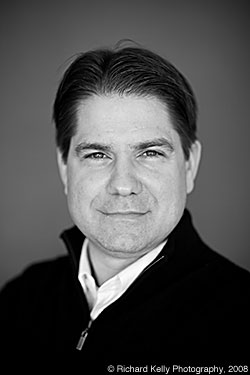
10 Questions for: Richard Kelly

Over the years, there have been good elected leaders at the helm of ASMP, and less-than-stellar elected leaders. One of the great leaders is photographer Richard Kelly, and he most certainly should be re-elected, and also serve a second term as ASMP President. I first met Kelly when I travelled to the Pittsburgh ASMP chapter to give a presentation over 5 years ago, and then we started working together on the ASMP Strictly Business 2 series. All along, Richard has demonstrated a street-tested savvy as an ASMP leader because he is a full time photographer as well. He knows all to well the reality of being in business, because he IS in business, first as a photographer, and then, brings his skills to the fore to lead ASMP in the right direction.

While Richard has submitted a ballot statement, he also answered a series of questions and answers that were posed from the membership. His ballot statement is here, and the ASMP Q&A is here. However, we thought it of value to continue our "10 Questions for..." series, and call upon Richard for his answers. Below are his answers to our questions, and while yesterday marked the first day you could cast your ballot online here, I encourage you to first read his answers, and then, yes, go vote for him You'll need the password that ASMP e-mailed you with the subject line "Your ASMP election information".

(Continued after the Jump)

1. You're running for re-election to the ASMP board, and I presume, you'd like to return for a second term as President. Why?
For the last 3 years in my board role, I've had an opportunity to move the needle on important initiatives for photographers across the country. My role as President allows me to directly impact the profession we all pursue so passionately--so yes, I'd like to return as President to continue working for our members.
2. What achievements are you most proud of during your tenure on the ASMP board?
Education has been a big part of my agenda, so as a board member Strictly Business 2 and the continuous growth of the ASMP seminars series are both important achievements for me.

In the big picture, its been the opportunity to take a critical look at the short and long term challenges and opportunities both for publication photographers as well as ASMP, and then applying that research to writing the new Strategic Plan. That plan is the map that ASMP will navigate over the next five years and it was important for us to have a master plan with clear outcomes that will positively impact the industry.
3. Aside from the achievements in #2, what achievements or projects during your term as President are you most proud of?
I spoke to a number of members when I started this role, and what I heard most often was that they wanted more information from the organization. I think we've made great strides in improving the ways and frequency of how we communicate with chapter leaders and members. We want members to be informed about the industry at large--as well as about what ASMP is doing in response.

Under my leadership, ASMP has embraced social media not only as a means of communicating with members but encouraging our members to learn and use these new tools. ASMP was the only photography organization to have a professional analysis of social media companies terms of service agreements, arming the larger community of photographers with information they could use when utilizing these web services.

I also initiated both the multimedia and motion video educational programming and went the next step by creating the motion video study group, which delivered an industry resource for photographers now creating motion video for clients. http://asmp.org/tutorials/video-tutorial.html

Looking out beyond today, I challenge the board to think differently, I encourage our members to think about what it means to be a professional, in an age when everyone with a camera is a photographer, I emphasize the need to renew our focus on copyright and register our work with the copyright office and give people the knowledge to do this by hosting hands-on workshops.

This focus on copyright goes beyond the actions of our members--its also working with software companies, independent developers and the copyright office to create registration access during the photographers regular workflow, and being part of the conversation with the big thinkers of copyright in New York City at the Registration Counts Symposium April 21, 2010. http://asmp.org/content/registration-counts
4. If you are re-elected to the board and in turn, for a second term as ASMP President, what one or two projects are you most excited about?
Continuing what I started, pushing ASMP and publication photographers to expand business strategies and models to adjust to our new economy and business demands. ASMP is the thought leader of our industry and I want to take that up a notch. But what photographers really need today is advocacy and education to help them move their businesses in a new direction.
5. How do you see the creative landscape for photographers (i.e. ASMP members) in the coming next few years?
This is a great time to be a photographer, the opportunities for telling your story your way is unprecedented. It is very exciting when I see photographers using these new platforms.
6. How do you see the business/economic landscape for photographers (i.e. ASMP members) in the coming next few years?
It is going to be challenging--not just for ASMP members and photographers but for small businesses in general. We'll survive only if we venture forward and leave behind some of the 'way it used to be done' thinking, in favor of, 'how can we do it better?'
7. How do you think that ASMP will serve its members as it regards the landscape of dealing the the realities of business in the near term?
We continue to focus efforts on opportunities for photographers to expand their markets and creativity. There is not one solution that will work for every photographer, but we want to provide them with educational and support resources to rethink their businesses.
8. ASMP, I believe, benefits from full-time working photographers serving on the board, because they know in a way no one else can, the realities of being in business. Can you share a few of your recent assignments with us (with or without naming clients, as you are comfortable)?
In my market I do primarily editorial and corporate assignments. In Pittsburgh, that translates into annual reports and features about business and innovation. I am currently working on an annual report for a non-profit that has me traveling throughout the state and I just completed two editorial projects featuring people who are making a difference in the community.
9. It seems that ASMP has grown in the past few years. How do you envision the growth of ASMP will be in the near term?
I believe ASMP is offering photographers very targeted and relevant information and resources and I do not see any other photographer group offering what we offer. In the past year, many new professionals are entering the freelance world especially from newspapers and these photographers want the same resources that the longstanding members want and need. This is the growth ASMP is seeing and will continue to see short term.
10. How has what you have learned as an ASMP member benefited your bottom line?
That my peer network is unparalleled in helping me resolve challenges, that I can't ever ignore marketing and that I can't stop moving at the speed of the rest of the industry.
If you don't vote, then you have no right to complain.


Please post your comments by clicking the link below. If you've got questions, please pose them in our Photo Business Forum Flickr Group Discussion Threads.


[More: Full Post and Comments]

Monday, January 25, 2010

On Commercial Photographers - Everything Is Relative

Anytime people get together to focus attention on the critical matter of the business aspects of photography, even when they are misguided, I applaud it. I applaud even the misguided discussions because someone will come out and get it right, and others will alteast spend some of their otherwise mis-focused thoughts on business for a change, and eventually, they'll get it right.

It is to that end that I applaud Rob Haggart's A Photo Editor, who poses the important question - How Much Money Do Commercial Photographers Make?

And I thought I'd take and make commentary on much of what was said, correctly, or incorrectly.

"One commercial photographer told me he was bringing in $250,000 in profits and another said he has several million in billings."
This is a loaded statement, because someone could have $250k in profits and next to no expenses in a number of circumstances. Further, someone could have several million in billings and be running at a deficit.
(Continued after the Jump)

"So, what do successful commercial photographers make? I’ve always believed it was a lot."
Success is not always defined by what someone makes. For example, the owners of LifeTouch - the business that does a large number of school portraits across the country is a commercial enterprise, bringing in millions each year. Yet is that success? For the owners? For the commercial photographer that runs the on-tripod camera with formulaic strobe setups?
"How has the economy effected the way people price? "
While you might seem to think that there would be an effect, and erroneously, there is, it isn't a long term solution - because when you're a $1,000 photographer for X, and you do the job for 1/2 of X, that client will remember you at the 1/2 price rate when the economy rebounds.
"Are photographers starting to base their usage on their cost of doing business instead of the cost of the use?"
This too is a flawed question - usage should never be based on the CODB, it should be based upon the use. However, one's photographers fees should have, as an absolute floor, that photographer's CODB when it comes to a photographers creative/assignment fees.

Amanda Sosa Stone and Suzanne Sease wrote:
"we had 1 photographer bold enough to give the answer everyone has been waiting for."
I'm not sure which one they are speaking about, so knowing this would be helpful.

The "Hot Emerging Photographer" (HEP) states "...My rep basically bids on what the client’s budget is..." and that's a problem. Knowing what the client's budget is is critical, and it's a question I always ask. However, when the budget is too low to properly do the assignment, then bidding on that can be a problem! Further, sometimes prospective clients will mis-represent the budget for any number of reasons, not the least of which is to see if you come in at a proper number that is well above the stated budget. I understand the point HEP makes when stating "...we push the production as low as we can to do a good job then create the fee out of the gap..." but that gap has to be a number that includes your CODB as well as a fee that compensates you for whatever creative talents you bring to the assignment. Lastly, HEP suggests "...I vote to keep an industry standard of fees..." and that's not going to float from an anti-trust standpoint. However, resources like FotoQuote/FotoBiz, Hindsight, and others are great resources for photographers to refer to outside of and formal establishing of prices by the trade organizations, which legally cannot happen.

The Established Photographer 1 (EP1) suggests "...250K in profits! I want to be him. In my best year, I grossed 225K and I was quite pleased. I can’t remember what I net’d but would have to guess around 1/3 of that." Most businesses look at a 3% - 7% net profit after taxes. If your net profit is 30%, I'd suggest that either you are the most amazing business person of the year, or you're not factoring in overhead items that you should be.

EP1 goes on "...It’s also difficult to compare me to most; I was away from business from 2005-2007 and have had a very challenging economy to grapple with upon my return so there’s no steady recent history for me to gather information with." So, we're to rely on the insights of someone who's been out of business for 2 (or even 3) years, with no steady recent history? This alone should be reason to discount these insights as valuable.

EP1 concludes "...I have estimated jobs based on usage, and I haven’t won many of them :-(" which to me that EP1 isn't doing a proper job of conveying usage to clients, or calculating it.

Next up Established Photographer 2 (EP2) reveals one of the reasons that this industry - especially assignment-type work, is in the current state, when they state "I have always tried to avoid talking about this kind of stuff." Whomever EP2 is needs to be talking about the business of photography with atleast their assistants, if not their local colleagues.

Then EP2 says "Even though I bill well over a Million Dollars in gross billing annually. What you actually pay yourself is much, much less....I am at the top of my game and probably make about what a halfway decent Attorney makes...It is quite exaggerated what photographers make." According to Payscale.com, the median salary for an attorney with 5-9 years ranges from $70K-$114K. An attorney "at the top of their game" can expect a salary of $200k or more coming out of a top-end law school.

Established Photographer 3 (EP3) seems resigned to the fact that they "... can’t say I am a poster boy for usage fees either. " Atleast EP3 acknowledges the possibility (hint: reality) that "..... Maybe I am getting played, but it usually happens in competitive bids where they say the other guy will do this usage for this money, so to be competitive I need to come closer to that number – that kind of thing. I typically but not always cave into it..." THAT is the definition of getting played - that they are playing you against the others, and the others against you.

EP3 does, however, suggest "... in that sense my cost of business does figure into it, but I only consider it when pressed to meet another person’s price." and in doing so, hopefully isn't accepting creative/assignment fees that are lower than their CODB.

EP4, while the least of the providers of information, does include a few details that are worthwhile. EP5 on the other hand, has it right in handling his money properly through a corporation, and I think EP4 was asked the flawed CODB question. EP5 concludes with one model that works for a lot of photographers "...License model, combined with photographers fee (shown as one line item!!) is the way the top guys estimate."

The EP with actual salary numbers provides succicint numbers, however is that a wedding photographer, an event photographer, or some other type? It seems to me that it is a wedding photographer.

The Very Established Art Buyer (VEAB) has some great insights. They know that "... top photographers do gross a million or more in fees.", but those fees cover overhead, and, as they acknowledge, "...agent commissions come out of that, but it’s still a nice living." It's refreshing when they reveal "...I don’t see top photographers any more willing to compromise on pricing than before the economic downturn." and that should be a guide for the rest of us.

The VEAB notes that "...Usage pricing is all over the board and there seems to be no rhyme or reason to it." and this is something that I, along with others (including Leslie Burns Del'Acqua) have been trying to promote for some time now, and that is that usage fees should be a percentage of media buys for advertising, anywhere from 5-7% down to 2% or so for large buys. Heck, if an ad buy is $2,000,000, is it unreasonable that you'd be paid $40,000 when it is your heroic picture selling the product? I don't think so.

I agree with Amanda and Susanne when they say "...you have to do your part to get those jobs and keep those clients and ask for what you are worth – NOT WHAT IT COSTS TO PAY YOUR BILLS!" However, you have to know what it costs to pay your bills before establishing your fees, or risk setting them below your CODB.

Commenter Jacob wrote "...I’ve noticed more and more that major ad campaigns are now crediting the photographer in ad work." and then Suzanne responded "...I am on the phone with Amanda right now and the answer is yes..." and it is important to note that the advertising landscape will change whenever the Orphan Works legislation gets through, because most of the versions I've seen will need photo credits in order to properly protect the work, even in ads.

Glen Wexler commented, on this subject ".... With ad work, a comparable level of freedom rarely exists, and the photographer’s vision is often shaped to the “greater good” of the brand. The process of making an ad is much more collaborative than editorial. An editorial photo credit is a must..." and then he goes on to point out, quite accurately, "...the media buy almost always dwarfs the photo fees" and then makes a huge point "...If photographers begins to reduce fees in exchange for exposure gained by ad work, where is the payoff? Wouldn’t you simply be setting a precedent of reducing fees to gain more reduced fees?"

Edward McCain seems quite fatalistic when suggesting "...I hope young photographers in most parts of the U.S. realize that they probably won’t ever net as much as a school teacher or plumber." If that's the case, the photographer has only themselves to blame. McCain also suggests "...I only know a handful of photographers that actually net more than $25-50K." I do hope ( but doubt) that he's referring to a net on their business income after having paid themselves a reasonable salary.

In the end, the discourse is of significant value, and I do look forward to Amanda and Suzanne's continued contributions.

Please post your comments by clicking the link below. If you've got questions, please pose them in our Photo Business Forum Flickr Group Discussion Threads.


[More: Full Post and Comments]

Monday, January 18, 2010

Charitable Giving - Do's, Don'ts, And Cautions

Charitable Giving is a cornerstone of a compassionate citizenry. Yet, it's very important that you know what you can, and can't give, and how to best give.

First - legally, if you designate a specific disaster (for example, Haitian relief) the organization is obligated to spend those funds on Haiti only. Guess what? In a few weeks, there will be another disaster, and if the organization recieves an excess amount of funds earmarked for one disaster - so much so that they can't spend it (guess what - this happens a lot!) they can't transfer those funds to other needs, so don't earmark your donation for a specific incident, let the charity manage their funds as they best can.

Second - your time is NOT a tax-deductible donation. Even if you have an hourly rate of $100, or a rate for an assignment for a charity documentary project of $750 for each day you are doing that type of documentary work, you cannot donate your services and take a deduction for that. If you incur airfare/hotel/food/shooting expenses during the trip, those you can deduct. (For more information on what is, and is NOT deductible, check out IRS Publication 526 - page 6 is where is says "You cannot deduct as a charitable contribution - 4. The value of your time or services,...")

(Continued after the Jump)

Third - make sure your donation is to a true charitable organization, and check them out! For example, making a donation to the Government of Haiti is NOT a tax deductible donation! Further, while everyone from the First Lady to Price Club are encouraging you to donate to the Red Cross, here are a few facts about them you should be aware of:
Red Faces At The Red Cross - In the hours after the Sept. 11 attacks, a record-breaking amount of donations started pouring into more than 1,000 local American Red Cross chapters. What donors didn't know was that some of the chapters entrusted with all that money had been identified by Red Cross headquarters just a few weeks before for having poor accounting procedures, inaccurate financial reports and for keeping national disaster contributions that should have been sent to headquarters in Washington.

Red Cross defends handling of Sept. 11 donations - "Don't confuse us with the 9/11 Fund in New York. Don't confuse us with Habitat for Humanity. Don't confuse us with the scholarship in New York for the victims. We have to get that out," [Healy] said. Controversy over the Liberty Fund was one reason Healy decided to resign at year's end.

Red Cross Blinks - The Red Cross had planned to use about half of the Liberty Fund to build up blood supplies and prepare for possible future terrorist attacks...The public responded with outrage to the disclosure that not all of the donated funds were being spent on victims of the attacks. "I donated money three times for the people directly affected by the attack on America, Sept. 11th. I did not donate money for the Red Cross to use as they wished.
It may be that your local church group, or a specific group, like the one photographer Cameron Davidson supports both with his time and money - The Community Coalition for Haiti, are a better destination for your donations. Just because everyone is championing one cause or another, doesn't mean you should take the easy path and do the same - figure out what you want to give, and how to best do it. Experts are saying that financial donations are best because if you, for example, donate bags of food or clothing, they may not only not be needed, but also, the costs to get them down there could be quite high.

It is important too, to realize that most people have a mindset of "I can give $x amount this year to charity..." and when they give that much, they don't give again for awhile. In the year after September 11, 2001, charitable organizations were reporting sharp drops in donations, because much of what people had planned to give to, say, research for a specific disease, or homelessness, was instead given to 9/11 charities. So, as you give for the current disaster - Haiti - remember your other charitable giving and don't make it an either/or - do both, if at all possible.

Please post your comments by clicking the link below. If you've got questions, please pose them in our Photo Business Forum Flickr Group Discussion Threads.


[More: Full Post and Comments]

Monday, January 11, 2010

PhotoShelter - Advice For The AfterStaff Circumstance

The good folks over at PhotoShelter called the other day to ask what 10 things a current staffer should do to prepare for their inevitable "switch" to freelance, and also the 10 things a newfound freelancer from the "Staff World" should do, so I gave them a few ideas, contemplated after a long spell in the shower, and I encourage you to head over there to check them out -

THE 10 THINGS ALL STAFF PHOTOGRAPHERS
MUST DO RIGHT NOW

This advice applies if you are:

  1. A freelancer welcoming the former staffer now newfound freelancer into your community (help them and welcome them, dammit, don't be a selfish jerk)

  2. A staffer who thinks your staff job is safe (it's not - REALLY, IT'S NOT)

  3. A staffer who just was forcibly "switched" to freelance by your (now former) employer

  4. The spouse or partner of a freelancer who is now worried about healthcare, rent/mortgage, and small things like where the next meal is coming from, and wants to know how to kick their freelance spouse back into gear and out of their malaise, and otherwise help.


So, go read, and be enlightened, and be thoughtful - it's a good thing for your karma.
(Comments, if any, after the Jump)


Please post your comments by clicking the link below. If you've got questions, please pose them in our Photo Business Forum Flickr Group Discussion Threads.


[More: Full Post and Comments]

Tuesday, December 8, 2009

FocalPop - Expect Pop Pop Fizzle Out

Who grades these grad school fantasies, Krusty the Klown? FocalPop - the latest incarnation of the idiocy of crowd-sourcing advertising photography assignments has apparently ozzed from the hot Summer nights of UT Austin. Here's the pitch:

1. Seekers fill out a request describing the exact photo they need, how much they'll pay, and how soon they need it.
What's missing: Oh, right - buyers don't get to dictate price.
(Continued after the Jump)
2. FocalPop notifies the community of Photographers of the new Photo Request.
What's missing: Oh, right - qualifications to actually do it. "The proof is in the pudding" doesn't work too well here.
3. Photographers review Request details, shoot photos that meet the Request needs, and upload submissions for review.
What's missing: the best results come from a dialog with the client, and who's covering the expenses for the shoot? Oh, wait, maybe that's the photographer.
4. After the deadline, the Seeker reviews all of the photos submitted, selects their favorite, and pays FocalPop the amount they specified in the Request.
What's missing: What if they don't like any? Unlike other plans, FocalPop will select the winning photographer and pay them from escrowed funds supposedly set aside by the client (a.k.a. "Seeker"). According to their T&C - "The Seeker further agrees that it would be unfair if no photographer received the award(s) offered by the Seeker due to the Seeker abandoning the request. Therefore, if the Seeker does not select the winning design/photographer(s) within seven days after their request ends, the Seeker agrees that FocalPop may select the winning photographer(s) and pay the award(s) on behalf of the Seeker. Additionally, you agree that when you are a Seeker in a request, you will complete wrap-up in your request within thirty (30) days after your request ends. You authorize us to release escrowed funds to pay the winning photographer(s) if more than thirty (30) days have passed since your request ended." Interesting, so let me get this straight - the client has to blindly agree to accept whatever images are produced by an unknown quantity/quality of photographers? Oh no, wait - their Seeker FAQ doesn't quite agree with the T&C above "We take a deposit of 30% at the time a Request is created in order to protect the photographers. We want to ensure no one requests photos that they don’t actually intend to purchase. However, if your Request receives less than 15 submissions and you are not happy with the results, we will gladly refund the 30% deposit – no questions asked."
5. FocalPop provides the high resolution file to the Seeker and pays the winning Photographer a commission on the sale.
What's missing: Hmmm, let's see - FocalPop would be the one recieving a "commission" on the sale, as the conduit. According to their T&C here, they'll take 30% to serve as this conduit. Or, wait - is this the same 30% that the photographer gets if a winner isn't chosen? Hmm, then maybe FocalPop takes 70%?
So far, all 10 of their requests (here) have come from one of the company founders, several of which were used to illustrate the website itself.

So, who are these dreamers? Brian Romanko (LinkedIn: Profile) touts in his biographical sketch about his past - "...Brian worked for numerous startups — both successful and utter failures..." Brian - be glad you got a good grade on this, because the real world has already proven this crowd-sourcing school project of yours to be an utter failure - see Pixish - Stupid Is, As Stupid Does (2/12/08) and Pixish - Finally Down The Tubes (2/7/09), and even the lunacy of David "that model was interesting, but didn't pan out" Norris (7/12/07, OnRequest - Realizing the Obvious). Heck, even Brian's friend Jonathan Cho (LinkedIn: Profile) trashes the idea here "...in the spirit of hating on crowdsourcing, here’s a similar site that my friend’s launching, except instead of design its photography: http://www.focalpop.com/ ...as a fucking awesome designer, i’m a bit ashamed to admit that i’ve submitted a few designs to crowdspring. an hour or two in illustrator = quick buck, right? what’s horrible is that my designs have never been picked. i’ve always lost to much crappier designs. and that is why i hate crowdspring." With friends like that...oh, wait - his friend is actually smart and giving him good advice.


Co-Founder Becky Parker (LinkedIn: Profile) seems to be simultaneously tasked to "Oversee the strategic planning for Sony Electronics' online social marketing programs" at marketing firm Powered, Inc, as well as trying to "...find her passion for offering true value to customers online and in developing meaningful customer relationships" for FocalPop. Becky - try working to find value for the creative talent that will produce this work, not pennies on the dollars of what the projects should really be worth. Hint: A project you facilitate for $100 that earns you $30 for FocalPop really could earn you $300 if it was more appropriately priced at $1,000. I guess, though, that winning the Moot Corp contest taught you to over-value moot money? Tip: moot money is as valuable as monopoly money in the real world.

The third in the trio of wunderkinds is Shawn Carr (LinkedIn:Profile), wooed in by the void left by Ronnie Lebert (LinkedIn: Profile), Eddie Howard (LinkedIn: Profile), who have both left for smarter options at Dell and Datran media respectively. Carr hasn't left the chilly weather of New England where he is an IT manager for a small company, and consulting for Croop-LaFrance. Hint - don't quit your day job, Pixish and OnRequest, as detailed above, are your harbingers of things to come, and that equity you might have - not going to be worth much, just make sure you get paid before you have to post that "out of business" splash page.

FocalPop is the quintessential example of the re-hashed ideas coming from MBAs time and time again. This idea hasn't worked before, and it won't work this time.


Please post your comments by clicking the link below. If you've got questions, please pose them in our Photo Business Forum Flickr Group Discussion Threads.


[More: Full Post and Comments]

Monday, December 7, 2009

One-Stop Shopping for Photo Buyers - Too Complex and Fractured

One of the questions that continues to surface like so much floatsam and jetsam on the sea of discourse about photography licensing, is why there isn't one centralized location to license images. Dan Heller recently tried to answer the question in his blog post here - Why there's no one-stop shop for photo buyers - (11/29/09), and he compares the business of photography to that of electronics, suggesting that the reason that there is a "viable, stable market for electronics (unlike photos) is because there are mechanisms in place that help establish price points, distributors, manufacturers, and so on. In short, it's a mature industry." There are two problems with that position - #1, photography has been in the marketplace for far and away longer than electronics even existed, and further - is is extremely easy to search for electronics because they have model numbers. It is exceptionally easy to compare two products with the same model numbers, and to enumerate even the most nuanced of differences between models when there is even one or two characters that change (example: Nikon D3 and Nikon D3x, or Canon 5D as compared to the Canon 5D II). Even though, if you don't know exactly what you are looking for, there is a very limited universe of variations on each type of electronics. However, if you try to search for a "cell phone cover" you are hosed. 75 millions results. Iphone cover: 110,000,000 results.

The problem is the nature of the medium. Not the maturity of the industry.

In photography, search is most often not for a particular object or product, but for a concept, which may be expressed by the state of a particular object.

(Continued after the Jump)

For example, If you want to find a dog photo, not a particular photo but a photo that expresses a certain concept, there is no possible answer (other than wading) but reliance on keywords. And when you do that search, if the results have not been edited for quality, you are going to waste time wading through though thousands of images to find a gem. Supplementary keywords added by viewers might improve keywording accuracy, however, it will be decades - at least - before a computer can parse the difference between a person smiling and showing their teeth - and that same person with a angry teeth-barring scowl, not to mention the micro-facial-expressions that differentiate happiness as compared to attraction.

Visual search can help with color, orientation, pattern, but not concept.

Image recognition can help with finding an exact image if you already have one, or an image with similarly structured feature points if you already have the image that you are looking for.

Object recognition can help with finding photographs of clearly delineated, unambiguously rendered objects, such as a bicycle, but will have a tough time distinguishing between a terrier and a cat. This will improve with time, but it takes a pair of eyes and a brain to distinguish subtleties, and this will not change. A combination of object recognition and contextual search will yield better results than either type of search alone.

But if you are conducting a search at a search engine like google, the results are images IN USE, not images FOR SALE. Big difference.

The problem is, there is almost always, as those attempting to solve licensing problems, a failure to recognize the fundamental differences between different types of products, and different types of intellectual property.

Searching for music is easier than searching for photos because there are relatively *few songs*. Searching for music -- a "mature" industry -- is a big headache, if you don't know the artist or the name of the song, but are just looking for a song that expresses a certain concept. However, lyrics can be of some assistance, beats per minute, genre, and so on. Yet, in the end, to be able to actually experience - by listening - to a song, will provide you with the final answer. So too, by seeing concepts in images, you really do have to either see it, or have had someone see it and keyword in conceptual keywords.

Heller, among others, suggest that even the big fish (Getty/Corbis/etc) can't/won't even attempt to solve these problems, because their results are absent images they don't represent. Yet, as noted above, it's more than that - these results would not include images that are for sale, yet not in a stock agency or indexed by Google.

Further, the licensing of images is a challenge too. If I told you that someone needed an aerial photograph of a football stadium, but they only wanted 200 copies for a printed brochure, how would you price that? Well, it's one thing if the brochure is for a local realtor to show how protected a home's traffic access is to the seasonal traffic jams on nearby roads, and completely another if that brochure will be what sells the NFL owners on having the next Super Bowl at that stadium.

Photography (and illustrations, for that matter) will continue to be far too complex and fractured an industry for there to be any one place to centralize the licensing of it


Please post your comments by clicking the link below. If you've got questions, please pose them in our Photo Business Forum Flickr Group Discussion Threads.


[More: Full Post and Comments]

Friday, December 4, 2009

Time Warner - Letting Freelancers Screw Themselves

If you're a freelancer, and Time Warner owes you for assignments, for a fee you can get it paid in 25 days after it's approved. Want it in 10 days? The fee quadruples. Again, this is an acceleration of "approved payments", not the acceleration of payment. Reports of 60 to 90 day payment cycles abound,(despite claims that you are getting paid in 30 days) so at what point are they approved in the system? I highly doubt that you could actually get paid 10 days after sending your invoice, for example. The concept of "2/10 net 30", while common in the business world, assumes that you're actually getting paid in 30 days in the first place.

We all can understand the concept that if you have $100 owed to you, it is better for you to be paid that $100 immediately, than to have to wait a year for it. If you get that $100, compounded interest could mean that after a year in your bank account earning interest, you'd have $105 (or more). However, if you wait to be paid the year, your debtor has earned that same $105. This concept is called Time/Value of money, and you can read more about it here. While you may not be able to leverage a $5,000 early payment of a bill for an assignment (including expenses) into more than a few dollars, imagine JP Morgan (Time Warner's payment vendor) being able to leverage 100 of those $5,000 bills by delaying payments a month or two? That's called "the float." Banks used to delay making the funds available for upwards of 7 days even though they got the money within 24 hours. A long time ago, it might have taken 7 days to get a check drafted on a New York bank validated by a California bank. However, long after those days had passed, the delays were still in place, giving banks a 5-6 day "float" on your money, so that tens of millions of dollars could earn interest for just a few days, and you would be none-the-wiser. Laws were enacted to force banks to change.

Here's the "Happy Holidays" memo sent to Time Warner's freelancers:

(Continued after the Jump)


Happy Holidays!

If you are receiving this email, you are the JPMorgan Xign administrator and you, or someone from your organization, is submitting electronic invoices or receiving electronic payments via the JPMorgan Xign solution on behalf of Time Inc. I apologize for the blind distribution but I wanted to protect everyone's privacy while sharing this important information.

As year end approaches I wanted to ensure that you were aware of the PayMeNow functionality, which allows you to _accelerate payment for invoices that have already been approved_ by TIME. This is an excellent tool to help with your cash management at year end! This does not change your payment term on future invoices, it simply accelerates the payment on the ones you specifically request.

* If you are receiving this email, it means you have approved invoices that are pending payment and can be accelerated for payment this week or any day before year end. *


This is a purely optional service that is available to you by following these easy steps:

1) Log into your JPMorgan Xign account at xign.net.

2) Look for the green $$ and click the link.

3) This will display all available invoices

4) Either select the fastest date to be paid, or select "Lower rates" to schedule payment later in the month, but still before your year end.

Thanks very much and please let me know if you have additional questions related to cash acceleration. For all other inquires, please contact our Support Team at 800 485 XXXX.

Sincerely,

Linda Piazza
JPMorgan

Vice President, Relationship Management
It seems that a survey done by the JPMorgan Business Settlement Network, as reported by Financial Services Technology - Early payment discounts – a lucrative cash management tool - suggests that "faster payment" represents "one of the great earnings opportunities in corporate finance." The article encourages "You need to consider the amount of discount ‘leverage’ you have with a particular supplier." Then (and here's where the lowly freelancer comes in):
"There is another large pool of suppliers...the non-strategic suppliers. These suppliers are typically small to mid-size suppliers...they are also the hungriest for cash and much more likely to accept discounts versus strategically sourced suppliers. Understanding your supplier’s need for cash is a key to success."
So, the next time you think that that Time Warner employee is your friend, or cares about you, remember, they are fronting for a payment system that wants you to be the "hungriest for cash and much more likely to accept discounts."

Gawker reports - Time Inc. Will Pay You Promptly, If You Pay Them for the Service - "Given how desperate freelancers are to be PAID NOW, largely because companies like Time Inc. never pay them on time, this is a pretty genius idea."

If you'd like to know more about the author of that missive, Linda Piazza's LinkedIn profile is here, and you can send her an email via LinkedIn, if you are so inclined.

Photography is business. Keeping your money longer and then giving you discounts, (as Gawker accurately describes it "charging its freelancers for the privilege of being paid for their work in a timely fashion") is Time Warner's business. So, you freelancers who fall into Time Warner's "non-strategic" category of vendors, remember how much they care when they won't pay you in full on time, despite your mortgage and credit card bills all being due in 30 day payment cycles, and you can't pay your bills.


Please post your comments by clicking the link below. If you've got questions, please pose them in our Photo Business Forum Flickr Group Discussion Threads.


[More: Full Post and Comments]

Thursday, November 5, 2009

Getty Images and Bloomberg - Futurescape

Let's say you're Getty images, and you have to pay a staffer $350 a day, plus gear and other overhead, to cover an event, which would amount to about $600 a day. From that event, let's say you have fifteen $25 sales of your wholey-owned content, or, even worse, 100 images fit the bill for a subscription model, where the per-image attribution is $1.50. That's maybe about $200 in revenue from your wholey-owned content. Couldn't you cut out that $600 expense and do it cheaper?

What if you were distributing the images of Agence France Press (AFP) and Bloomberg who have their own photographers and wholey-owned content, and they wanted to use the Getty distribution pipleline to reach more customers? Getty recently announced here that they would be the editorial distributor for Bloomberg News images.

Now, as a Getty staffer covering an event, you need to be looking at both the AFP and Bloomberg photographers as your competition. Note - I am not talking about the healthy competition between, say, the AP and Reuters and AFP, but actually, competition for whether or not you get to keep your job. This is because, if you're not careful, some green-eyeshade-wearing actuary will do the math and realize that carrying editorial staff photographers just might not be economically sound, and as Getty recently shuttered their creative photography division (as we reported here), so too might the agregated revenue from AFP and Bloomberg prove that they can do without editorial staff photographers.

(Continued after the Jump)

While theses employees are a significant revenue stream for Getty, they may not meet the profit targets that Hellman and Friedman have for Getty before they try to sell their entire library to Google or Yahoo. Don't think it could happen? Dan Heller, just a few weeks ago wrote here - Might Picscout Ultimately Cause Yahoo to Acquire Getty? - about this very possibility. While Dan and I come at things from differing perspectives, I often enjoy reading what he has to say. Trust me when I say this - the ONE thing Yahoo/Google don't want to do, is have photographers on their payroll.

What about all those contracts with the sports leagues? Each of those teams has their own photo departments, and Getty under a Yahoo/Google could just become a distribution point for those pre-existing teams. I know, it's complicated, but when cost savings, and profits from IP are the topics of conversation, smart business people figure out how to cut costs. More than one time I have been at an event where there was a WireImage, FilmMagic, Getty, and AFP photographer covering an event, and everyone looks around scratching their heads - that is essentially 3.5 photographers covering ONE event, that normally would be covered by one. Why not scratch the WireImage, FilmMagic and Getty photographers, and be the distribution point for the AFP and Bloomberg images from that event? That's essentially the same revenue as 1 photographer. Don't think that the bean counters haven't thought about this.


Please post your comments by clicking the link below. If you've got questions, please pose them in our Photo Business Forum Flickr Group Discussion Threads.


[More: Full Post and Comments]

Monday, October 19, 2009

Re-Tooling the Message of Antipiracy Content Protection

Word matter. Fortunately, photographers have other creatives - musicians, movie-makers, and the like with far better organization that we can muster, and thus they can commission research about how to best convey the message that stealing intellectual property is bad. ASMP NY did a good job of illustrating the similarity between analog and online image theft, as we discussed recently. Yet, more can be done.

(Continued after the Jump)

Examples about in how, simply by making something sound and read differently through a linguistic change can make things more effective or appealing. Dr. Frank Luntz, author of one of my favorite books - "Words That Work", discussed this in great detail. "Gambling", for example, was changed to "Gaming" industry-wide. Liquor, as Luntz points out, has a negative connotation, and is now more positively referred to as "Spirits." The Republican's Contract With America was a brilliant move, including acts patriotically titled "The Taking Back Our Streets Act", and the "Personal Responsibility Act". Whether or not you like the Republicans, you have to give them their due for brilliant word-smithing on that front. Thus, just the momentum that comes from "helping orphans" is the basis for those on the "pro" side of the "Orphan Works Act", whenever it resurfaces.

Perhaps we should get it re-branded as something like "Photos for Free At the Expense of Artists Act" and see how far it goes? Maybe that's a bit wordy, but photographers are mis-percieved as cold because, well gosh, how can we be against something that's good for "orphans"?

As you work on your own branding and messaging to clients, be sure to be thoughtful in the words that you use and make sure they not only say what you mean, but also, that they work.

With thanks to Gail Mooney for the MPAA messaging tip.

Please post your comments by clicking the link below. If you've got questions, please pose them in our Photo Business Forum Flickr Group Discussion Threads.


[More: Full Post and Comments]

Wednesday, October 7, 2009

Becoming A Contract Photographer/Photo Editor

As staff positions at organizations around the country are cut, the workload needed to be accomplished on any given day does not. The common refrain I hear from people who are separated from their jobs is "how will they do all that work without me?" - and that's a fair question.

The two primary ways they will do that work, is to load it onto remaining co-workers or they will hire a contractor to do the work. Whether it's photography, or photo editing, you need to figure out what you're worth because you are now in that "contractor pool".

So, what are you worth?

(Continued after the Jump)

When you're a staffer, it's pretty easy to figure out what you're paid per hour. With 52 weeks in a year, multiplied by 5 days a week, there are 260 week-days. Most staffers just use that, and that equates to $192 a day, or $24 an hour, for a $50k a year job. However, there is a huge hole in this thinking. First, it doesn't factor in your vacation, paid sick days, or holidays, nor training. All together, you're looking at 9 weeks of combined days when you're not being productive for the company, but you are still being paid. With this in mind, that $192 a day jumps to $231 a day, that you're more accurately worth - thus about $29 an hour. Do you see how easy it could be to undervalue yourself by $5 an hour?

But wait, there's more! You're a contractor not an employee, and thus, you are required to cover your own health/disability/life insurance, equipment you need for work, training, and so on. As an employee, these would be paid by your employer - now, you're your own employer. What are they worth? The Contract Employees Handbook has a really great online resource for talking through your benefits. There, they suggest that your benefits package is likely worth about $35,000 a year. So, take that $50k salary and add in $35k to arrive at a much more accurate $395 a day, or $49 an hour.

Crazy how, as an employee, you did the over-simplified math, and concluded that you were worth $24 an hour, when, when all is said and done, you're worth to the company is over double that! No wonder companies are getting rid of staffers and then hiring in contractors who don't do this type of math and undervalue themselves!

Further, companies are shedding the obligation to keep people on the employee roles when times are tough. There should be a premium paid to you since you are not guaranteed the next days' work as you were when you were an employee. Thus, there should be a premium on what you are being paid for you to assume this risk. So, perhaps that $49 an hour jumps to $55 an hour - again, which equates to just $50k a year. If as an employee you were earning $80k, that equates to $535/day, or $67 an hour, and adding in a premium for your assuming the risk as noted above, you could be properly valued at $75 an hour as a contractor - again, if you are worth $80k a year.

It is important to note here, that none of these figures calculate in anything having to do with rights to images, but rather, labor, time, and knowledge for physical work for which the benefit to the company stops when you stop working. Intellectual property (IP) in the form of images/video would continue to work for whomever owns the IP to them. So, recognize that if you are shifting from employee to contractor you need to factor in the value of your IP and what rights the contracting party has to them (if any) once the contract has ended.

Please post your comments by clicking the link below. If you've got questions, please pose them in our Photo Business Forum Flickr Group Discussion Threads.


[More: Full Post and Comments]

Saturday, October 3, 2009

The NGO Mystique

The NGO, or non-governmental organization, has made it to the forefront of well-intentioned photojournalists' minds these days hoping to change the world with their photography. Photographers get the opportunity to travel to far-away lands, usually in the third world, to document the plight of a population, region, or other disenfranchised group. The photos are immediately turned into online galleries and printed materials for fundraising purposes to bring in more money, ostensibly, to do more good. In a short period of time, a photographer can see their images doing good.

many a desperate freelancer is looking to organizations to save them these days, and photojournalists think it's the NGO.

So, first, what - really - is an NGO?

(Continued after the Jump)


PBS defines an NGO as "A nonprofit group largely funded by private contributions that operates outside of institutionalized government or political structures. In general, NGOs have as their agendas social, political, and environmental concerns."

The US Chamber of Commerce defines an NGO as "A group or association that is not directly part of a government body and that seeks to affect change for a specific cause or activity not commercial in nature. In many cases, NGOs operate for a charitable purpose and rely on donations from individuals, corporations, and foundations in order to operate."

Are all NGO's charitable organizations? Well, their work may be charitable, as the USCC notes, however, their tax status may not be one that qualifies a donation to them as tax deductible. Further, as a photographer, your work for them is not tax deductible, except for your actual expenses. So, supposing you shoot for a week for them, and burn them a CD with your images. The $0.50 cost of the CD is all that would be deductible, unless you had other receipts for expenses directly associated with that work.

As you contemplate how you would (or if you would) charge an NGO for your photography services, consider this - according to SimplyHired.com (here), the average NGO CEO earns $97,000 a year. The reality is that NGO CEO's can far and away exceed that, getting to over $250,000 or more.

NGO's often have offices in downtown areas, where costs can be $65.00 per square foot, per month. Look around your home, and let's say it's 1,000 square feet. That equates to $780,000 a year just in office space costs. Is your potential NGO client working in a downtown office building, or a one room apartment complex? If they have 47 employees in an office in downtown Manhattan, should they be asking you to work for free, or paying you a pittance?

The simple reality is that NGO's are just businesses, and they look appealing to work for, because their business is helping people. NGO Watch is one resource for you to do your research on an NGO, but there are many others. Where does their money come from? How much covers salaries/staff/office rent/overhead, and how much actually makes it out to the target beneficiaries?

How much accountability and transparency is there at the NGO you are considering doing an assignment for? Here you can learn more about what's going on with these issues, as just one resource to review.

Ansel Adams, who is cited by William Turnage, of the Ansel Adams Trust, in the PBS American Experience series Ansel Adams, notes, “He and Edward Weston were criticized because they weren't photographing the social crises of the 1930s, and [Henri Cartier] Bresson said, '[T]he world is going to pieces, and Adams and Weston are photographing rocks and trees.' And Ansel was very stung by this criticism. He felt that documentary photography, unless it was practiced at an extremely high level, was propaganda, and he wasn't interested in that. He wasn't trying to send a message.

Yes, no less than Ansel Adams was concerned that "documentary photography" was almost always propaganda, and he was right. Working for a newspaper or other legitimate news outlet, you get sent somewhere to cover the story. Hopefully, you will come away with great images from a great story. However, from time to time, the story wasn't there, or didn't pan out. The plight was not as severe as was first thought. However, when you're working for an NGO, your images must illustrate, with great intensity, the work that the NGO is doing. The difference that the NGO is making. Thus, if only there was more money/funding/time, more of a difference could be made. You go with a mission - to tell - in as vivid a manner as possible - the story of the good that the NGO is doing. This is NOT documentary photography - this is activist photography, also known as propaganda.

This is not to say that you have manipulated an image, or, per se, that your image has lied. However, it must be considered that if you are not telling the whole truth, then to what degree are you lying? The minute you as a photographer slant your perspective from neutral observer to purveyor of propaganda, you need to realize you are no safer against challenges of having a political agenda than Fox News or CNN.

In addition, it is important to consider what expectations are made of you when, as a journalist, your only avenue into a country is via an NGO trip. Occasionally, as was the case with the Congo awhile back, the only way in was with one of the United Nations NGO's on their flights. In the travel/tourism trade, this would be called a "familiarization trip", or a "fam trip", where the visit is carefully orchestrated so that the travel journalists get to see the best - and only the best - of the destination. Is this only avenue into the country just an inbound and outbound channel, and you are free to "do your job", or are you shepherded around by the NGO? IF your trip is to see how an organization is making a difference, that might be one thing, however, if your trip is to get a real sense of what is going on in that country, you likely won't see everything you need to make an honest and balanced assessment of the situation.

As NGOs are becoming the object of desire for photojournalists with a story to tell, you must be careful about giving away your creative talents. It's one thing to donate your time doing physical labor, where, once you stop the heavy lifting, your assistance pauses. However, to donate your intellectual property is far and away a much bigger deal. NGOs need to understand that even if you give them the right to use the photos on their website and in their newsletter, those images can't be used in advertising or be sold, without your permission. NGOs must be educated about the value you bring to the table, and your contributions. Discussions about how great photography can really tell the story - honestly - to possible donors, is key. One or two images can seal the deal on tens of thousands of dollars to be given in a single donation.

It's okay to want to change the world, or make a difference, through your photography. However, the key is to keep a close watch on the integrity and honestly you bring to the coverage, as it can be easy to cut a corner here and there. If you're not careful, that four-square of integrity could end up looking more like a circle.

Further, if you are not charging a sustainable fee for your creative talents, you will have a limited ability to make a difference over time. How unfortunate would it be if your talents were not properly compensated as a photographer, and thus, it wasted away while you waited tables to pay your bills? Establish, through research, what your fees would be for an NGO that is multi-national and national, or where the CEO and entire board are volunteers. Be sure that, while the NGO may have rights to the images for specific purposes, that you retain all rights to the images for your own use. If an NGO tells you that everyone you will be photographing will have signed a model release, be sure to include in your contract that the NGO conveys to you all of the rights that they were granted in those model releases as a part of your contract - and get a copy of the model release for your files (or preferably, all of the signed ones, if possible.) Get signed releases if you can, as you go - and be sure they are in the local language, and have both the local and English versions on the form. When I travelled to Japan for an assignment, I had my releases translated before I left into Japanese. Getty Images has a great collection of translated releases here that is worth a look.

David Burnett astutely notes in his blog here on the matter of model release shady practices "Steve McCurry’s picture of the Afghan girl was perhaps the most famous of these: the haunting blue eyes, taken in a camp as part of a bigger reportage, and as he didn’t have her name she became the iconic, nameless beauty of a refugee, only to be found nearly twenty years later. A good attorney could have easily wrangled a seven figure settlement from the Geographic, as they had used her image on everything from advertisements, tip-ins [the annoying little subscription cards that fall out], posters, the list just goes on and on."

Does it smack to you of commercialism that you, the journalist - the documentarian - must obtain these legal documents, so the organization can use the images in ads and marketing materials? If so, then that should give you some indication that your images are worth more than a pittance, and you should be paid fairly when you are called upon to shoot an assignment for an NGO, or even a non-profit.

One of the first things that McCurry is said to have done is secure a retroactive release from the Afghan girl. He recounted in a presentation I saw, about how he had to be careful how much The Geographic compensated her because of where she lived and how that would be mis-perceived by her community. He indicated that she and her family have enough to be well taken care of for a very long time.

Keep in mind, as you contemplate the NGO as the unfettered answer to your documentary dreams of changing the world with your images, that an NGO is a business, and you are a business. They must compensate you fairly for your efforts, so you can remain in business. In the end, their business is helping people, and yours is to make images.

Please post your comments by clicking the link below. If you've got questions, please pose them in our Photo Business Forum Flickr Group Discussion Threads.


[More: Full Post and Comments]

Wednesday, September 30, 2009

The Value of ORIGINAL Assignment Photography

In only the way that Jon Stewart can, the value of a client commissioning ORIGINAL photography for a campaign is underscored in this brief clip, where Jon Stewart, while skewering major organizations that use microstock from sources like iStockphoto, also slam those who are selling out for $300 in perpetuity:


Thank you, Jon Stewart!

(Comments, if any, after the Jump)


Please post your comments by clicking the link below. If you've got questions, please pose them in our Photo Business Forum Flickr Group Discussion Threads.


[More: Full Post and Comments]

Tuesday, September 8, 2009

Re-Stating The Value of Copyright

All too often I hear photographers justify giving away all the rights to their work, suggesting the images are worthless or next to worthless. Like grains of sand, over time, they can become a beach. How big of a beach? That depends.

Photo District News has done a great job of following Annie Liebovitz's trials and tribulations (Is the Leibovitz Archive Really Worth $50 Million?) and asked the question that a photographer who does not own their own images could never ask of themselves because the answer is obvious.

When you give up the copyright, or all the rights, the answer is $0. So, say you're not Annie, what is your work worth?

(Continued after the Jump)


Enter Manuello Paganelli. "Pag" spent many years in the Washington DC area before moving to Los Angeles to make his mark. Manuello has been a stalwart defender of photographers rights (and his own) for as long as I have known him. Manuello can take a great photo - he's a solid photographer to be sure. Pag isn't, however, Annie, Salgado, Avedon, or Newman. I'm not telling him anything he doesn't already know, but I am making the point that you Pag could be you.

He posted an interesting story about his experience generating $20,000 from images he made on assignment. The story is here - Done Deal Three Images Licensed for 20K, and is well worth the read, including checking out the photos, which he links to.

The point here - is that your archive - when you own all the rights to the work, is valuable. Just a few months ago, I did a portrait for a magazine, and the subjects' organization (a non-profit by the way) is looking to license the work - for the usage they are looking for, the fee that has been agreed to is $2k.

Copyright, and your ability to control what does - and does not - happen with your work is what separates you, the photographer, from a day-laborer. There's nothing wrong, of course, with being a day-laborer, unless you are creating images that other people are licensing and re-licensing and profiting from, and you are not a participant in that revenue stream.

Please post your comments by clicking the link below. If you've got questions, please pose them in our Photo Business Forum Flickr Group Discussion Threads.


[More: Full Post and Comments]

Wednesday, August 12, 2009

MacWorld Cover - From Start to Finish

What goes into a "simple" cover of two iPhones for MacWorld? Watch it here from start to finish:


(Comments, if any, after the Jump)


Please post your comments by clicking the link below. If you've got questions, please pose them in our Photo Business Forum Flickr Group Discussion Threads.


[More: Full Post and Comments]

Thursday, August 6, 2009

MLK, Michelangelo, Street-Sweepers, & You

One of the sentiments that has always stayed with me has been this quote, from Martin Luther King Jr:

If a man is called to be a street sweeper, he should sweep streets even as Michelangelo painted, or Beethoven composed music, or Shakespeare wrote poetry. He should sweep streets so well that all the hosts of heaven and earth will pause to say, here lived a great streetsweeper who did his job well.
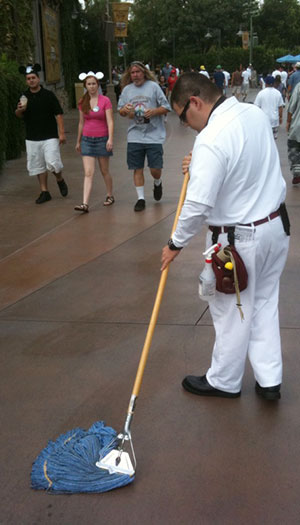
Today, on assignment in Disney's California Adventure, I witnessed this first-hand. The gentleman I photographed here fit that charge to a T. I watched as he mopped the concrete walks. A stubborn stain he spritzed with his spray bottle, and his holster held other tools necessary to do the job as if he were Michelangelo. He even cared about his appearance as he was doing it, and he also worked during lulls in the crowd so his moping didn't interfere with the parks' guests. I watched for awhile, impressed by his overall approach as well as the details he cared about.

Next is Rutger Hauer, who played Roy Batty in one of my all time favorite movies Blade Runner. "The light that burns twice as bright burns for half as long", a reference to Roys' longevity and impending death.

Last up for the day is the tortise and the hare, and that tale of slow and steady over fast and corner cutting is a well known tale. These and so many other parables are guideposts to a future of success in this field.
(Continued after the Jump)


In photography, there are no real short-cuts to success. Yes, there are lucky breaks, yet often, those that experience those do not have the foundations laid for continued success, and often falter.

I'll recount for you a scenario from several years back, to illustrate this point. I had an intern working with me, and this intern had only been in Washington a month or so, and we were photographing the first lady. I was in a holding room doing meet-and-greet images, while the intern was tasked with holding a spot in the room where the press conference was taking place. During that time, my college graduated intern was talking with a young photographer, trying to make idle conversation to pass the time. My intern learned that another young photographer there had dropped out of college to shoot. When this photographer was asked why he would do that, his response was "I'm doing pretty well here, don't ya think? I am covering the first lady!" All in all, the conversational tone was him looking down on my intern and trying to promote his station in life. Fortunately for him, I learned a year or so later, he had returned to school to finish his degree. (Smart move there, if you're reading this and recognize yourself!)

Yes, in a short period of time you can be covering important people doing important things, but if doing so means giving up your rights to your images as a freelancer, or accepting a pay structure that is unfair and non-sustaining, then, as with Roy Batty, you may "burn twice as bright but half as long" and you'll flame out.

Returning to the street sweeper - if you're working for a small paper, a weekly, or doing what some might consider a menial photography-related job, take the sweepers' approach. Do your job well. Earn your respect. Shine brightly as a photographer if you are doing kindergarten snapshots or pet portraits, and you'd rather be photographing CEO's or globe-trotting on an important news story. More than once I've heard of photographers just starting dismiss immediately the notion of working for a small town newspaper, thinking it beneath them and instead believing they were owed a spot at a bigger named publication. Further, far too many photographers believe they are owed something, and that not only should they get a second chance when they screw up, but that they deserve a second chance. They also believe that it is their God-given right to be the next New York Times staff photographer. When you catch your lucky break, if you want to maintain the momentum that the break created, remember this - luck is what happens when preparation meets opportunity.

Please post your comments by clicking the link below. If you've got questions, please pose them in our Photo Business Forum Flickr Group Discussion Threads.


[More: Full Post and Comments]

Monday, July 20, 2009

Distinguishing Yourself

While I spent the formative years as a photographer switching seamlessly between my Hasselblad and my 35mm film cameras, frankly, my preference for shooting, for example, weddings, was 35mm. I was of the opinion that I could be more free and able to catch that fleeting moment with a 35mm autofocus camera, than my manual focus Hasselblad. Yet, somehow, when I sat down with a prospective bride and groom, they asked about my camera. "Will you be shooting with a medium format camera?" was the question. The reality is that I could have said yes, and turned up with my 35mm and they would not have known the difference. Yet, somehow (whether a magazine article, or another photographer) they had been told that photographers using a medium format camera were somehow distinguished as more of a professional, and the quality of the work would be better.

When I talk to a prospective client for an ad shoot, there are ways to distinguish yourself too.

(Continued after the Jump)


"we'll of course have a certificate of insurance for this shoot incase there is an issue, and I want to encourage you as you're talking to other photographers to be sure they have that too." A full 50% of any collection of photographers I am competing against for work will not only not know what that is (a COI) when the client asks, but won't have the ability to get one either.

About the only time having a diploma from a college from the standpoint of getting a job is when you are trying to get a full-time job at an organization with an HR department. In 20 years as a photographer, I have never had any client ask if I have a degree, let alone a degree in photography.

One of the great things that the Professional Photographers of America (PPA) does is they have a certification program. Their Certified Photographer program gives you a variety of designators that follow your name. So, just as there is "PhD", or "Esq" as a designator after your name, so too is there "CPP", which stands for "Certified Professional Photographer". PPA encourages you to distinguish yourself thusly - "It’s like quality assurance because certification is a credential consumers and businesses understand. More importantly, it provides you with a tool for telling the world—and all those potential clients—why they should call you rather than the competitor down the street." PPA has other designators as well, "M Photog. Cr" which is "Master Photographer Craftsman", and others. The key here, is to actually market your credentials.

If you are in the enviable position where you know the client is only calling you, then saying something like "and be sure when comparing us to others..." you give them idea that maybe they should. I often ask "are you just talking to me, or are there others you're considering?" Often, I get "I was referred to you by several of my colleagues, and I haven't called anyone else." If, however, I get "we are talking to several other photographers", then I know it is time to set forth my credentials. Sometimes, when the location is a hotel venue, you can define yourself easily by saying "oh, we've worked in that ballroom several times, and are very familiar with that space. The location is tricky because.....so be sure you're talking to other photographers who have worked there before." Or, it could be "...that hotel requires all vendors have a COI, and we've provided ours to them previously...". Or, it could be that you distinguish yourself by saying "as you're talking to other photographers, be sure they are certified as a professional photographer. We are, and it's a characteristic that ensures you'll get a level of quality over taking your chances with another photographer who is not certified."

Besides the PPA certifications, utilize your memberships in professional organizations. "We are members of the American Society of Media Photographers..." or "We are members of the National Press Photographers Association", and then there's "We are members of the Advertising Photographers of America". Each of these distinguishes you as a professional, to one degree or another, and demonstrates your commitment to being a full time professional photographer.

Maybe though, you have none of these memberships or credentials? "I was a staff photographer at {insert publication name here} for X years...." is a distinguishing characteristic. Or, "my website demonstrates that I specialize in {insert type here} photography, and I would love to bring that specialization to this assignment."

The key is to know your prospective client type, and convey to them reassurances that you are indeed capable, skilled, and reliable for the photo shoot you are being considered for.

Please post your comments by clicking the link below. If you've got questions, please pose them in our Photo Business Forum Flickr Group Discussion Threads.


[More: Full Post and Comments]
Older Posts