Thursday, December 4, 2008

A Holiday Present For Former Staffers

While I grew up on an island on the Pacific Rim (Alameda, California, in the SF Bay, to be exact) two of my distant island colleagues - Baron Sekiya, on Hawaii, and Tim Clayton on Austrailia (actually an island continent) have departed the field of staff photographer recently. Baron wrote about his experience - Life Beyond the Newspaper, while Tim wrote about his - Do I stay or do I go? Both talked about the struggles of making the break, and all that you have to do, which got me to thinking - what can I do to help those that are departing the comfort of the staff position to make the transition? I once was a staffer at a magazine, and abruptly lost my full-time status due to financial difficulties at the publication, only this was about 15 years ago. And, for me, so far, so good.

Which brings me to my free offer.

(Continued after the Jump)

If you are someone who has left the comfort of a staff photography position from November 1st of this year, and through January 31st of 2009, I will send you a copy of my book for free.

Yes, free.

Here are the details:

You have to have either been laid off or opted to take a buyout in some form or another. If you got fired for stealing, or manipulating photos or that sort of thing, you're out of luck. You'll need to send me a link to a recent photo of yours at the paper (or magazine) online, and I am only giving it to you. If you already bought a copy, well, then you get my thanks, this offer isn't transferrable. I have no idea how many people will take me up on this, but if it gets over a hundred, I'm going to have to include the condition that this offer could end without further notice.

Where will I get the books? Amazon. I have already given away over 200 free copies since it came out, and so once I've confirmed you're a legit former staffer somewhere, you'll get an Amazon gift card via e-mail for the cost of the book. There'll be a lot of the honor-system going on here. One per customer, please. Once you get it, for a start turn to page 71, the section titled "Transitioning from a Salaried Staff Position to Freelance." Then, begin at the Introduction. If you are curious what I am talking about, hit this link and then enter in "71" in the search to see what I am referring to.

Why am I doing this? Because it might make a difference to someone who just feels like they got kicked in the teeth after 15+ years of commitment to a paper, and it might make them feel a bit better. Heck, it might help some amazingly talented photographer continue to contribute to this profession that I love so much, and to continue to be able to make a difference with their images.

Happy Holidays, friends.

Please post your comments by clicking the link below. If you've got questions, please pose them in our Photo Business Forum Flickr Group Discussion Threads.


[More: Full Post and Comments]

Wednesday, December 3, 2008

Usage: With & Without Permission

I was struck by the article in the UK's Guardian recently, titled "Is a picture really worth £1,000?", and sub-titled "A church and small businesses are just some of those accusing picture agencies of using heavy-handed tactics when pursuing payment", and I thought - "heavy handed?"

The article then goes on to attempt to diminish the value of the photographs, in an attempt to make those insisting on payment look ridiculous.

But they're not.

(Continued after the Jump)


If I say "my photos are worth $1m", then that's what *I* value them at. For some form of validation, I have to convince someone to pay that. Once they have, then, regardless of what you think, they are worth that much - atleast to somebody.

The criticism though, comes in, when it's suggested that a photo should have been valued at $50 - had the license and permission been recieved before-hand, and that the rights-holder - in this Getty Images - was now demanding 1,000 pounds. What is the purpose of this?

It's short-hand for "we will sue you, but if you want to make a retro-active license for it, we'll do that for that much."

What is the purpose for this? To deter future infringement. In the article, one of the parties involved in an infringement wrote about the churches that are involved "now regularly reminds all churches to ensure that all the images they use are fully licensed."

Lesson learned.

The purpose in Copyright, generally speaking, when courts grant punitive damages (and this is where all those $150,000 per infringement pie-in-the-sky copyright infringement ideas come from) is as a punishment to deter future infringements. Is it ever that much? Not very often, but it's a big stick that forces infringers to pay attention to the lawsuits, and come to a settlement.

Lofty figures, whether during an infringement suit, or as an offer of a retro-active license, are put forth to deter future people from doing it, and then just paying when they're caught red-handed.

Should you do a retro-active license?

If you do, be very careful. Your offer should be a part of an "offer in settlement" between you and the other side, because if you don't define it in that scope, your offer could diminish the future court case because figures that are a part of an "offer in settlement" are not disclosable in court proceedings. Further, if you do do this, make darn sure that you are excruciatingly specific about the use, and that, as a part of the retro-active license the other side certifies that they have not previously infringed your works, and are not currently infringing your works, and that this offer in settlement is specific to that one use, and that any other infringements will be handled separately. Often times, having an attorney handle these issues where your claim is in the $1k range, will be well worth the letter an attorney might charge you $250 for. All of this rides, however, on the fact that you are registering your images and have the teeth to back up the larger looming claim if they don't settle.

As always, talk to an attorney about your specific situation, since I am not one.

Please post your comments by clicking the link below. If you've got questions, please pose them in our Photo Business Forum Flickr Group Discussion Threads.

[More: Full Post and Comments]

Sunday, November 30, 2008

CNNwire - CNN enters the Wire Service Game


There is a lot going on in the news world these days, and one of the things that struck me as remarkable is that CNN has decided to enter the wire service game. They have economies of scale to depend upon, bureaus in many locations, data networks, storage facilities, and so forth.

In a "newspaper summit" set to begin today, December 1st, and continuing for 2 1/2 days, it's an all expenses paid trip to Atlanta for those with an invite, and CNN will be pitching newspapers on its' cheaper service. Cheaper, that is, than the AP (who is losing member papers), Reuters (which CNN dumped last year, saving $3.5 million), and AFP and Bloomberg as well.

(Continued after the Jump)

They are staffing up their newsdesk (check this link for a few of the job listings) and hiring left and right. Staff jobs, yes.

The AP, especially in the US, stands the most to lose. Both Reuters and Agence France Presse are euro-centric wire services, with some in-roads into the U.S., but not to the depth and breadth that the Associated Press has. United Press International is all but irrelevant these days relative to them, and the service Bloomberg offers is mostly a financial one. So, the AP stands mostly alone in their risk for an across the board US-competitor, especially with the brand recognition that CNN brings to the table. Moreover, CNN images - taken from stills and standard-definition cameras, have been gracing the pages of newspapers across the country already. As CNN migrates all of their cameras to HD, the images they can pull from video will increase in quality, and this doesn't even consider the still-image assignments that will be produced by new CNN staffers with still cameras, and reporters to boot. As papers migrate even more of their content to the web, the resolution will become even less and less of an issue as well.

It's a welcome addition to the breaking-news arena, and the fact that they are "staffing up" is a good thing. Whether those staffers are both editors and photographers, or just editors, remains to be seen. Atleast on the outset, having staff photographers will be important to convince prospective subscribers that CNN is serious about original content. Like a restaurant that opens and offers free valet parking, it shows a commitment to the customer. Down the line, they can charge for the valet parking, or do away with it and let people fend for their own parking spot. For now, I would expect paid staffers to begin shooting for CNN in the not to distant future.


Related Stores:
Content Bridges - Nine Questions: How Will CNN Change the Wire Game?
Editor & Publisher - CNN Courts Newspapers With New Wire Service
New York Times - CNN Pitches a Cheaper Wire Service to Newspapers


Please post your comments by clicking the link below. If you've got questions, please pose them in our Photo Business Forum Flickr Group Discussion Threads.


[More: Full Post and Comments]

Adobe & Futurecasting

Often we wonder "what's next?" in our chosen profession, and the consensus seems to be "video", in one form or another. I just finished a 25 minute Ken-Burns-esque video for a client that I am delivering this week, which uses 400 stills from 5,000+ images from a recent assignment. In addition, we've integrated video capabilities into our service offerings to clients in DC, but the uptake on that segment of our business - at least right now - is minimal.

When we ask Adobe "what's next?" for upcoming versions of software, they demur and don't answer, or they are coy about exactly what will be next in a roundabout way, with a wink and a nod. Here though, is a cool video that demonstrates what they're working on over at Adobe - an example of the increased openness we're seeing from the company. This, I believe, is a good thing.


Interactive Video Object Manipulation from Dan Goldman on Vimeo.

(Comments, if any, after the Jump)


Please post your comments by clicking the link below. If you've got questions, please pose them in our Photo Business Forum Flickr Group Discussion Threads.

[More: Full Post and Comments]

Saturday, November 29, 2008

As Storage Costs Decline, Alamy Takes Mo' Money

Yes, as the costs of storage continue to decline, as well as the costs for server technology as well, it would stand to reason that your partner in stock image licensing would share in these cost savings by giving you, say, a greater piece of each sale? Then again, why bother. They've gotten to be so big that they can just do as they please, and take more of your money. What are you going to do about it? Go to Getty?

(Continued after the Jump)

Perhaps I am harkening back to days gone by where these organizations were "representing you", as your "agent", and looking out for your best interests. That notion was decimated by how Getty handled (and continues to handle) its' stable of photographers. We wrote about this back in September (Alamy, Oh My!, 9/28/08), about this same 5%, and they wrote on their blog here about the 5% from September, and here just recently, to remind you. The e-mail they just sent out, in part, reads:

The key changes are listed here: http://www.alamy.com/notice-board-1108.asp

We advise you to review the new contract here: http://www.alamy.com/terms.asp

The changes take effect on January 10th 2009, 45 days from November 26th 2008.

We recommend that you read through the changes thoroughly and print off a copy of the new contract for your records, there is no need for any further action on your part.

The key reason for issuing a new contract is the 5% increase in Alamy's commission on all commission schedules as announced on our blog.

The following commission splits will apply from January 10th:

- Alamy Blue: Alamy commission 40%, Contributor commission 60%
- Alamy Red: Alamy commission 20%, Contributor commission 80%
storage fees and submissionfees still apply
- Alamy Green: Alamy commission 30%, Contributor commission 70%
storage fees still apply

What is a mis-representation is that Alamy is not increasing their commission by "5%", they are increasing it by 5 percentage points, and there's a big difference.

Consider this. A sale of $100 where the commission was 40% to Alamy, that would mean they would get $40. a 5% increase in what they are getting would increase $40 by $2. A 5 percentage point increase would increase the $40 to $45. So, they are taking an additional 12.5%, not an additional 5%. They are playing games with statistics, making it appear like it's less of an increase than it is. What this means is that you won't see a 5% decrease in your actual dollars received, you'll see a 12.5% decrease in actual dollars received. So, for every $100 you used to get, you'll only be getting $87.50. Curb your holiday spending accordingly.

What's next? A Windows Home Server , which I wrote about (Microsoft Pro Photo Summit2008 - recap, 7/11/08) is something we've put in place here in the office. The box has four 1TB drives, and three Iomega 1.5TB drives, for about 7.5TB of storage space, all accessible to me from anywhere in the world. This is seperate and distinct from my ability to use "screen sharing" on my Mac and connect into the computers in my office.

What I think will be next will be that Alamy/et al will give you X% if they host it, and X% plus an additional percentage point or two if you host it - a sort of distributed computing/peer-to-peer network. All Alamy would need to do is set up a P2P solution and all of a sudden you are being required to host the images, and they become the distribution hub, and collect fees as the requests pass through their servers.

Please post your comments by clicking the link below. If you've got questions, please pose them in our Photo Business Forum Flickr Group Discussion Threads.


[More: Full Post and Comments]

Friday, November 28, 2008

Nikon D3x - It Has Arrived!

Whispers of a Nikon D3x have been floating around for some time. It was first rumored to be coming out in time for the Olympics, and was anticipated between March and June of this past year (Nikon D3x - impending announcement, 4/16/08). Sources suggest that there was a decision to delay that announcement. Some have suggested it was to give the D700 some legs and some suggest they wanted the excitement to be about the D90. Still others surmised that there were details they wanted to work out to ensure a timely delivery date after its announcement.

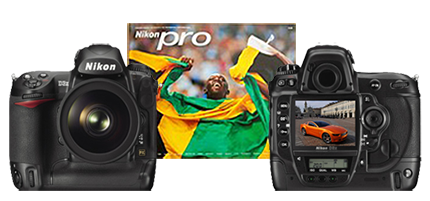
Regardless of the reason, official word has come out - the D3x has arrived in the form of NikonPro magazine with all the details and specs. Hit the jump for the specs, and more thoughts on what this means moving forward.

(Continued after the Jump)

The first thing that struck me was the statement that leads off the third paragraph - "The D3x was designed with medium format photographic applications in mind." This statement is two-fold in its' intentions. 1) Medium format photographers should welcome a 24.5MP chip as a suitable replacement for their medium format cameras. But, the real reason, in my estimation, is this: 2) to set expectations in that arena, and not expect a 24.5MP edition of the D3.

Everyone was blown away by the insanely high ISO of the D3, and the D3x had to make some accommodations for the larger chip, in the form of a reduced ISO range. A stated range of 100-1600, with low/boost settings allowing for 50-6400 illustrate some of the likely technical limitations of a chip this size at the higher ISO ratings.

Here's the basic spec rundown:
  • 24.5-megapixel shooting at up to 5fps; cropped 10-megapixel shooting at up to 7fps
  • Custom-built Expeed 16-bit processing to handle detail on the 75MB image files
  • ISO range of 100-1600 with a Lo1 (equivalent to ISO 50) with boosts up to ISO 6400
  • Writes files to dual CF slots at 35MB/s
  • Same lithium-ion battery as D3
  • 51-point MultiCAM3500FX autofocus system
  • Scene Recognition System
  • 3-inch, 922,000-dot LCD
  • 35.9mm x 24mm FX format sensor (If you can't think in metric, that's 1.4" x 0.94")
  • Weather-resistant magnesium body
  • Designed for medium-format shooting
  • 12ms start-up time; 41ms shutter-release lag time
  • USB 2.0, HDMI and AV-out jacks, with 10-pin terminal for GPS and other accessories
  • World’s highest-res SLR with Live View at 922,000 dots in the LCD
One of the points missed and I think is of value (I talked about its benefits when reviewing the D700 here- Nikon D700 Report) is that you can use the new GP-1 GPS Unit with this (goes back to the D200 as well) to geo-tag your images.

Also worth noting is the compatibility with the D3 batteries. It seems Nikon is finally happy with their battery configuration, and isn't changing it again. Also unchanged (and would you expect any less?) is the lens mount. Yes, you can go back to any F-mount lens you'd like. On top of that- Nikon's EXPEED engine is designed to minimize the effects of color fringing for those lenses specifically. How's that for taking care of legacy customers? That's a definitive pro-consumer decision - enhancing the ability of lenses they've already sold which might otherwise cause someone to decide now is the time to upgrade a lens. Nice move Nikon.

What does this portend for Canon?

Well, this chip-size is larger, by about 3.5MP. Ok, so what. The pixel game is essentially over. What continues to be the battleground will be clarity of files (can you say Foveon technology anyone?), high-iso noise (and Nikon, with the D3, set the equivilent of Kodachrome 25 as the benchmark for future noise measurements) concerns. What the Wikipedia article notes (and a citation is indicated it's needed) is that a Kodachrome 25 slide on 35mm will hold detail equivilent of 25MP or more of image data. This is in line with information I gleened from meetings over a decade ago with people in the production department at National Geographic, who gave as a guidepost the maximum size of an RGB 8-bit file from a 35mm slide as being 60MB, or 20MP. Thus, at more than 20MP, in my estimation, size is no longer the issue. What's next? Video.

So, why no video on the D3x? We can guess a lot of reasons. My guess is that it's a fun pro-sumer capability that is getting tested in the D90, and when the D800 comes out, it will have video capabilities comparable to the 5D Mark II. As throughput on CF/SD cards gets better, and the price of cards plummets to a negligible amount, it might be a feature that a pro would want, but I am guessing that the jury is still out on that for the flagship editions of Canon and Nikon cameras. I for one am not bothered one iota at video missing from the D3x DSLR.

The one remaining question is one of price. The D3 was introduced at $4,999, and you can get one for around $4,100. Competitors the Sony A900 with a 24.6MP chip is the low-price point here, at $2,999. While Sony has made significant inroads in Europe (see our video interviews here and here from PhotoPlus on the A900), I surmise that they are coming in very low to get into the US market, because traditionally Sony is the premium brand premium priced product. Canon, on the other hand, has dropped down to under $7k, with demo and other used excellent-rated used systems at the $5,600 range. I think we'll know much more come Monday, when Nikon has scheduled announcements. We can only guess that that announcement will be the same as what the mailbag brought to doorsteps today in the form of the Nikon Pro magazine. We just await pricing and delivery dates. Nikon Rumors is reporting one UK retailer suggesting £5,500 as the price, which equates to $8,466 USD.

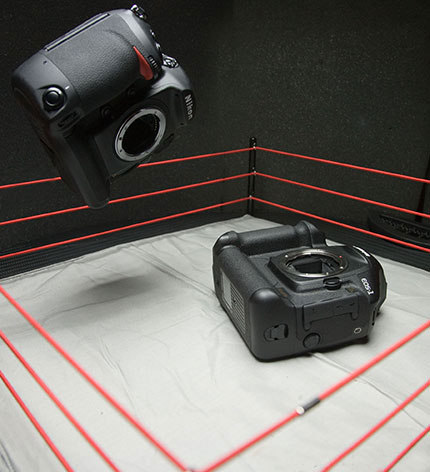
Look for a head-to-head like we did just a year ago(Nikon - a first look, 12/8/07) when we concluded that the D3 beat out the EOS 1Ds Mark III. So, it's time for a re-match in the ring.


UPDATE:
The D3x has an estimated street price of $7,999 USD, and you can learn everything you need to know (atleast officially) here - Nikon D3x Official webpage.They also have a micro-site here.
The delivery date is stated to be December of 2008, and it has been suggested that it will be before Christmas.

Please post your comments by clicking the link below. If you've got questions, please pose them in our Photo Business Forum Flickr Group Discussion Threads.


[More: Full Post and Comments]

A Free Read: Best Business Practices for Photographers

For those of you looking for specific guidance on a particular point, Amazon has put my book in their AmazonOnlineReader - Best Business Practices for Photographers, so you can read it online to your hearts' content for free.

You can search for any term or word, browse the table of contents, and generally just browse it. It remains among the top ten books in "Books > Arts & Photography > Photography > Professional" (thank you very much dear readers), and, for under $20, you can buy it at this link - Best Business Practices for Photographers
- and have it laying around your house to enjoy at your leisure.

(Comments, if any, after the Jump)


Please post your comments by clicking the link below. If you've got questions, please pose them in our Photo Business Forum Flickr Group Discussion Threads.


[More: Full Post and Comments]

Wednesday, November 26, 2008

And The Battle Rages On

There is a lot going on in the great and nebulous cloud in the sky, and not all of it is good. Yes, some taste the sweet nectar of power, and are driven to corruption for their own personal gain. Some try and fail to succeed, and blame the system. What is key, as I sit and contemplate how this applies to the future of photography and it's many aspects, is that there must be a mutual effort to be made - one is the success of one both personally and professionally, and the other is the success of this ever-changing field of photography. The two are not mutually exclusive, lest you subvert the good of the whole for your own gain.

There are those that are the lap-dogs of the status quo, unwilling to take a principled position, or fight the good fight. They take the easy road, without confrontation or sincere criticism, simply interested in making it just one more day.

Then there are the turncoats. They profess to be the do-gooders, the righteous, and are indignant that anyone question them. They may do some good, but all-the-while they are seeking their own expanded power base, and are undermining those they profess to want to help. In the end, there's a net deficit to the collective good that is laid at their feet, and they kick it away, saying it wasn't their doing, knowing all-the-while that anything that stands in the way of their success is to be climbed over, not realizing that it will be their undoing.

On the other hand, there are the titans of industry, who profess to know more than the little people, and who believe that the masses are to be lead, like lemmings, to whatever shifting destination they desire, and which serves their own greater good. Yet they lead, to a degree, not a body of passionate "soldiers", but of a somewhat conscripted army ill-equiped to fight, and then blame the solders for their own demise, unwilling to accept any blame for failure to ready those soldiers for battle.

Then there are the outposts of resistance. Those that are deemed to be the gnats and flies, to be swatted away. The David to Goliath, the John Conner to SkyNet, Luke and Leia to the Empire. History is repleat with stories of the swattable interlopers affecting change and making a difference.

Unbeknownst to many, these outposts are out there, fighting the good fight, each and every day for the profession they love. The rag-tag group of people of singular focus on what is good and right. They are well educated, and they have their mission clear. Attempting to silence one only grows the resistance that much stronger. A modern day Knights Templar if you will (with a more positive outcome some 700 years later, one can only hope.)

The battle indeed rages on. You may not see it, hear it, or feel it, but you hopefully will be the beneficiary of the wins, and insulated from the losses. While there are many things to be thankful for, to paraphrase Robert Frost, "there are miles to go before you sleep". Reflect in your quiet moments of all the good things in your life, but know that all the while, those that are working to undermine you are not pausing to reflect - they are gathering their strength for coming battles. This may be metaphorical, but its effects, if ignored, will be real.

(Comments, if any, after the Jump)


Please post your comments by clicking the link below. If you've got questions, please pose them in our Photo Business Forum Flickr Group Discussion Threads.


[More: Full Post and Comments]

Tuesday, November 25, 2008

Marketing: Success Depends on the Details


How often are you reminding your clients that you are still alive? That you still want their business? As the playing field continues to evolve, reminding clients that you are still out there, working hard, and looking forward to working for them, is important.

Many people who find themselves a bit slow, are (hopefully) finding the time to do some much needed marketing. And for those who are still busy? You should be marketing when you're busy - in fact, you shouldn't stop marketing at all. The key, is to be thoughtul about your promotional campaign.

So, what details will help you be the most effective? How frequently? When? How?

(Continued after the Jump)

We've done a fair amount of research on the subject, and here are some significant statistics that have born themselves out to be true from multiple sources. You can find more stats at EmailStatCenter.

Monthly emails and content and frequency options positively impacted a company's reputation. - Habeas (2008)

Wednesday was the best day of the week in the third quarter of 2007 to send email in terms of click (3.9%) and open rates (25.4%). - eROI (2007)

Most marketers send email to their customers once a week. - Shop.org, State of Retailing Online 2007 report (Sept. 2007)

45% of small businesses execs want to receive the (email) newsletter weekly, 34% said monthly. - Bredin Business Information (2007)

63.8% of retailers conduct up to three email campaigns each month. - Internet Retailer (Aug 2006)

79% of the respondents said they hit the "report spam" button when they don't know who the sender is. - Email Sender and Provider Coalition (2007)

21% of the emails reviewed appeared completely blank when images were turned off, or stripped inside a variety of email clients. - Email Experience Council (2007)

44% of email users said email inspired at least one online purchase and 41% said it prompted at least one offline purchase. - JupiterResearch's The Social and Portable Inbox (2008)

66% of those surveyed said they had made a purchase because of a marketing message received through email. - ExactTarget, "2008 Channel Preference Survey" (2008)

For advertising-oriented lists, 57% of marketers surveyed said that "emailing unique content by segment" produced routinely justifiable results. - MarketingSherpa "Email Marketing Benchmark Guide 2008" (2008)

69% of at-work email users usually view emails in their preview panes. - MarketingSherpa (2007)

80% of at-work users in the US rely on Outlook, which offers preview panes. - MarketingSherpa (2007)

Most common screen resoltion is 1024 X 768. - OneStat.com (April 2007)

64% of key decision makers are viewing your carefully crafted email on their BlackBerrys and other mobile devices, according to new data. - MarketingSherpa, in partnership with SurveySampling (2007)

64% of online merchants keep key points of content high up in the body of the message. - Internet Retailer (2007)

Utilizing a professional company and/or their tools to test your image rendering across multiple email clients often helps to increase response up to as much as 87%. - Email Experience Council - Email Rendering Report (2007)

A typical landing page visitor spends only 5 seconds on the page. - Marketing Experiments

Seven in 10 US Internet users said they judged these "from" and "subject" lines when deciding whether to report an email as spam. - E-Mail Sender and Provider Coalition and Ipsos (December 2006)

64% of small businesses execs said they decide whether or not to open the (email) newsletter based on who it's from. - Bredin Business Information (2007)

40% of marketers restrict their personalization efforts to the salutation. - Responsys Survey: The State of Personalization (2006)
While there is a lot more insightful information at EmailStatCenter, these are several of the items that are applicable to what we do. Keep in mind while reading items, that there's a difference between B2B and B2C, and you need to know which of these markets you are reaching out to, and segmenting and designing your outreach specific to them. Also take note - some of the above details are about retail marketing, so consider how that might be different from your efforts, if it is.

While it may seem obvious to many, for example, that sending a B2B e-mail at 10pm on a Friday night is a bad idea, knowing how to fine-tune your delivery time and day is important. Knowing as many details as possible helps increase the efficacy (and thus ROI) on your marketing campaign.

As to the "How?" There are several photo-centric services. Adbase, which we've mentioned and reviewed before, as well as AgencyAccess. Read their FAQ's, their white papers, their help pages, their how-to's. Getting it right in your outreach to new and old clients is critical. Put your best foot forward, and do things right, it's your future we're talking about.

Please post your comments by clicking the link below. If you've got questions, please pose them in our Photo Business Forum Flickr Group Discussion Threads.


[More: Full Post and Comments]

Friday, November 21, 2008

Star-Ledger: It's a Team Effort

There have been a variety of comments on the subject of Assistant Deputy Photo Editor Mitchell Seidel (LinkedIn: Profile), as reported in Editor & Publisher (Buyout-Depleted 'Star-Ledger' Reassigns Two Journos -- To Mailroom, 11/19/08) now working in the mailroom.

Many reports and comments I've heard centered around the ha ha, isn't that funny, and the is this what they went to college for, kind.

As I sit back and contemplate the evolution and the changes that are taking place, I see Seidel doing exactly what he should - pitching in WHEREVER he is needed.

(Continued after the Jump)

Feel free to mock him if you'd like (and I'll watch your karmic savings account self-deplete), but in this downturn, what Mitchells' actions are saying is "I will do anything - whatever it takes - to keep my job and my paper alive." His actions most definitely are speaking louder than words. Mitchell is not above this "type" of work. None of us are above it. Heck, next they should slash the cleaning crew, and let everyone on their way out of the office at night empty their own trash. What a cost savings that would be.

Mitchell - hats' off to you and your 28 years of service to the Star-Ledger. You epitomize what it means to be a team player.

Please post your comments by clicking the link below. If you've got questions, please pose them in our Photo Business Forum Flickr Group Discussion Threads.


[More: Full Post and Comments]
Newer Posts Older Posts