Wednesday, September 23, 2009

Chase Jarvis Rocks It With His Best Camera Application
As someone who, in fact, carries his iPhone everywhere, Chase is right, with his now trademarked phrase "The Best Camera is the one with you" (yes, he did trademark it!). Chase is also right that all the apps out there are missing bits and pieces, and he brings it all together in the app, which you can learn more about at www.TheBestCamera.com.


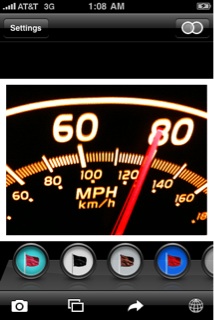
I downloaded the app on my way to New York yesterday, and it is amazingly intuitive. I have multiple apps already, with my favorite one before this being Camera Bag, however, this one just does a great job all around, especially on the sharing front. At left is a nifty screen shot of the app in use with a photo of my speedometer as I was headed home from NYC on the NJ Turnpike, inside the Best Camera app.
(Continued after the Jump)


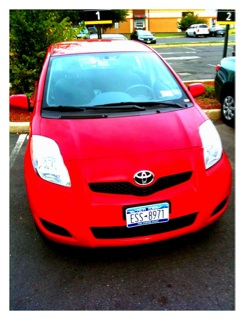
The app does a REALLY great job of lighting up shadows in images, and the warm/cool and candy settings are great, but watch out for an over-use of the candy setting. One application of that filter on my red rental car that replaced my Jeep that broke down in the middle of the NJ Turnpike when we were northbound to NYC had commenters criticizing the saturated reds. (As for me, I liked it - it represented my anger at the situation I had found myself in, and the clown-car size of the sub-compact I was stuck renting to get to NYC in time!) Also, playing with the app distracted me from my frustrations - my creativity with other photos actually had a bit of a calming side effect!

What don't I like? Not much. All around, it is the best application out there. One thing I wrote to Chase about was that every photo lists the photo as "Photo from Chase Jarvis' Best Camera", and he indicated that that will change in a few days with a "0.1" release, as it was coded that way by accident. Even when you input a caption in the app, it does not make it to facebook, however, you can easily edit the caption on facebook after the fact. The only other thing is that the crop tool just crops square arbitrarily. I would love to be able to select my crop and dimensions, and I suspect that will come as an enhancement very soon. the entire interface is so intuitive, with easy to understand visual cues as to what each filter does, and the fact that you can stack them.

Run, don't walk to get this app, and begin sharing your photos on Facebook and Twitter much easier than ever before. Don't have an iPhone? Too bad! Who knows if he's going to do a version for other phones, so go get an iPhone so you can use this app. Chase also has a pretty cool social networking site where you can see what other people are shooting and sharing, as well as the most popular amongst those. In addition, he has this book (at right) that is worth checking out as well!

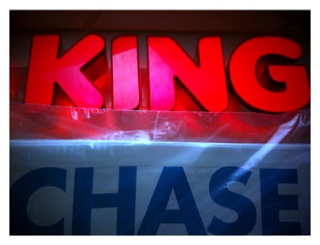
Lastly, it wouldn't be "total Chase" without a cool video to accompany this, so check the latest from Mr. Jarvis out below. As I note, in my 1am photograph taken at the Burger King along the turnpike, using a newspaper front page, he really could deserve, in some creative realm, the title "King Chase"!


Please post your comments by clicking the link below. If you've got questions, please pose them in our Photo Business Forum Flickr Group Discussion Threads.


[More: Full Post and Comments]

Monday, September 21, 2009

Photography As Art: Sotheby's Auction Listings

In a sign that photography is being accepted by the art world as, well, art, Sotheby's is holding an auction of an amazing collection of photographs, with details and an online catalog available for browsing here.

Below are the details, and it's an interesting browse, as well as what the valuations are estimated to be. Click on the individual photograph to see the dollar figures.

Sotheby's NYC
Fri, 9 Oct 09, 10:00AM (Lots 1-102) & 2:00PM (Lots 103-243)

Sotheby's October 2009 sale of Photographs features an exciting selection of masterworks by some of the most important and innovative of 20th-Century photographers. Paul Outerbridge's Nude with Sculpture Head combines the photographer's technical rigor with his distinctive, frequently Surreal, aesthetic. Man Ray's Lee Miller and Friend links the Surreal with the sensual. In Eleanor, Harry Callahan creates a multi-layered double-exposure study of his wife and muse. Work by László Moholy-Nagy, Edward Weston, Ansel Adams, and Pierre Dubreuil illustrates the range and diversity of the Modernist impulse in photography. Contemporary work includes images by Cindy Sherman, Chuck Close, Hiroshi Sugimoto, Peter Beard, Robert Mapplethorpe, and Helmut Newton. Also on offer is the complete set of fine books and portfolios published by 21st Editions, each illustrated with original photographs and photogravures by a variety of contemporary photographers.

Nineteenth-century offerings include a daguerreotype of Maungwudaus, a chief of the Ojibwa tribe, who performed Native American dances in Europe and the United States in the 1840s. Masterful landscapes by Carleton Watkins and Henry P. Bosse, as well as a rare and early Lincoln portrait, are featured as well.
Remember, folks, you can't sell your work as art if you gave away the copyright, but the people you sold it to can.
(Comments, if any, after the Jump)


Please post your comments by clicking the link below. If you've got questions, please pose them in our Photo Business Forum Flickr Group Discussion Threads.


[More: Full Post and Comments]

TOMMORROW - NYC Presentation: The Art of the Deal

Interested in knowing more about how to negotiate with your clients? How to more clearly license your work? TOMORROW, 9/22, in the evening, I am presenting The Art of the Deal at Adorama, Sponsored by Nikon.

Here are the details:

The Adorama Building
42 West 18th Street - Between 5th and 6th Avenues
5th floor
New York, N.Y. 10011
Event Description:
Join John Harrington, author of the best-selling ‘Best Business Practices for Photographers’, for an insightful and solutions-oriented presentation on how to generate more revenue from the assignments, through pricing examples and discussion, negotiation strategies, and demystifying licensing of your work.

Unlock the mysteries surrounding how to price your work, and learn ways to negotiate from a position of strength. When it comes to licensing, how do you write a license that gives the client the permissions they paid for, without leaving loopholes you could drive a truck through?

Through a series of actual negotiated assignments, we will break down the negotiation and explain how to plan for the questions you'll get, and to know the best ways to answer them. When it comes to pricing, there seems to be a world of secrecy around rates. We will discuss solutions for stock and assignment pricing, as well as discuss tools for you to establish your own. When it comes to licensing, we'll discuss and explain the standardized licensing solution that is the Picture Universal Licensing System (or PLUS), and how to write a license, where to put the licensing language, and what the best format will be.Throughout the program, all of these elements will be integrated into each assignment discussed.
To attend or learn more, click here.

(Comments, if any, after the Jump)


Please post your comments by clicking the link below. If you've got questions, please pose them in our Photo Business Forum Flickr Group Discussion Threads.


[More: Full Post and Comments]

Tuesday, September 15, 2009

Ad Agency Cut as Unilever Crowdsources Its Creative

Two and a half years ago, we took to task Five Point Productions, of Cary North Carolina, for their ill-advised free contribution and boasting of the $13 cost to produce a commercial for Doritos' Superbowl commercial (Free photos (and $13 Superbowl ads, 2/1/07), since then, the highlights of their work have been a weak ad for Trans World Radio, a PSA for a radio station, and they continue to use their footage of a promo they did for a local wedding chapel, that we wrote about 18 months ago in our follow-up piece "Superbowl Suckers - One Year Later, 2/3/08. Yet, Doritos continues to milk the concept, touting their successes here. So, let's see - Doritos wins, everyone else gets a nifty t-shirt saying "I'm With Stupid", and an arrow pointing towards the collar area. Five Point learned what everyone that "works for photo credit" or "for the glory" does - doing that work does not pay off in more and better work - even when you are showcased in the Super Bowl ad lineup.

(Continued after the Jump)

Not to be outdone by the Doritos/Frito Lay parent company Pepsi Co, Unilever has upped the anty - firing their entire ad agency to crowdsourcing and a contest, as Advertising Age reports, in Don't Look Now, but the Crowd Might Just Steal Your Ad Account (9/14/09). Unilever's Chief Marketing Officer suggests that this crowdsourcing approach will translate into "outstanding" results, rather than just the "good" results he was getting from his agency, according to the article. In addition, as the article notes "the move to crowdsourcing saves on agency fees." Now, the entire effort has been taken internal, with no outside ad agency handling the media buy, or managing the contest.

Certainly, as entries are submitted, and presumably voted upon, the company's competition will know the direction of a strategic ad, so they can counter-program. Further, just as chinese "sweat shops" of World of Warcraft have sprung up to "farm gold", so too, could a rival agency, for just a few thousand dollars, outsource to Chinese computer users voting to promote the worst ad.

Unilever is penny-wise and pound-foolish here in this move. If they thought that the results from their current agency were just "good", they could have put out an RFP for a new agency to get "outstanding". This is, to say the least, a bone-headed move.

Please post your comments by clicking the link below. If you've got questions, please pose them in our Photo Business Forum Flickr Group Discussion Threads.


[More: Full Post and Comments]

iStockphoto Indemnifies Clients Up to $250k

iStockphoto has stepped up their efforts to woo wary would-be clients by indemnifying them in the event the client gets sued, according to this report by Cnet - iStockphoto seeks profit from others' legal worries - 9/15/09.

The free-wheeling days of free advertising photos being sourced from the likes of Flickr were brought back down to reality after the highly publicized case of Virgin Mobile being sued after they used a photograph of a young girl in their ads without a model release. ( MSNBC - Virgin Mobile sued over Flickr image used in ad, 9/20/07) Further complicating the matter, the photographer, who assigned a Creative Commons Attribution license, sued Creative Commons, because, as this article points out (Flickr User Sues Creative Commons Over License, 10/4/07) "According to the photographer, he didn't realize that by licensing his photos Attribution Only, he was agreeing to commercial uses like advertising....they [Creative Commons] were explicitly targeting non-legally-sophisticated users (i.e., separating their licenses into Human Readable and Legalese) and urging them to use CC's form licenses." The Virgin Mobile case is just one of many lawsuits that have caused a chilling effect for major corporations' willingness to use Flickr/et al images to save a few dollars on the front end only to be hit with big dollar settlement amounts in the end. The AP/Shepard Fairey case (The Associated Press v. Shepard Fairey, 2/4/09), is among others.

(Continued after the Jump)

In one report on a now locked iStockphoto forum thread by Craig Swatton reveals "I was speaking to someone who works in London for a major global firm and on my suggestion they were going to come here for images to put into a presentation but it turns out the firm's global policy explicitly bans istock (along with one of the other main competitor)."

In the iStockPhoto licensing agreement, as of September 15, 2009, it states, in part:
7. Limited Representations and Warranties
(a) The Site acts as an exchange of Content between those who provide Content to the Site and those who wish to use such Content. iStockphoto grants no rights and makes no warranties regarding the use of names, people, trademarks, trade dress, patented or copyrighted designs or works of art or architecture or other forms of intellectual property represented in any Content. While we have made reasonable efforts to correctly categorize and keyword the Content, iStockphoto does not warrant the accuracy of such information.

(b) THE CONTENT IS PROVIDED “AS IS” WITHOUT REPESENTATION, WARRANTY OR CONDITION OF ANY KIND, EITHER EXPRESS OR IMPLIED, INCLUDING, BUT NOT LIMITED TO THE IMPLIED REPRESENTATIONS, WARRANTIES OR CONDITIONS OF MERCHANTABILITY, OR FITNESS FOR A PARTICULAR PURPOSE. ISTOCKPHOTO DOES NOT REPRESENT OR WARRANT THAT THE CONTENT WILL MEET YOUR REQUIREMENTS OR THAT ITS USE WILL BE UNINTERRUPTED OR ERROR FREE. THE ENTIRE RISK AS TO THE QUALITY AND PERFORMANCE OF THE CONTENT IS WITH YOU. SHOULD THE CONTENT PROVE DEFECTIVE, YOU (AND NOT ISTOCKPHOTO) ASSUME THE ENTIRE RISK AND COST OF ALL NECESSARY CORRECTIONS.

IN PARTICULAR AND WITHOUT LIMITING THE GENERALITY OF THE FOREGOING, IF YOU ARE DOWNLOADING CONTENT THAT IS IN A FLASH FORMAT OR FILE (WHETHER .SWF OR OTHERWISE) ISTOCKPHOTO MAKES NO REPRESENTATION OR WARRANTY RESPECTING SUCH CONTENT WHATSOEVER, WHETHER AS TO OWNERSHIP, TECHNICAL OR LEGAL COMPLIANCE, OR OTHERWISE.
9. Indemnification
You agree to indemnify, defend and hold iStockphoto, its affiliates, its Content providers and their respective directors, officers, employees, shareholders, partners and agents (collectively, the “iStockphoto Parties”) harmless from and against any and all claims, liability, losses, damages, costs and expenses (including reasonable legal fees on a solicitor and client basis) incurred by any iStockphoto Party as a result of or in connection with any breach by you or anyone acting on your behalf of any of the terms of this Agreement.


Clearly, some actuary did the math and concluded that the likelihood of an image being used and then a lawsuit being brought was sufficient that they could include, as a part of your $1.00 license to use a photo, atleast $10,000 in insurance, and as much as $250,000 if you are a frequent user of iStockphoto. Likely, iStockphoto is not self-insuring against this, but rather has a specific policy to protect them in these cases.

Interesting, since the v1.2(d) edition of the Flickr/Getty contract, clause 5 says that the contributor:
"Each party represents and warrants to each other that it has the full power, authority, legal capacity and is of sufficient age to enter into the Agreement and perform its obligations hereunder...content will not infringe the copyright of any third party, and will not contain any subject matter which violates any applicable law or regulation and, if released, will not defame, violate the right of privacy or publicity, or infringe the trademark or other personal or property interests of the parties..."
The contract goes on, stipulating that
"Each Party (an "indemnitor") agrees to defend, indemnify, and hold harmless the other Party..." and then goes on "Getty Images shall not be liable for any punitive...damages...you shall bear sole responsibility for obtaining and maintaining adequate insurance for protection of Content. If, despite the above limitations, liability is imposed on Getty Images for any of these reasons, in not event shall Getty Images' liability exceed US$10,000 in the aggregate."
Thus, iStockphoto/Getty/et al are protected because once the end client says "hey, I just got sued for using one of your photos..." Getty will offer to settle up to $250k, and then, in turn, has every right to sue the hobbiest/soccer mom/amateur for whatever they had to spend, plus all their attributable legal fees for handling this. These issues will also likely be reasons for photos getting rejected because of trademarks in the content.

As more lawsuits are filed from Flickr/Creative Commons/Royalty-Free uses of photography, those willing to spend high dollars for pictures will continue to turn away more and more from the penny-stocks, with these tens of millions of images being relegated to school reports and uninformed mom-and-pop shops who don't know what they are - and are not - getting. Atleast they're getting insurance, for the time being.


Please post your comments by clicking the link below. If you've got questions, please pose them in our Photo Business Forum Flickr Group Discussion Threads.


[More: Full Post and Comments]

Monday, September 14, 2009

NYC Presentation Next Week: The Art of the Deal

Interested in knowing more about how to negotiate with your clients? How to more clearly license your work? Next Tuesday, 9/22, in the evening, I am presenting The Art of the Deal at Adorama, Sponsored by Nikon.

Here are the details:

The Adorama Building
42 West 18th Street - Between 5th and 6th Avenues
5th floor
New York, N.Y. 10011
Event Description:
Join John Harrington, author of the best-selling ‘Best Business Practices for Photographers’, for an insightful and solutions-oriented presentation on how to generate more revenue from the assignments, through pricing examples and discussion, negotiation strategies, and demystifying licensing of your work.

Unlock the mysteries surrounding how to price your work, and learn ways to negotiate from a position of strength. When it comes to licensing, how do you write a license that gives the client the permissions they paid for, without leaving loopholes you could drive a truck through?

Through a series of actual negotiated assignments, we will break down the negotiation and explain how to plan for the questions you'll get, and to know the best ways to answer them. When it comes to pricing, there seems to be a world of secrecy around rates. We will discuss solutions for stock and assignment pricing, as well as discuss tools for you to establish your own. When it comes to licensing, we'll discuss and explain the standardized licensing solution that is the Picture Universal Licensing System (or PLUS), and how to write a license, where to put the licensing language, and what the best format will be.Throughout the program, all of these elements will be integrated into each assignment discussed.
To attend or learn more, click here.

(Comments, if any, after the Jump)


Please post your comments by clicking the link below. If you've got questions, please pose them in our Photo Business Forum Flickr Group Discussion Threads.


[More: Full Post and Comments]

Friday, September 11, 2009

Google Analytics 'Missing Manual'


Google Analytics is one of the best things since sliced bread. What if, though, you could see that bread through the plastic wrap, but could only get at a few morsels simply because you couldn't figure out the twist-tie? The folks at PhotoShelter have unlocked the secrets of Google Analytics - for the first time that we know of - with their free eBook explaining how to maximize the GA tools at your disposal.

(Continued after the Jump)

While the PS guide was written after months of research, and follows on their leading role in search engine optimization for the content they host for photographers, the tools and explanations are easily translated to most anyone using GA.

Almost 50 pages of content in total, spread across 3 files that comprise the e-Book, they break down and explain, in easy to understand terms, just how to maximize Google's free analytics tool. Not enough? PhotoShelter CEO Allen Murabayashi is doing a series of free webinars about their efforts and results.

How do you get the free Google Analytics for Photographers e-Book? Click here and enter your e-mail address. I promise it will be worth it!

What is Google Analytics? PhotoShelter CEO Allen Murabayashi explains it best "Smart photographers are realizing that a website is much more than just a digital portfolio where you show pretty pictures, but rather a powerful marketing tool that requires constant optimization,” he explains. “When a photographer adds Google Analytics, they gain the same type of data that the world’s greatest marketing organizations are using to make their websites more effective.” The PhotoShelter press release gives you more information - "With the insights from Google Analytics, photographers can easily determine the best sources of website traffic, top performing marketing investments, search keywords used by visitors, most engaging content, why visitors are leaving, and more. Used properly, Google Analytics data can help photographers dramatically improve their website performance and make critical decisions that grow their businesses."

Thus, in a nutshell, a website without Googles' free Analytics is like making pictures and guessing if the focusing ring is in the right place or not. Not partaking in this, and the rest of the free photoshelter research would be a fireable offense if you weren't self-employed.

Please post your comments by clicking the link below. If you've got questions, please pose them in our Photo Business Forum Flickr Group Discussion Threads.


[More: Full Post and Comments]

Associated Press and PictureGroup Form Distribution Alliance

September 10, 2009 the AP places another feather in their cap as they sign a distribution deal with one of the leading music and entertainment photographers – Frank Micelotta – as he formally launches PictureGroup. AP is just ramping up their NFL deal that they spirited away from Getty Images (The Associated Press and the NFL, 4/15/09), as Micelotta, who left Getty back in January, now has launched PictureGroup with an AP Images distribution deal.

Micelotta brings not just his decades of talent and connections to PictureGroup as CEO and Chief Photographer, but he brings together decades of talent from across the country under one umbrella in PictureGroup.

It has been said by many industry leaders that Photo Business News has talked to about this, that Getty Images has such penetration into the marketplace because of distribution, that they would seem to be hard to beat., and PictureGroup would have an uphill battle in gaining traction.

(Continued after the Jump)

Micelotta, despite having many marquee companies and organizations like MTV, BET, Comedy Central, FOX, MySpace, Columbia Records, Jive Label Group, RCA Records and EMI, would have to convince the prospective buyer to actively visit the PictureGroup site in order to license material. Getty benefits from people already being on their site and performing searches, and while Getty is a known entity and image resource, PictureGroup is not. As such, the concern is that, for example, MTV might benefit from people looking for images specifically from one of their events, but could lose out on the exposure from an MTV image fitting the bill when a search is performed for a celebrity where the event didn’t matter. These searches can reasonably be called unintended-but-beneficial results.This is where the AP distribution deal is remarkably genius.

Under the deal with the AP, Micelotta says “I am also thrilled to be partnering with the world’s largest and preeminent news organization, the Associated Press, and believe that this alliance allows PictureGroup to provide a unique offering to the entertainment industry.” And the AP is equally effusive, “We look forward to working with all of PictureGroup’s photographers to expand AP’s entertainment content, while furthering the evolution of AP Images into a dominant provider of commercial entertainment assignment services,” said Dan Becker, AP’s Director of Entertainment Content.

In one fell swoop, concerns about the count of eyeballs on images vanishes. More than Getty Images, the AP’s AP Images platform has more searches performed, which will lead to more of those unintended-but-beneficial results for picutureGroup and the AP.

Micelotta is not alone in leading this endeavor. He will run PictureGroup with Paul Melcher, who, aside from most recently being the CEO of REX USA, was also was Director of North American Operations and Sales for Hachette Filipacchi Photo Group. Melcher will likely continue to pen his Melcher System blog with his candid thoughts about the industry, and we look forward to those insights.

Micelotta adds “one of the reasons I am doing this is that there is an opportunity in the marketplace that wasn’t being filled, and I was hearing that from my clients. I think it’s really nice that we can start a company like PictureGroup, and hopefully empower photographers a little bit more to be able to run their businesses as photographers again, and have a company that will support them. We plan on supporting our photographers with technology, and we plan on supporting their clients, all the while letting them still work with their clients. I think we have a little bit of a different approach.

Look to PictureGroup to be a most formidable opponent in the entertainment images arena.


Related:
10 Questions for Frank Micelotta, 9/11/09


Please post your comments by clicking the link below. If you've got questions, please pose them in our Photo Business Forum Flickr Group Discussion Threads.


[More: Full Post and Comments]

Ten Questions for Frank Micelotta

Frank Micelotta ranks among the legends of the entertainment photography community. After founding ImageDirect and selling it to Getty Images in 2003, Micelotta served as their Director of Entertainment, before leaving to launch PictureGroup, along with another industry veteran, Paul Melcher. In the late hours of September 10th, hours after the launch was announced on Variety (Micelotta Forms PictureGroup), Micelotta took the time to answer our 10 Questions.

1. How will you compensate photographers at PictureGroup? In the past, Getty Images required a copyright transfer/work-for-hire in order to earn an assignment fee, otherwise the assignments generally were on spec. So is PictureGroup going to follow that model, or return to a model where photographers keep their rights, earn their percentage of resales, and earn an assignment fee, which is much more akin to an agent/photographer relationship?

Yeah, well, that’s exactly the point. I think that luckily for us, I think that about 90% of the assignment work we do – the photographer still gets royalties. They get a share of the assignment fee and they also get royalties when the image is licensed. I think that we are making it an attractive place for photographers to work and I think that we’ll attract some really quality photographers. We also have a lot of announcements we’ll make between now and the end of the year.
(Continued after the Jump)
2. Getty images has certainly changed since they acquired ImageDirect from you back in 2003. What two or three changes are the most pronounced (or, alternatively, bad), since you came on board?
I think that not all the changes are bad. I think that they certainly increased their coverage and focus on entertainment. When I joined the company, it was certainly sports and news and entertainment was given very little focus. I think they’ve paid more attention to entertainment because that is where the money is. Conversely, I think that they’ve driven the prices down because of the premium access subscriptions, which I think are just not a good thing, and I think you’ve taken the one part of the editorial market that was still healthy, and I think damaged it by really lowering prices significantly. I think the other problem is that – you know they did the acquisition of ImageDirect, and later on WireImage and FilmMagic – I think they just have too much content. Too much content, too many photographers, and I think that’s a problem. I think it’s a problem for clients not wanting to see that much stuff. I think it’s just a little bit overwhelming.
3. Many of the talented team of photographers you had brought to Getty, I am hearing from them, and they are saying that Getty was trying to force on them a work-for-hire contract, when the contract you had with them was much more fair, with reasonable pay rates and 60/40 or 50/50 revenue sharing. Was Getty doing this, and if so, how did you, and your photographers handle this?
In our previous company, we really didn’t do work-for-hire, unless it was something the client wanted, and was paying for. In our current company, in PictureGroup, it’s the same way. We’ll do work-for-hire, but in a case where the client is paying a premium for that and usually even if it is a work-for-hire we’ll get – we’ll maintain – the editorial rights, which I think is really nice. I think that Getty does do work-for-hire with the majority of their assignments, and that’s their take on where they need to be with the business now. You know, they have a much bigger business to support than I do, so I think that at PictureGroup we can be a little bit more fair to photographers and if the client is hiring us and then it’s not a work-for-hire I think we can just pass that along to our photographer and share the revenue on the assignment with them, and then share the licensing or royalties with them.
4. A contact of mine at a major womens' beauty products corporation shared with me that when they hire a photographer to come cover a red carpet event, or inside, for a few hours, they are paying between $5,000 and $6,000 to WireImage/Getty, yet the photo editors are telling the photographers they only have $200-$250 to pay, and all the rights (including copyright) are a part of that fee. Can you explain how Getty/et al thinks this is fair, and why any photographer would accept such a deal?
I don’t know what – to be honest – I don’t know that much about that part of their business, only because when I was at Getty and had my assignment work going through Getty, I booked everything with the clients myself. So I never really had interactions with people – the sales people – that were handling that stuff. I don’t really know. I’ve heard the same thing, and I think if it’s true, then the photographers don’t really know about it. You know, unfortunately, when I started at Getty, there was a revenue share on assignments of 65/35 I believe, and it was my understanding that that was always the way it was. I don’t really know if – when there’s a policy in place now of just paying them as little as possible, or what. I just don’t know. If it is the case, you know, I don’t think it’s a very good deal for photographers, and I think they really should question it.
5. ImageDirect clearly was a profitable business before Getty bought it from you, and Getty primarily bought WireImage to keep them from impacting their bottom line (oh, and for the WireImage contracts) but now it appears, with the race to the bottom, that the market for celebrity images has been slashed to within an inch of it's life. Can you explain how this happened?
Yeah. I think there’s a lot of people that have participated in the race to the bottom for the editorial entertainment market. I think that everyone has their right to lower prices, but I t hink when you see companies – when you see agencies willing to give away photos fpr $5, for a photo for online use. I just think it’s a very bad strategy. Getty has premium access subscriptions that has lowered prices significantly, but there’s a lot of smaller agencies that I see and they’re either trying to match the prices or they’re just offering images at really – at rates that you cannot run a business on. So, I don’t know, I don’t see these businesses – I don’t see their pictures published that much, so I don’t know how much they’re making, but I think when you have a small agency, with just a few people running it sitting in an office, they’re just trying to sign as many deals as they can for $500 or $1,000 a month for unlimited use. I just think that’s a really short-sighted strategy. I wish they would think a little bit more about the long term, but I also think that these people are not going to be in the business long term, so maybe that’s why they just are trying to take the easy way out right now, and offer these really low rates. It’s not profitable and you can’t run a business on those rates, so I don’t really understand the continual lowering of prices.
6. It is remarkable to me that the editors at Getty think it's reasonable to pump out 3,000 images from an LA red carpet event, when prospective clients like US, Entertainment Weekly, AOL, etc, each will likely use 10 to 40 images, and usually very similar ones. Why do these editors think that forcing their clients to wade through the haystack to find the needed "needles", is making their clients happy? Or, is this a pump-and-churn mentality forced upon the editors by senior management?
I think there’s too much content coming from almost everybody. I don’t think – it’s easy to look at Getty because they have three brands and they have so many photographers. It’s easy to look at them and the amount of images they put out. At the same time, I think that in certain ways they are stuck with the situation where they have a lot of photographers that they have contracts with and they have to support all those photographers contractually. So, they’re stuck with a certain volume. I’m not sure they can really take their volume down very much even if they wanted to. Again, I think there are a lot of smaller agencies that are putting out a lot of photos just because it’s digital, and just because it’s easy, and doesn’t cost any more to send 1,000 photos, then to send 100. I think if it cost them money to send more photos, you’d see the amount of images drop drastically. So, I’m not saying that’s something that people should do, you know, charge for the amount of images we submit, but, I would say that a little bit of editing goes a long way. When we met with all the magazines, what we talked to them about was returning to a reasonable edit. So, do a job, do a reasonable edit, make sure the event was covered, and that everybody was represented, and all the good pictures made it to the site, and to the magazines.
7. So many people talk about how clients are requiring work-for-hire contracts, yet that's not really the case, is it? I mean, while a corporate music client may want an extremely broad span of rights, and you can't license commercial rights anyway without releases, you surely are able to continue to license your editorial rights forever, right?
Right. I mean, the way we deal with work-for-hire is – my main objective is that we have the editorial rights. If we have to give up some rights on the other end, we don’t usually have a problem with it. I understand the realities of business now and we do a lot of music. The record companies are having a tough time financially, so our rates for a lot of the record companies have come down a little bit, and they need to have ownership of certain things we do for them. But, if they want ownership, but will give up the editorial rights, then we’re fine with that. Really, the editorial rights are all we have anyway, unless we negotiate the commercial rights, but they still come back to us when they want to license a picture for a CD single, or some other use, other than publicity, which is what we’re hired for. So, there are ways around it. There are ways to make sure it’s still a good and profitable business for both parties.
8. Why do you think photographers are so willing to believe prospective clients when they force a work-for-hire contract on them, and pay them a pittance, when the work is really worth much more? I know that people might think that your opinion will be based upon the fact that you are at the top of your field, but what advice would you give aspiring photographers about keeping rights and about being paid equitably for assignments and earning resales down the line?
I think that we have to look at the realities of the marketplace. That budgets have come down for quite a lot of work. I know it has for entertainment. It’s probably true for news and sports as well. I think if you have a combination of a reasonable rate for an assignment plus the ability to license it and generate royalties – I think you have to just balance it. Find a balance with your client that’s going to let you accept an assignment and feel good about it. I mean, we’ve very open with our clients. I’ll talk to them about things. Sure, we can shoot that for this rate, even though it’s lower than we would like, if we have the right to license the pictures and make up some of the difference. So, as long as they’re open to that, then we’re open to it too. I tend to not really want to walk away from an assignment – especially from a good established client – and if I have a relationship with a client for five years, or ten years, or, you know, 20 years, almost 25 years as is the case with MTV. When they need something, I’m going to take care of it. If the rate is down, or they’re at the end of their fiscal year, and they don’t have much money in the budget, I’m still going to take care of them because it’s in my own best long term interests. I think it’s a bit of a balancing act now. I think in particular, the way the economy is, the publishing market has been hit pretty badly. I think as photographers we need to look at that, and just be a little bit more intelligent about both the way we quote prices to our clients, and what we’re willing to accept from a client. I think a little bit of negotiating can go a long way.
9. Morale, from the people I am talking to, seems to be very low amongst the Getty editing staff. Do you think they are seeing the end-game, and realizing that their contributory role as "editor" in producing a quality product has become more of an image processor that is devoid of any real "editing"?
Well, I think that if you look at the way editing is done at big events, we’re all racing to move as many pictures as we can as quickly as we can. I think that for that reason, a lot of editors feel like they’re just pumping images out. Not really editing, as much as they are just being part of the workflow that moves images from the camera to a website. I think at some point that will have to scale back a little bit as well. These things are all connected. The amount of images, the amount of photographers, the larger file sizes coming out of the cameras all sort of command more work on the back end, so I think the business in general is stuck in a cycle where we’ve had to increase production on the back end due to all these other factors. It’s very costly to have editors, and we’ll have six editors at the video awards for MTV this Sunday, and that’s a pretty costly expense to have. I would like to be able to scale back on that as well, as I am sure others would. I’ve got to think that at some point we have to all find a more economical way of handling that workflow.
10. We have written separately - Associated Press and PictureGroup to Form Distribution Alliance – about your launch of PictureGroup and your distribution deal with the AP. What can you share with us that wasn’t in the press release?
I would say that we are working on a lot of other things both on the client side that will hopefully happen between now and the end of the year as well as on the photographer side. We have just begun this relationship with the AP, and we’re going to work very closely with them in the next few months to implement the workflow and make sure it works efficiently. I think probably the things I am most excited about are things that will happen in the next six months or so. We’re working on some deals that will be very big. Very good for Picture Group, and good for the photo industry as well.


Related:
Associated Press and PictureGroup Form Distribution Alliance, 9/11/09

Please post your comments by clicking the link below. If you've got questions, please pose them in our Photo Business Forum Flickr Group Discussion Threads.


[More: Full Post and Comments]

Tuesday, September 8, 2009

Re-Stating The Value of Copyright

All too often I hear photographers justify giving away all the rights to their work, suggesting the images are worthless or next to worthless. Like grains of sand, over time, they can become a beach. How big of a beach? That depends.

Photo District News has done a great job of following Annie Liebovitz's trials and tribulations (Is the Leibovitz Archive Really Worth $50 Million?) and asked the question that a photographer who does not own their own images could never ask of themselves because the answer is obvious.

When you give up the copyright, or all the rights, the answer is $0. So, say you're not Annie, what is your work worth?

(Continued after the Jump)


Enter Manuello Paganelli. "Pag" spent many years in the Washington DC area before moving to Los Angeles to make his mark. Manuello has been a stalwart defender of photographers rights (and his own) for as long as I have known him. Manuello can take a great photo - he's a solid photographer to be sure. Pag isn't, however, Annie, Salgado, Avedon, or Newman. I'm not telling him anything he doesn't already know, but I am making the point that you Pag could be you.

He posted an interesting story about his experience generating $20,000 from images he made on assignment. The story is here - Done Deal Three Images Licensed for 20K, and is well worth the read, including checking out the photos, which he links to.

The point here - is that your archive - when you own all the rights to the work, is valuable. Just a few months ago, I did a portrait for a magazine, and the subjects' organization (a non-profit by the way) is looking to license the work - for the usage they are looking for, the fee that has been agreed to is $2k.

Copyright, and your ability to control what does - and does not - happen with your work is what separates you, the photographer, from a day-laborer. There's nothing wrong, of course, with being a day-laborer, unless you are creating images that other people are licensing and re-licensing and profiting from, and you are not a participant in that revenue stream.

Please post your comments by clicking the link below. If you've got questions, please pose them in our Photo Business Forum Flickr Group Discussion Threads.


[More: Full Post and Comments]
Newer Posts Older Posts