Friday, December 5, 2008

A Two-Party System: PACA and the Photolibrary Debacle

It continues to be a head-shaker for me that the purveyors of stock can take such a disdainful position towards the actual people making the images. They seem to not realize that without those that produce the images, they have empty filing cabinets and idle servers with nothing to sell or license.

First up is Photolibrary(PL), and one of the companies they acquired - Index Stock. What doesn’t seem to be in dispute is that Index Stock had money problems and was possibly going bankrupt. When Photolibrary purchased Index Stock, they didn’t do so in bankruptcy, and further, didn’t do so with any attempt to preclude assuming all of Index Stocks’ debt, and there remain large portions that still need to be paid. What is in question is if PL acted ethically and honestly with regard to the debt. While I don’t have answers, per se, to those questions, I do have some insights that are worth sharing. If any of the accusations are true, this puts in question whether PL is run by ethical people at all.

We received numerous internal PL documents from sources, which detail the behind-the-scenes maneuvering regarding PL, PACA, and the thousands of photographers who have not been paid for the use of their work.

(Continued after the Jump)

When PL acquired the stock agency Index Stock in October of 2006 (as announced here), not only did they acquire the entire collection (whether wholly owned images or the right to continue to license the images of photographers that were represented by Index Stock) but they also acquired the accounts receivable (i.e. the money that people who had licensed images from Index Stock but had not yet paid) as well as the accounts payable (i.e. the money that Index Stock had collected for image licensing but had not yet paid to the photographers whose work was licensed).

After about a month on the job, a Controller hired by PL, after having had an in-depth look at the accounting systems, found information and documents that appeared to point to massive potentially illegal and unethical activities on the part of PL leadership. At the time, the Controller determined his best course of action was to become a “whistle blower.” He wrote an e-mail outlining the problems and blasted it out to hundreds of PL photographers along with detailed individual statements of what they were owed, as reported on by Photo District News here – “Letter To Stock Contributors Is Instant Classic”.

The Controller also sent substantial documentation and information to
the Picture Archive Council of America (PACA) and the Stock Artists Alliance (SAA) asking for their help in getting the contributors paid, and in bringing PL’s accounting practices to light.

SAA tried to engage with PL directly but after they were dismissive of the allegations and unresponsive, SAA issued a press release that laid out their detailed concerns that “about whether Photolibrary has met its contractual obligation to pay Index Stock contributors all past commissions.” ( read here).

A week later SAA was joined by the American Society of Media Photographers (ASMP), Advertising Photographers of America (APA), Editorial Photographers (EP), and the Canadian Association of Photographers and Illustrators in Communications (CAPIC) calling on PL to “seek full accounting and payments of any monies owed to contributors”, according to an SAA press release.

Four days later, PL issued their own press release, where they characterized the Controllers' e-mail as containing “inaccurate and ill-founded reports in the media and elsewhere, drawing on unauthorized and misleading information”. The controller was summarily fired days later.

At the request of PACA following inquiries by the whistle blower about filing a grievance, he handed over further evidence and documentation and wrote in his grievance that he would testify in court to the validity major accusations of:

1. PL’s attempt to write off 2 million dollars they knew was supposed to be paid to photographers for the images that clients licensed, on their 2006 tax forms. Internal emails from PL’s CFO John Smith directed the whistleblower to alter tax forms to move the 2 million from debt obligations to misc income, seeming to subvert the monies that should be paid to the photographers whose images generated that revenue. Attached to this email was PL’s Tax form supposedly in the handwriting of John Smith directing the change.

2. A PL email from Tim Moore ordering employees to tell artists that KPMG completed an audit and all past debt was paid. PL now states that the audit was not complete, but KPMG clearly wanted to distance themselves when they told SAA “KPMG LLP (US) was not engaged to perform an audit or review of any financial statements of Photolibrary”, as reported here at Photo Archive News.

3. PL incorporating an applet in their Australian accounting system that purposely under-reports 20% of sales. If true, this action affects all PL photographers and distributors, even those outside of Index Stock.

4. PL was accused of knowingly selling out of contract images and purposely keeping all revenue. This is something no one has talked about to this point.

Re-enter Stock Artists Alliance. SAA has been all over the Index Stock debt that PL acquired with the purchase of the company in late 2006. SAA's principal obligation is to protect the interests of rights holders, and they have been a champion of those issues from the beginning. As a part of SAA’s last investigation, 9 months after PL stated most artists were paid all or part of their debt, SAA contacted 93 of the top 400 highest grossing artists using PL own records and most had still not been paid (or even contacted) on the past debt. If PL is not paying their highest grossing artists on their own after two years, then who are they paying? After SAA’s sustained public pressure, it appears many artists are now being paid.


PACA's Grievance

Here is where the story gets murky, so I scheduled a call with Cathy Aron (LinkedIn: Profile), the Executive Director of the PACA. What we found was that she had invited their lawyer, Nancy Wolff (LinkedIn: Profile) onto the call “just to be sure I don’t say anything I shouldn’t”, said Cathy. That would make sense, especially since we have heard from more than one source that she is privately appalled at the whole Photolibrary situation. During our call, Aron, who I’ve worked with on other issues, was all business, and any allusions to her private sentiments were not in evidence.

PACA has a grievance process, whereby someone who has a problem with a member company can bring a grievance to PACA, and PACA will work to resolve the problem, saving everyone lawyer fees, and lots of hassles. Since PACA has no legal position, it’s more of a courtesy than anything else. According to Aron, “The process is in our operating manual, and if a formal complaint comes in and contacts the member, they have six weeks to decide whether it should be investigated or not.“ Aron continues “The most PACA can do is ask for a meeting. We don’t have the authority to audit. It’s sort of an informal free mediation,” and concluded “All we can do is take a complaint and present it to our agents. “

What kind of grievance would occur? The most common one is when a photographer under contract with a PACA member, determines that the member company has either failed to report sales and thus, pay the photographer, or the sales have been reported, but no payments have been made. While there may be others, these are the most likely to come before the PACA Grievance Committee.

PACA has, in the past, facilitated grievances that have resulted in a member company being expelled from the organization. When I asked how many, Aron responded “Two that I know of, since I’ve been involved, which has probably been fifteen years.”

PACA may be taking a lackadaisical approach to resolving the problems with Photolibrary (PL), and the non-payments of Index Stock.

Photo District News, a year ago, wrote - PACA Investigating Ethics Complaint Against Photolibrary - based on information sent from the whistle blower, yet that investigation, a year later, still remains open. Just as SAA is looking out primarily for individual rights holders, PACA's principal obligation is to the photo archives (formerly referred to as photo agencies). PACA’s Mission Statement (as seen here on their website) that lists as item #1 “To develop useful business standards, and promote ethical business practices”. Yet their actions as it pertains to the PL issue and their delays in responding to complaints (or even a resolution) suggest perhaps an unwillingness to resolve the PL issue once and for all.

10 months ago, PACA received evidence, testimony and alleged internal PL documents from the whistle blower, as well as SAA’s separate 6 page grievance detailing dates of artists statements, payments and other evidence showing vast portions of PL’s PR defense and many private statements to SAA to either come across as false or be flat-out false. Included in SAA's grievance are artists who PL had accurate contact info that had new sales record in 2007 over the $250 threshold yet never receive payments at the time. This would suggest PL recorded new sales but selectively paid artists.

Now to the conflicting obligations, with SAA serving photographers and image producers, and PACA serving the photo archive/photo library community. SAA’s last PR offered compelling evidence that that the majority of artists never received their past due debt after 9 full months. There is no public evidence that PACA responded or acted on the grievance against their member company, nor has effected payments to photographers, yet still they remain solid in the belief that PACA’s procedures are comprehensive.

What remains to be known (among many answers that should still be forthcoming) is what did PACA actually do?

At the helm of PACA's grievance committee during the grievance being raised, and current Vice President, is Christina Vaughan (LinkedIn: Profile), founder of Image Source. Interestingly, a search of PL's web site reveals that Image Source is in business with PL with over 70,000 images that are currently offered for licensing on the PL web site. As the owner of Image Source, Vaughan’s livelihood relies at least in part on payments received from PL – the very company that Vaughan has been charged with investigating, Can you say “CONFLICT OF INTEREST?”

One does not need to dig too much deeper to understand why PACA hasn’t been critical of PL. While the proceedings of the grievance committee are supposed to be confidential, some sources suggest that the board was well aware of much of the details surrounding the grievance. That said, a majority of the board members don't seem likely to be critical of PL, since many members' companies have business relationships with PL. Getty Images (Photographer's Choice, PhotoDisc, Digital Vision, Footage, Stock Byte); Jupiter Images (Banana Stock, Comstock, Creatas, Brand X, Botanica, etc) ; UpperCut Images (approx. 5,000 images); and Corbis (over 145,000 images). Of note Patrick Donehue of Corbis was president of PACA last year during the initial "investigation”.

Other PACA leaders - committee heads – with Blend Images, with over 4,400 images; Grant Heilman (via Index Stock); Look Photography, and others also have images on the PL platform. Thus, it would seem that the deck is indeed stacked in favor of PL. So sure of a positive outcome, PL CEO Tim Moore, according to sources, is reported to have said “I made her [Christina Vaughn] several million dollars last year, I’m not worried.”

So, could the PACA board act separate from the interests of the companies that employ them? We put the question to Aron, and she said that sometimes the board members wear “their PACA hat”, and other times, their employers’ hat, and that sometimes they vote in a manner that is right for PACA, but not best for their employer. She emphasized her belief in the boards’ ability to be impartial “I feel that if someone felt they couldn’t be fair, they wouldn’t vote, but it didn’t come to the board”, said Aron. And therein lies the problem.

The grievance never made it to the board, because the Grievance committee headed up by Christina Vaughan at the time. While the grievance board's other members are supposed to be confidential, according to sources, the two other members are reported to have been Jeff Schultz of Alaska Stock, and Miles Gerstein of Uppercut Images. They collectively seem to have decided that the SAA grievance did not meet the test of a valid grievance.

Come again?

So, we put this question to Aron. Regarding Photolibrary “We had several photographer complaints, and a complaint from SAA”, she said. “There’s no complaint from an association, it can only be from a photographer of an agency.” She went on “The problem with that, is the SAA, as an association - it doesn’t make sense for an association to file a complaint. “

We then talked to Betsy Reid
(LinkedIn: Profile),, Executive Director of SAA. “PACA describes its grievance process as set up to investigate any complaints made against their members regarding violations of the PACA Code of Ethics. That’s precisely what we asked them to do in the case of Photolibrary. We filed a grievance to ask for their help in addressing serious allegations made against one of their most prominent members, and we provided ample information, documentation and specific examples to establish the validity of the allegations. Clearly, this was an unprecedented case for both our associations, and a challenge to PACA’s grievance process which we expect had previously dealt with more easily handled individual complaints.”


According to Aron, SAA was told “Come back with individual photographers, and we can bring those issues to the member” yer in their grievance SAA delivered a spreadsheet listing over 1,000 photographers and distributors (including PACA members) to PACA, many with contact information, and all of whom, to varying degrees, were allegedly not paid by PL, but that wasn’t good enough. The defense then turned to “There’s no signed complaint from any of those photographers, we can’t just use names on a spreadsheet” Aron said during our call. Yet we have reviewed several emails and written letters addressed to Aron and PACA’s ethics board clearly from individual photographers. To date, none of them have received a response to their e-mails, but somehow, they were finally paid.

“It’s a learning process for us too. We’ve never had a situation like this before, and we had to go back to our bylaws”, said Aron.

Could Vaughan of Image Source be impartial in this PACA investigation/inquiry/grievance?

We asked Aron, and she said “We had asked Christina If she could handle the possible conflict of interest, and she assured us that she could.“ PACA Attorney Nancy Wolff commented during the call that she kept an eye on the proceedings, and felt that it was being pursued. So, the question remains – is there a grievance, or isn’t there? According to whatever was investigated, Aron’s stated position on Vaughan was clear “She treated it with no bias.”

“We were monitoring this because it was such a huge issue, and the few photographers – the last thing we heard from Christina was, after her meeting with SAA in New York - she never heard from SAA with individual photographer names” said Aron. Wolff reiterated “We requested specific photographer issues to be dealt with, and we never heard back. It’s back in SAA”s lap.”

SAA’s 2007 President Roy Hsu (LinkedIn: Profile) was at the New York meeting with Vaughan and stated in response, "Christina was our sole source of contact and this is the first time I have heard that SAA's grievance did not qualify. Christina rep
eatedly referred to our document as a grievance, and repeatedly promised a written response in our New York meeting. We stated that SAA's intention was only to see that PL fulfilled their contractual obligations which we felt, given the massive information passed to PACA, was not happening. Christina agreed and confirmed that PACA had put PL on a ‘watching brief’. She asked us to submit a clarified 3 to 5 questions for PACA/PL to directly respond to and end this case, which we promptly provided in an email and never received any response. At that point, we decided that the process did not produce much fruit and moved forward to contacting artists directly and keeping our focus on getting everyone paid.”

With many of the leadership of PACA (in the form of the companies that employ them) having a financial interest in PL, continuing whatever methods of revenue collection they have, and maintaining a good reputation for PL, it is understandable (but not acceptable) that they would want to maintain the status quo, if that is, in fact, what they are doing. While Aron stated emphatically on the call as it regards the grievance “it’s confidential, and doesn’t go to the board. The only reason it would go to the board, is if there was a recommendation for expulsion”, yet sources suggest that the board was well aware of the allegations.

So what were the actions of Vaughan?

In Vaughan's member update dated 5/22/08 she states that the PACA grievance procedures are to expulsion, probation or dismissal of complaint. " In all cases, copies of the decision shall be furnished to both parties." This is required within 6 weeks, and Vaughan’s correspondence with the whistle blower suggests she was treating the complaint as falling within the guidelines of a valid PACA grievance when she noted to him via e-mail “As per our Protocol, I have 6 weeks to examine the case and report back to the Board”. Yet she has yet to respond to the whistle blower of the outcome of probation, dismissal or expulsion. In an email sent to him, she only stated that PL is on a "watching brief", which would imply that Vaughan at a minimum acknowledged wronging by PL.

As part of Vaughn's 'comprehensive' investigation, she never once talked to the whistle blower over the phone, and she limited her communications to several emails that were initiated by him. When she asked for all the evidence, she then handed all of it to PL, stating that that was a part of the grievance procedures, so that PL could provide comment. While resolving a dispute over a sale or a minor contractual issue would require such an action, it is rather odd that someone would hand over all the evidence of alleged serious financial fraud over to the defendant for a response. PL created their Dec 2007 PR ”separating fact from fiction”, which was a point-by-point response to the accusations and evidence handed them by Vaughan. This response was a part of a PDN article “Photolibrary Explains Index Stock Problems, Calls Reports "Inaccurate", and they issued a five page statement defending themselves, readable here.

Vaughn’s statement to PACA members could well come across as misleading to the many honest PACA members, and could have been properly adjudicated within PACA’s guidelines, or, if not, given the alleged widespread non-payment (and alleged under-payments by 20%) treat this situation as a special circumstance and handle all the issues in a similar format that a class action lawsuit might be handled. I can’t square what has happened, to date, with any fair and thoughtful interpretation of PACA’s bylaws. It would seem that, at best, Vaughn ignored the entire situation, at worse could be complicit and aided PL in their defense.

Many times the truth lies in middle and sadly in this case If only a fraction of these allegations are true, PL leadership could easily be seen by many as unethical. If the extent and evidence of the PACA grievances filed is not enough to raise the real possibility of expulsion based upon timely actions by PACA’s board, what does a PACA member need to do?

In the end, what does this mean to other PL contributors outside of Index Stock?

Current artists payment statements can only be considered correct if you believe that PL is and has run an honest business. In this business where artists and distributors have to rely on the honesty of major distributors like PL, that honesty appears to broken, whether by accident or nefarious action, and that distinction remains to be seen. Is anyone sure that they aren't only receiving a fraction of the sales due them? Even the many companies that are represented on the board of PACA?

One of the big questions is whether or not current PL statements are in fact accurate. Despite a PL letter to artists stating KPMG was hired to perform an audit, PL now states it was incomplete, and KPMG went out of their way to stipulate that they never performed an audit, as noted above “when they told SAA ‘KPMG LLP (US) was not engaged to perform an audit or review of any financial statements of Photolibrary' ". Only if PL artists, and distribution partners come together for a real and formal audit can anyone really be sure. And it should be a formal audit looking for the sundry accounts and exonerating any charges of unlawful activities as claimed by the whistle blower to PACA.

Steps for Photographers, Distributors and PACA Members not yet Paid:

Aron noted “We want everyone treated fairly, and to be paid and that seems to be happening.” She went on “Individual photographers who filed a complaint – the case was closed and they’re happy.” And she stated “The offer still stands for any SAA photographers - if things haven’t been taken care of, we’re happy to look at their complaint.”

So, if you are among the 1,000+ photographers and distributors who have allegedly not been paid, PACA is more than happy to hear from you, and more than happy to look at your complaint. A group complaint about an alleged pattern of wrongdoing by one of their members isn’t something that PACA has the bylaws to cause a member to be considered for expulsion. As far as what you’ll need to provide to PACA - They’ll want a copy of your contract, and any other information you have pertinent to your claim.

For the most immediate results we would recommend the following:
1. Provide contract or information
2. Provide information regarding your situation (outstanding debt, withdrawn images still being marketed, etc) SAA is likely more than happy to provide you with a copy of the evidence they have specific to you.
3. Email PACA (and cc’ing SAA couldn’t hurt) with the complaint will probably expedite things like the photographers who initially contacted them and listed in their grievance.
You can contact Cathy Aron at PACA at execdirector@pacaoffice.org, and CC the current grievance chairperson Laura Dives at ethics@pacaoffice.org. Whatever you write to them, you might also want to CC to SAA’s Executive Director Betsy Reid, at: Betsy@stockartistsalliance.org, and SAA has more information about PL at this link.

To date, Photolibrary remains a “member in good standing” at PACA.

Please post your comments by clicking the link below. If you've got questions, please pose them in our Photo Business Forum Flickr Group Discussion Threads.



[More: Full Post and Comments]

Thursday, December 4, 2008

A Holiday Present For Former Staffers

While I grew up on an island on the Pacific Rim (Alameda, California, in the SF Bay, to be exact) two of my distant island colleagues - Baron Sekiya, on Hawaii, and Tim Clayton on Austrailia (actually an island continent) have departed the field of staff photographer recently. Baron wrote about his experience - Life Beyond the Newspaper, while Tim wrote about his - Do I stay or do I go? Both talked about the struggles of making the break, and all that you have to do, which got me to thinking - what can I do to help those that are departing the comfort of the staff position to make the transition? I once was a staffer at a magazine, and abruptly lost my full-time status due to financial difficulties at the publication, only this was about 15 years ago. And, for me, so far, so good.

Which brings me to my free offer.

(Continued after the Jump)

If you are someone who has left the comfort of a staff photography position from November 1st of this year, and through January 31st of 2009, I will send you a copy of my book for free.

Yes, free.

Here are the details:

You have to have either been laid off or opted to take a buyout in some form or another. If you got fired for stealing, or manipulating photos or that sort of thing, you're out of luck. You'll need to send me a link to a recent photo of yours at the paper (or magazine) online, and I am only giving it to you. If you already bought a copy, well, then you get my thanks, this offer isn't transferrable. I have no idea how many people will take me up on this, but if it gets over a hundred, I'm going to have to include the condition that this offer could end without further notice.

Where will I get the books? Amazon. I have already given away over 200 free copies since it came out, and so once I've confirmed you're a legit former staffer somewhere, you'll get an Amazon gift card via e-mail for the cost of the book. There'll be a lot of the honor-system going on here. One per customer, please. Once you get it, for a start turn to page 71, the section titled "Transitioning from a Salaried Staff Position to Freelance." Then, begin at the Introduction. If you are curious what I am talking about, hit this link and then enter in "71" in the search to see what I am referring to.

Why am I doing this? Because it might make a difference to someone who just feels like they got kicked in the teeth after 15+ years of commitment to a paper, and it might make them feel a bit better. Heck, it might help some amazingly talented photographer continue to contribute to this profession that I love so much, and to continue to be able to make a difference with their images.

Happy Holidays, friends.

Please post your comments by clicking the link below. If you've got questions, please pose them in our Photo Business Forum Flickr Group Discussion Threads.

[More: Full Post and Comments]

Wednesday, December 3, 2008

Usage: With & Without Permission

I was struck by the article in the UK's Guardian recently, titled "Is a picture really worth £1,000?", and sub-titled "A church and small businesses are just some of those accusing picture agencies of using heavy-handed tactics when pursuing payment", and I thought - "heavy handed?"

The article then goes on to attempt to diminish the value of the photographs, in an attempt to make those insisting on payment look ridiculous.

But they're not.

(Continued after the Jump)


If I say "my photos are worth $1m", then that's what *I* value them at. For some form of validation, I have to convince someone to pay that. Once they have, then, regardless of what you think, they are worth that much - atleast to somebody.

The criticism though, comes in, when it's suggested that a photo should have been valued at $50 - had the license and permission been recieved before-hand, and that the rights-holder - in this Getty Images - was now demanding 1,000 pounds. What is the purpose of this?

It's short-hand for "we will sue you, but if you want to make a retro-active license for it, we'll do that for that much."

What is the purpose for this? To deter future infringement. In the article, one of the parties involved in an infringement wrote about the churches that are involved "now regularly reminds all churches to ensure that all the images they use are fully licensed."

Lesson learned.

The purpose in Copyright, generally speaking, when courts grant punitive damages (and this is where all those $150,000 per infringement pie-in-the-sky copyright infringement ideas come from) is as a punishment to deter future infringements. Is it ever that much? Not very often, but it's a big stick that forces infringers to pay attention to the lawsuits, and come to a settlement.

Lofty figures, whether during an infringement suit, or as an offer of a retro-active license, are put forth to deter future people from doing it, and then just paying when they're caught red-handed.

Should you do a retro-active license?

If you do, be very careful. Your offer should be a part of an "offer in settlement" between you and the other side, because if you don't define it in that scope, your offer could diminish the future court case because figures that are a part of an "offer in settlement" are not disclosable in court proceedings. Further, if you do do this, make darn sure that you are excruciatingly specific about the use, and that, as a part of the retro-active license the other side certifies that they have not previously infringed your works, and are not currently infringing your works, and that this offer in settlement is specific to that one use, and that any other infringements will be handled separately. Often times, having an attorney handle these issues where your claim is in the $1k range, will be well worth the letter an attorney might charge you $250 for. All of this rides, however, on the fact that you are registering your images and have the teeth to back up the larger looming claim if they don't settle.

As always, talk to an attorney about your specific situation, since I am not one.

Please post your comments by clicking the link below. If you've got questions, please pose them in our Photo Business Forum Flickr Group Discussion Threads.


[More: Full Post and Comments]

Sunday, November 30, 2008

CNNwire - CNN enters the Wire Service Game


There is a lot going on in the news world these days, and one of the things that struck me as remarkable is that CNN has decided to enter the wire service game. They have economies of scale to depend upon, bureaus in many locations, data networks, storage facilities, and so forth.

In a "newspaper summit" set to begin today, December 1st, and continuing for 2 1/2 days, it's an all expenses paid trip to Atlanta for those with an invite, and CNN will be pitching newspapers on its' cheaper service. Cheaper, that is, than the AP (who is losing member papers), Reuters (which CNN dumped last year, saving $3.5 million), and AFP and Bloomberg as well.

(Continued after the Jump)

They are staffing up their newsdesk (check this link for a few of the job listings) and hiring left and right. Staff jobs, yes.

The AP, especially in the US, stands the most to lose. Both Reuters and Agence France Presse are euro-centric wire services, with some in-roads into the U.S., but not to the depth and breadth that the Associated Press has. United Press International is all but irrelevant these days relative to them, and the service Bloomberg offers is mostly a financial one. So, the AP stands mostly alone in their risk for an across the board US-competitor, especially with the brand recognition that CNN brings to the table. Moreover, CNN images - taken from stills and standard-definition cameras, have been gracing the pages of newspapers across the country already. As CNN migrates all of their cameras to HD, the images they can pull from video will increase in quality, and this doesn't even consider the still-image assignments that will be produced by new CNN staffers with still cameras, and reporters to boot. As papers migrate even more of their content to the web, the resolution will become even less and less of an issue as well.

It's a welcome addition to the breaking-news arena, and the fact that they are "staffing up" is a good thing. Whether those staffers are both editors and photographers, or just editors, remains to be seen. Atleast on the outset, having staff photographers will be important to convince prospective subscribers that CNN is serious about original content. Like a restaurant that opens and offers free valet parking, it shows a commitment to the customer. Down the line, they can charge for the valet parking, or do away with it and let people fend for their own parking spot. For now, I would expect paid staffers to begin shooting for CNN in the not to distant future.


Related Stores:
Content Bridges - Nine Questions: How Will CNN Change the Wire Game?
Editor & Publisher - CNN Courts Newspapers With New Wire Service
New York Times - CNN Pitches a Cheaper Wire Service to Newspapers


Please post your comments by clicking the link below. If you've got questions, please pose them in our Photo Business Forum Flickr Group Discussion Threads.


[More: Full Post and Comments]

Adobe & Futurecasting

Often we wonder "what's next?" in our chosen profession, and the consensus seems to be "video", in one form or another. I just finished a 25 minute Ken-Burns-esque video for a client that I am delivering this week, which uses 400 stills from 5,000+ images from a recent assignment. In addition, we've integrated video capabilities into our service offerings to clients in DC, but the uptake on that segment of our business - at least right now - is minimal.

When we ask Adobe "what's next?" for upcoming versions of software, they demur and don't answer, or they are coy about exactly what will be next in a roundabout way, with a wink and a nod. Here though, is a cool video that demonstrates what they're working on over at Adobe - an example of the increased openness we're seeing from the company. This, I believe, is a good thing.


Interactive Video Object Manipulation from Dan Goldman on Vimeo.

(Comments, if any, after the Jump)


Please post your comments by clicking the link below. If you've got questions, please pose them in our Photo Business Forum Flickr Group Discussion Threads.

[More: Full Post and Comments]

Saturday, November 29, 2008

As Storage Costs Decline, Alamy Takes Mo' Money

Yes, as the costs of storage continue to decline, as well as the costs for server technology as well, it would stand to reason that your partner in stock image licensing would share in these cost savings by giving you, say, a greater piece of each sale? Then again, why bother. They've gotten to be so big that they can just do as they please, and take more of your money. What are you going to do about it? Go to Getty?

(Continued after the Jump)

Perhaps I am harkening back to days gone by where these organizations were "representing you", as your "agent", and looking out for your best interests. That notion was decimated by how Getty handled (and continues to handle) its' stable of photographers. We wrote about this back in September (Alamy, Oh My!, 9/28/08), about this same 5%, and they wrote on their blog here about the 5% from September, and here just recently, to remind you. The e-mail they just sent out, in part, reads:

The key changes are listed here: http://www.alamy.com/notice-board-1108.asp

We advise you to review the new contract here: http://www.alamy.com/terms.asp

The changes take effect on January 10th 2009, 45 days from November 26th 2008.

We recommend that you read through the changes thoroughly and print off a copy of the new contract for your records, there is no need for any further action on your part.

The key reason for issuing a new contract is the 5% increase in Alamy's commission on all commission schedules as announced on our blog.

The following commission splits will apply from January 10th:

- Alamy Blue: Alamy commission 40%, Contributor commission 60%
- Alamy Red: Alamy commission 20%, Contributor commission 80%
storage fees and submissionfees still apply
- Alamy Green: Alamy commission 30%, Contributor commission 70%
storage fees still apply

What is a mis-representation is that Alamy is not increasing their commission by "5%", they are increasing it by 5 percentage points, and there's a big difference.

Consider this. A sale of $100 where the commission was 40% to Alamy, that would mean they would get $40. a 5% increase in what they are getting would increase $40 by $2. A 5 percentage point increase would increase the $40 to $45. So, they are taking an additional 12.5%, not an additional 5%. They are playing games with statistics, making it appear like it's less of an increase than it is. What this means is that you won't see a 5% decrease in your actual dollars received, you'll see a 12.5% decrease in actual dollars received. So, for every $100 you used to get, you'll only be getting $87.50. Curb your holiday spending accordingly.

What's next? A Windows Home Server , which I wrote about (Microsoft Pro Photo Summit2008 - recap, 7/11/08) is something we've put in place here in the office. The box has four 1TB drives, and three Iomega 1.5TB drives, for about 7.5TB of storage space, all accessible to me from anywhere in the world. This is seperate and distinct from my ability to use "screen sharing" on my Mac and connect into the computers in my office.

What I think will be next will be that Alamy/et al will give you X% if they host it, and X% plus an additional percentage point or two if you host it - a sort of distributed computing/peer-to-peer network. All Alamy would need to do is set up a P2P solution and all of a sudden you are being required to host the images, and they become the distribution hub, and collect fees as the requests pass through their servers.

Please post your comments by clicking the link below. If you've got questions, please pose them in our Photo Business Forum Flickr Group Discussion Threads.


[More: Full Post and Comments]

Friday, November 28, 2008

Nikon D3x - It Has Arrived!

Whispers of a Nikon D3x have been floating around for some time. It was first rumored to be coming out in time for the Olympics, and was anticipated between March and June of this past year (Nikon D3x - impending announcement, 4/16/08). Sources suggest that there was a decision to delay that announcement. Some have suggested it was to give the D700 some legs and some suggest they wanted the excitement to be about the D90. Still others surmised that there were details they wanted to work out to ensure a timely delivery date after its announcement.

Regardless of the reason, official word has come out - the D3x has arrived in the form of NikonPro magazine with all the details and specs. Hit the jump for the specs, and more thoughts on what this means moving forward.

(Continued after the Jump)

The first thing that struck me was the statement that leads off the third paragraph - "The D3x was designed with medium format photographic applications in mind." This statement is two-fold in its' intentions. 1) Medium format photographers should welcome a 24.5MP chip as a suitable replacement for their medium format cameras. But, the real reason, in my estimation, is this: 2) to set expectations in that arena, and not expect a 24.5MP edition of the D3.

Everyone was blown away by the insanely high ISO of the D3, and the D3x had to make some accommodations for the larger chip, in the form of a reduced ISO range. A stated range of 100-1600, with low/boost settings allowing for 50-6400 illustrate some of the likely technical limitations of a chip this size at the higher ISO ratings.

Here's the basic spec rundown:
  • 24.5-megapixel shooting at up to 5fps; cropped 10-megapixel shooting at up to 7fps
  • Custom-built Expeed 16-bit processing to handle detail on the 75MB image files
  • ISO range of 100-1600 with a Lo1 (equivalent to ISO 50) with boosts up to ISO 6400
  • Writes files to dual CF slots at 35MB/s
  • Same lithium-ion battery as D3
  • 51-point MultiCAM3500FX autofocus system
  • Scene Recognition System
  • 3-inch, 922,000-dot LCD
  • 35.9mm x 24mm FX format sensor (If you can't think in metric, that's 1.4" x 0.94")
  • Weather-resistant magnesium body
  • Designed for medium-format shooting
  • 12ms start-up time; 41ms shutter-release lag time
  • USB 2.0, HDMI and AV-out jacks, with 10-pin terminal for GPS and other accessories
  • World’s highest-res SLR with Live View at 922,000 dots in the LCD
One of the points missed and I think is of value (I talked about its benefits when reviewing the D700 here- Nikon D700 Report) is that you can use the new GP-1 GPS Unit with this (goes back to the D200 as well) to geo-tag your images.

Also worth noting is the compatibility with the D3 batteries. It seems Nikon is finally happy with their battery configuration, and isn't changing it again. Also unchanged (and would you expect any less?) is the lens mount. Yes, you can go back to any F-mount lens you'd like. On top of that- Nikon's EXPEED engine is designed to minimize the effects of color fringing for those lenses specifically. How's that for taking care of legacy customers? That's a definitive pro-consumer decision - enhancing the ability of lenses they've already sold which might otherwise cause someone to decide now is the time to upgrade a lens. Nice move Nikon.

What does this portend for Canon?

Well, this chip-size is larger, by about 3.5MP. Ok, so what. The pixel game is essentially over. What continues to be the battleground will be clarity of files (can you say Foveon technology anyone?), high-iso noise (and Nikon, with the D3, set the equivilent of Kodachrome 25 as the benchmark for future noise measurements) concerns. What the Wikipedia article notes (and a citation is indicated it's needed) is that a Kodachrome 25 slide on 35mm will hold detail equivilent of 25MP or more of image data. This is in line with information I gleened from meetings over a decade ago with people in the production department at National Geographic, who gave as a guidepost the maximum size of an RGB 8-bit file from a 35mm slide as being 60MB, or 20MP. Thus, at more than 20MP, in my estimation, size is no longer the issue. What's next? Video.

So, why no video on the D3x? We can guess a lot of reasons. My guess is that it's a fun pro-sumer capability that is getting tested in the D90, and when the D800 comes out, it will have video capabilities comparable to the 5D Mark II. As throughput on CF/SD cards gets better, and the price of cards plummets to a negligible amount, it might be a feature that a pro would want, but I am guessing that the jury is still out on that for the flagship editions of Canon and Nikon cameras. I for one am not bothered one iota at video missing from the D3x DSLR.

The one remaining question is one of price. The D3 was introduced at $4,999, and you can get one for around $4,100. Competitors the Sony A900 with a 24.6MP chip is the low-price point here, at $2,999. While Sony has made significant inroads in Europe (see our video interviews here and here from PhotoPlus on the A900), I surmise that they are coming in very low to get into the US market, because traditionally Sony is the premium brand premium priced product. Canon, on the other hand, has dropped down to under $7k, with demo and other used excellent-rated used systems at the $5,600 range. I think we'll know much more come Monday, when Nikon has scheduled announcements. We can only guess that that announcement will be the same as what the mailbag brought to doorsteps today in the form of the Nikon Pro magazine. We just await pricing and delivery dates. Nikon Rumors is reporting one UK retailer suggesting £5,500 as the price, which equates to $8,466 USD.

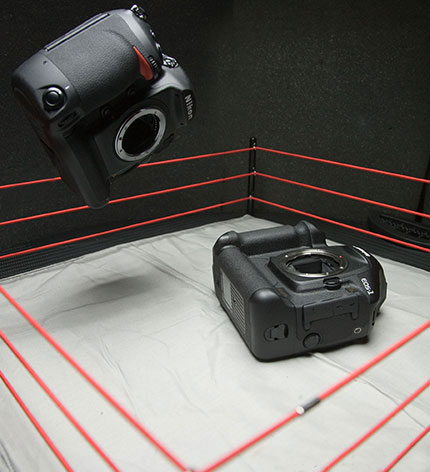
Look for a head-to-head like we did just a year ago(Nikon - a first look, 12/8/07) when we concluded that the D3 beat out the EOS 1Ds Mark III. So, it's time for a re-match in the ring.


UPDATE:
The D3x has an estimated street price of $7,999 USD, and you can learn everything you need to know (atleast officially) here - Nikon D3x Official webpage.They also have a micro-site here.
The delivery date is stated to be December of 2008, and it has been suggested that it will be before Christmas.

Please post your comments by clicking the link below. If you've got questions, please pose them in our Photo Business Forum Flickr Group Discussion Threads.


[More: Full Post and Comments]

A Free Read: Best Business Practices for Photographers

For those of you looking for specific guidance on a particular point, Amazon has put my book in their AmazonOnlineReader - Best Business Practices for Photographers, so you can read it online to your hearts' content for free.

You can search for any term or word, browse the table of contents, and generally just browse it. It remains among the top ten books in "Books > Arts & Photography > Photography > Professional" (thank you very much dear readers), and, for under $20, you can buy it at this link - Best Business Practices for Photographers
- and have it laying around your house to enjoy at your leisure.

(Comments, if any, after the Jump)


Please post your comments by clicking the link below. If you've got questions, please pose them in our Photo Business Forum Flickr Group Discussion Threads.


[More: Full Post and Comments]

Wednesday, November 26, 2008

And The Battle Rages On

There is a lot going on in the great and nebulous cloud in the sky, and not all of it is good. Yes, some taste the sweet nectar of power, and are driven to corruption for their own personal gain. Some try and fail to succeed, and blame the system. What is key, as I sit and contemplate how this applies to the future of photography and it's many aspects, is that there must be a mutual effort to be made - one is the success of one both personally and professionally, and the other is the success of this ever-changing field of photography. The two are not mutually exclusive, lest you subvert the good of the whole for your own gain.

There are those that are the lap-dogs of the status quo, unwilling to take a principled position, or fight the good fight. They take the easy road, without confrontation or sincere criticism, simply interested in making it just one more day.

Then there are the turncoats. They profess to be the do-gooders, the righteous, and are indignant that anyone question them. They may do some good, but all-the-while they are seeking their own expanded power base, and are undermining those they profess to want to help. In the end, there's a net deficit to the collective good that is laid at their feet, and they kick it away, saying it wasn't their doing, knowing all-the-while that anything that stands in the way of their success is to be climbed over, not realizing that it will be their undoing.

On the other hand, there are the titans of industry, who profess to know more than the little people, and who believe that the masses are to be lead, like lemmings, to whatever shifting destination they desire, and which serves their own greater good. Yet they lead, to a degree, not a body of passionate "soldiers", but of a somewhat conscripted army ill-equiped to fight, and then blame the solders for their own demise, unwilling to accept any blame for failure to ready those soldiers for battle.

Then there are the outposts of resistance. Those that are deemed to be the gnats and flies, to be swatted away. The David to Goliath, the John Conner to SkyNet, Luke and Leia to the Empire. History is repleat with stories of the swattable interlopers affecting change and making a difference.

Unbeknownst to many, these outposts are out there, fighting the good fight, each and every day for the profession they love. The rag-tag group of people of singular focus on what is good and right. They are well educated, and they have their mission clear. Attempting to silence one only grows the resistance that much stronger. A modern day Knights Templar if you will (with a more positive outcome some 700 years later, one can only hope.)

The battle indeed rages on. You may not see it, hear it, or feel it, but you hopefully will be the beneficiary of the wins, and insulated from the losses. While there are many things to be thankful for, to paraphrase Robert Frost, "there are miles to go before you sleep". Reflect in your quiet moments of all the good things in your life, but know that all the while, those that are working to undermine you are not pausing to reflect - they are gathering their strength for coming battles. This may be metaphorical, but its effects, if ignored, will be real.

(Comments, if any, after the Jump)


Please post your comments by clicking the link below. If you've got questions, please pose them in our Photo Business Forum Flickr Group Discussion Threads.


[More: Full Post and Comments]

Tuesday, November 25, 2008

Marketing: Success Depends on the Details


How often are you reminding your clients that you are still alive? That you still want their business? As the playing field continues to evolve, reminding clients that you are still out there, working hard, and looking forward to working for them, is important.

Many people who find themselves a bit slow, are (hopefully) finding the time to do some much needed marketing. And for those who are still busy? You should be marketing when you're busy - in fact, you shouldn't stop marketing at all. The key, is to be thoughtul about your promotional campaign.

So, what details will help you be the most effective? How frequently? When? How?

(Continued after the Jump)

We've done a fair amount of research on the subject, and here are some significant statistics that have born themselves out to be true from multiple sources. You can find more stats at EmailStatCenter.

Monthly emails and content and frequency options positively impacted a company's reputation. - Habeas (2008)

Wednesday was the best day of the week in the third quarter of 2007 to send email in terms of click (3.9%) and open rates (25.4%). - eROI (2007)

Most marketers send email to their customers once a week. - Shop.org, State of Retailing Online 2007 report (Sept. 2007)

45% of small businesses execs want to receive the (email) newsletter weekly, 34% said monthly. - Bredin Business Information (2007)

63.8% of retailers conduct up to three email campaigns each month. - Internet Retailer (Aug 2006)

79% of the respondents said they hit the "report spam" button when they don't know who the sender is. - Email Sender and Provider Coalition (2007)

21% of the emails reviewed appeared completely blank when images were turned off, or stripped inside a variety of email clients. - Email Experience Council (2007)

44% of email users said email inspired at least one online purchase and 41% said it prompted at least one offline purchase. - JupiterResearch's The Social and Portable Inbox (2008)

66% of those surveyed said they had made a purchase because of a marketing message received through email. - ExactTarget, "2008 Channel Preference Survey" (2008)

For advertising-oriented lists, 57% of marketers surveyed said that "emailing unique content by segment" produced routinely justifiable results. - MarketingSherpa "Email Marketing Benchmark Guide 2008" (2008)

69% of at-work email users usually view emails in their preview panes. - MarketingSherpa (2007)

80% of at-work users in the US rely on Outlook, which offers preview panes. - MarketingSherpa (2007)

Most common screen resoltion is 1024 X 768. - OneStat.com (April 2007)

64% of key decision makers are viewing your carefully crafted email on their BlackBerrys and other mobile devices, according to new data. - MarketingSherpa, in partnership with SurveySampling (2007)

64% of online merchants keep key points of content high up in the body of the message. - Internet Retailer (2007)

Utilizing a professional company and/or their tools to test your image rendering across multiple email clients often helps to increase response up to as much as 87%. - Email Experience Council - Email Rendering Report (2007)

A typical landing page visitor spends only 5 seconds on the page. - Marketing Experiments

Seven in 10 US Internet users said they judged these "from" and "subject" lines when deciding whether to report an email as spam. - E-Mail Sender and Provider Coalition and Ipsos (December 2006)

64% of small businesses execs said they decide whether or not to open the (email) newsletter based on who it's from. - Bredin Business Information (2007)

40% of marketers restrict their personalization efforts to the salutation. - Responsys Survey: The State of Personalization (2006)
While there is a lot more insightful information at EmailStatCenter, these are several of the items that are applicable to what we do. Keep in mind while reading items, that there's a difference between B2B and B2C, and you need to know which of these markets you are reaching out to, and segmenting and designing your outreach specific to them. Also take note - some of the above details are about retail marketing, so consider how that might be different from your efforts, if it is.

While it may seem obvious to many, for example, that sending a B2B e-mail at 10pm on a Friday night is a bad idea, knowing how to fine-tune your delivery time and day is important. Knowing as many details as possible helps increase the efficacy (and thus ROI) on your marketing campaign.

As to the "How?" There are several photo-centric services. Adbase, which we've mentioned and reviewed before, as well as AgencyAccess. Read their FAQ's, their white papers, their help pages, their how-to's. Getting it right in your outreach to new and old clients is critical. Put your best foot forward, and do things right, it's your future we're talking about.

Please post your comments by clicking the link below. If you've got questions, please pose them in our Photo Business Forum Flickr Group Discussion Threads.


[More: Full Post and Comments]
Newer Posts Older Posts