Saturday, April 21, 2007

Upgrades, Upgrades, Upgrades

Every once in awhile, I get caught off guard. Such was the case Friday. At the conclusion of an assignment where I had produced 10GB of images for a corporate client, over five seperate 2GB cards, I returned to my office, and we began to ingest the images. I made the mistake of popping open the back door of the camera while the camera was still on. A rare oversight on my part, I am usually very methodical about this seemingly small point. This time, however, when the card was mounted, it showed no files.

Frustrated, I knew the additional work involved in rescuing the card. I've done it before more times than I wish I'd have to, but it's really not a cause for alarm, because I have yet to be unable to recover a clients files from a CF card. Had this happened on assignment, I immediately stop using the card, and isolate it for attention back in the office. In this case, we were already there.

I launched Photo Rescue, my go to solution for recovering files (in this case, both RAW and JPEG). I know that Lexar and SanDisk have their software, and I'm sure they work fine, but I know that I have not only saved my own files before with Photo Rescue, but have also saved friends cards where others have failed. In fact, PC Magazine rated it the best of several products. I won't go into details about imaging the card first, and so on, but I will say that there was a problem.

The program recovered the JPEG's, but the CR2 files were showing up as TIF's, and I know that's a problem. Of course, I panicked. This was about 6pm, and the folks in my office were talking about arrangements for leaving for the day. I said over my shoulder "you're going to leave me here with this problem unresolved?" There didn't seem to be much compassion for my predicament, and soon I and my corrupt card were all alone in the office, and my wife was calling on the phone asking me about meeting her downtown for dinner. "When I get to a point where I can resolve this problem, dear", was my message back to her.

So I thought. And I contemplated. Then I realized that there might be another solution.


Enter my trusted friend, v3.0. You see, I had v2.1, and while it had served it's master well, it was time to take retirement. I looked up my date of purchase, and it was outside of the free window for a complimentary upgrade, and the only link on the site was for the full version, at $29.99, but not for the $19.99 upgrade price. So, I downloaded the free demo, and ran the card (actually, the image of the card) through the recovery software, and - voila! My JPEGs and my CR2's. Whew! Then I click the "Next" button, and am met with "To save your images, enter your registration key".

I went to the site, and, seeing that I could only e-mail the site's owners for upgrade information, and knowing it was Friday night, thinking that unlikely, and beyond that, considering that they are located in Belgium, while I sent the e-mail, I opted to go through the automated process of obtaining the full version. I waited, and waited. And then I left for dinner.

When I returned at 9pm, there was an e-mail from Belgium providing a link to the upgrade page, and also telling me to pay there. By 11pm I had my upgrade with serial #, and a refund for my full version, and my images were safely saved on my redundant hard drives, converted to both DNG and JPEG, and I could go to sleep - a restful one at that.

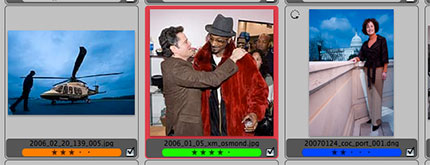
Make sure you have the latest upgrades to your critical software. Software upgrades like those for Photo Mechanic include dual processor support, background processes, full IPTC compliance, and tabbed browsing: as well as full implementation of both the star-rating and color-class, adding to their valuable tagged/untagged system to mark your selected images, as seen below:In addition, it handles the latest RAW files, and includes a year's upgrades. At $150 for first time buyers, it's the fastest solution for editing images (especially on location), and upgrading with a year's additional upgrades is only $90.

Spending the time upgrading your software, and the costs to do so, is just one more reason why your post production charges are a critical part of your billability as a photographer. Doing so on a schedule, rather than on a panicked Friday night, will give you more peace of mind. I type this as a peaceful man, but if it weren't for the Belgians being so responsive at 11pm EST, I'd be panicked all weekend long. Thanks guys!


Please post your comments by clicking the link below. If you've got questions, please pose them in our Photo Business Forum Flickr Group Discussion Threads.


[More: Full Post and Comments]

Tuesday, April 17, 2007

Working Through (And Around) WMFH

Everyone's complaining about how clients are demanding WMFH contracts, and legal departments seem everywhere to want that language in their contracts. Ok, put it in, and have it apply when you are paid an appropriate fee (as deemed by you), and you agree, specifically, to it in writing.

I have the good fortune of having a few clients for whom I am on a retainer. I am blessed that they call often enough that they don't want to have to sign off on fees and expenses and rights packages every time. So, we set forth an Agreement for all work performed for them.

This is essentially the same way a magazine handles assignments you do for them -- they present the contract, you sign once, and everything completed for them after that is under those terms. Here's how I have handled WMFH in my corporate contracts:

Term X: Rights In Work.

Licenses or permissions not expressly stated in this agreement shall not be implied, and all rights not expressly granted to Client are reserved to Photographer. Except in the case of work made for hire, or where provided for in a written agreement between Client and Photographer, licenses and permissions expressly exclude derivative rights. Except in the case of work made for hire or as expressly authorized in writing by the Photographer, work may not be archived or placed in any electronic catalog or electronic delivery service. Work which is to be created as and priced as “work made for hire,” if any, shall be specified in writing signed by the Photographer. As to all work, Photographer specifically retains the right to use and display Photographer’s work for portfolio purposes.

Photographer grants Client the non-exclusive permission to use, display and reproduce “day to day” photography and “major projects photography” with respect to any image, for one year from the date of the image's initial delivery, as follows: 1) on Client’s Web Site, 2) in Client’s newsletter as the newsletter appears in both electronic and printed form, 3) in trade publications, 4) for press kit handouts, and 5) to wire services for their use and that of their subscribers within the terms of their applicable and in effect written subscriber service agreements.

Photographer grants Client the non-exclusive permission to use, display and reproduce “portrait photography” with respect to any image, for three years from the date of the image's initial delivery, as follows: 1) on Client’s Web Site, 2) in Client’s newsletter as the newsletter appears in both electronic and printed form, 3) in trade publications, 4) for press kit handouts, and 5) to wire services for their use and that of their subscribers within the terms of their applicable and in effect written subscriber service agreements.

Permissions not expressly granted herein shall be licensed at Photographer’s current rates in effect at the time of license.

How about, however, the client who wants to preclude your work from appearing in a competing publication, or for a competing business. Since you own the rights, you can do that, unless you agree to preclude that, and that certainly is a fair request to be made. Here's how you might tweak it. You could add, above the sentence "Permissions not expressly granted...":
Photographer states that no licenses or permissions of any images made under the terms of this contract shall be offerred, licensed, or otherwise made available to competitors of Client. A list of parties Client believes and photographers agrees constitute a competitor shall be listed in Appendix X of this Agreement, which may, from time to time, be amended and agreed to, by both parties, as new organizations, media outlets, or businesses come into existence.

Ok, so what about the possibility that the client will put you within the organizations inner sanctum, where you might be in a position to make images that would make them look bad, and they want to preclude that. You could then add:
Photographer states that it is not his intent to grant a license or permission to use an image produced under the terms of this Agreement which would cast Client in a negative light. As such, Photographer agrees to seek approval by Client in circumstances which the license or granting of permission to an image produced under this Agreement may cause such negative publicity to occur, and Client shall hold the right to preclude a license or permission which would result in negative publicity to Client. Photographer shall make requests where a concern for negative publicity may exist, in writing (via e-mail, or fax, or other instrument), to their principal contact for Client, prior to the offering of any license or permission. This contact shall have the authority to approve or decline these written requests.

In the initial language above, you have stipulated that "Except in the case of...", and more importantly, "Work which is to be created as and priced as “work made for hire,” if any, shall be specified in writing signed by the Photographer." Note the stipulations:
  • created as and priced as
  • if any
  • shall be specified in writing and signed by the photographer
These are some fairly specific conditions that must be met, and if you ever recieved a request for that manner of work, it's stipulated that it's priced differently and you'll surely know you committed to that in the "if any" circumstances arose.

This would allow for you to account for the possibility in the contract. Further, you have granted a clients rights package that meets their needs, and can, elsewhere in the contract, stipulate the common types of photography you provide for this client. For me, I provide "day to day", "major projects", and "portrait" photography, all priced differently, and stipulated as such. This way, when the client calls, it's easy to know which type of work they are requesting, and they have already agreed to the fees. An e-mail request is all that is necessary to secure your services, because those requests are under the terms of the agreement. Since your primary contact at the company, (once legal is through with you), won't be writing to you saying "this one's going to be WMFH...", there will be no opportunity for a WMFH agreement to exist, and certainly nothing signed by you to that effect. The client will have the rights they want, the safety from competition using the work you did for them (if that's a concern, then add that paragraph), and no possibility for negative publicity as a result of your access they have given you (again, if that's a concern they've expressed, then add that paragraph too).

Of course, an editorial contract would look different - it would contain "first world", or "one time use", as/or other variations of those terms, rather than the one year, or three year terms detailed above, so modify them, or better yet, ask an attorney to help you on this.

This is one way in which, because I always present my paperwork, and we negotiate from there, I have been able to succesfully navigate the "WMFH" waters, satisfy clients who initially were demanding that type of work, yet retain my rights, and convey to them their needed rights package at a fair price. If you're operating from the client's paperwork, modifying and inserting a lot of text will become cumbersome and problematic. Use your paperwork and your language.
Please post your comments by clicking the link below. If you've got questions, please pose them in our Photo Business Forum Flickr Group Discussion Threads.


[More: Full Post and Comments]

Tragedy Abounds - Photographer's Killer Remains on the Loose

As we pause to reflect on the tragedy in Blacksburg, there are other episodes of loss that abound. The Austin Police Department needs your help in connection with finding the killer of photographer Michael Cahill. His murder was profiled by America's Most Wanted on April 7, 2007 and we urge you to go to amw.com to read the accounting of this senseless killing. Click here, or search for on Michael Cahill or "most recent episode".

If you are reading this post you are a photo professional familiar with the practices, equipment and cast of characters which comprise the world of professional photography. Mike Cahill was a photographer and it might take the assistance of a brother/sister photographer to catch his killer.

By going to www.amw.com/features/feature_storydetail.cfm?id=1636 you can view a list of photographic equipment which the killer stole from Mr. Cahill and several other professional photographers who resided in and around Austin in 1979. Please note that the police believe that the killer was highly selective in what he stole from his photo victims.

Note that there were a substantial number of Leica cameras stolen. That might indicate that the killer/thief well knew and/or wanted that which he stole. Please check the serial numbers on the amw site and check them against any Leica or Canon equipment that you may have.

There is a significant possibility that the killer was/is a photographer or related professional. He may have lived and/or worked in Austin in and around 1979. He could be living or working anywhere.

I believe with the assistance of the professional photo community this killer can be traced and caught. So go to the amw site, put on your thinking cap and carefully examine the missing equipment.

Detective Sharen Soliz is in charge of this case. A portion of one of her e mails to me lists certain photo books that were stolen:

"The following books/magazines were either taken or stacked to be taken in the burglaries surrounding the Cahill murder case:

1) "Women See Woman" - ....by over 80 talented photographers
2) "The History of Photography" - Beaumont Newhall
3) "1979 Book of Days" (the "!978 Book of Days" was the publication used to form the "Book of Days" theory)
4) "Photojournalism 76" - could not see author's name
5) "Texas Heartland, A Hill Country Year" - Photographs by Jim Bones, Jr.
6) "Photojournalism" - Life Library of Photography
7) "Austin" - magazines - 4 editions - could not read the months but could provide articles featured on the covers if needed
8) Diane Arbus - softbound - large format book
9) Ansel Adams - basic photo set (4 books)
10) Ansel Adams - small format - hardbound
11) "Americans" - Robert Frank - small format - softbound
12) Doreatha Lange - softbound - small format book
13) Andre Kertesz - hardbound - large format book
14) Walker Evans - book of photographs
15) "The Craft of Photograph" - David Vestal
16) "Yearbook of Photography" - 2 books - published by Time/Life
17) "Doonesbury Chronicles"
18) "Texas Monthly" - magazine with photos by Rick Patrick titled "A Texas and His Gun"

"Please remember what we talked about with regard to the "Book of Days" just being one theory on this murder.
If someone finds they have some of the missing camera equipment, have them contact me. Email would be the preferable means of communication since I will be out of my office and my phone will likely go unanswered until I call to check messages. If a viable lead comes up, Sgt. Lara will evaluate the lead and assign it as needed.If you have any questions, feel free to contact me".

I think that a review the stolen equipment, reading material and cameras will reveal to you guys things that would never occur to laypeople. Remember this is a burglar and killer who selectively removed (non-collectable) photo books?! One of you out there has got to know something.

Crimes do not in real life get solved in 48 minutes plus commercials. This is real life. Mike Cahill's murderer has for two decades, skated. I believe you guys can help find the bastard.

If you have any information regarding this matter do not hesitate. Contact:

Sharen Soliz
Detective
Austin Police Department
Homicide Cold Case Unit
P. O. Box 689001
Austin, Texas 78768-9001
(512) 974-8576
Sharen.Soliz@ci.austin.tx.us

Also:

Edward C. Greenberg, PC
100 Park Ave.
33rd Fl
NYC NY 10017
ecglaw@aol.com


Please post your comments by clicking the link below. If you've got questions, please pose them in our Photo Business Forum Flickr Group Discussion Threads.


[More: Full Post and Comments]

Altered Reality - Just Another Perspective

So, today, as I was busy organizing my shoelace collection, untieing all those double knots that my daycare teacher tied some 30-odd years ago, I used my idle brain cycles to contemplate Ms. Anais Nin, who passed away some thirty years ago, about the time I was being told I would trip on my un-loosed laces were they not double-tied, who said:

We don't see things as they are, we see things as we are."
I have been reflecting on reality. And have contemplated a myriad of circumstances, from the Geographic's "retroactive repositioning of the photographer", where a horizontal image of the pyramids was made vertical, to accomidate a vertical cover some 20 years ago, to the latest in Photoshop activity by a Toledo Blade photographer.

Where does it stop? Answer: Never, it won't stop. Where did it begin? That's worth pondering a bit.

Photographers have made choices about altering images for generations. However, let's take a less antagonistic approach to the word - let's call it a perspective change. Dartmouth has an interesting timeline here where they call it digital tampering, starting back in 1860.

The earliest black and white photographers, by choosing the right filter could make a woman's freckles disappear. Vanish. Poof! That's a different perspective. A deep red filter made the skies black as night, during midday sun. A polarizer made the skies look unnaturally blue. A polarizer when used with a car's window reflection let you see something the naked eye could never see from the same perspective - through the window and into the car.

Fast forward a few years to color film. Every photographer worth their salt knew how the choice of a particular brand or variation of film altered reality - err, changed perspective. Consider how Velvia would render a subject. How about EPP? And what about when you would put a tunsten gel on your strobe and shoot EPY, EPJ, or EPT? These choices were ones made by photojournalists, and the results published in traditional media outlets.

The rule was, if you could do it in a darkroom, it was ok. Cropping? Ok. Dodging/burning? Ok. High contrast? Ok? Low contrast to open up the shadows, ok. Many even considered the selective bending of the corners of the paper while in the enlarging easel to throw the edges out of focus and leave the center more focused to be acceptable. Ansel Adams himself said the negative as the score and the darkroom master printer as the conductor and symphony, bringing the image to life.

Many a photojournalist would throw an 80A filter on their camera's strobe, and one more on their lens, and see it as fine - a slightly warmer day than it really was, a "golden hour" shot three hours before sunset instead of one.

The camera itself has it's limits. What the eye sees, the camera cannot replicate. The eye's depth of field far and away exceeds what a camera can produce. In fact, the selective choice of a shallow depth of field is an alteration of reality...err, change in perspective. the use of a longer lens to compress the contents of an image and make a moderately filled sidewalk look like it's overcrowded is an easy image to make. When I am in the back of the room of a sparsely attended press conference and I drop down low, and shoot with a long lens between people towards the podium so it appears like there are a lot of people, I am just changing perspective, right?

What if you wanted to apply a "velvia" filter in Photoshop to your images? I'd bet the photo editor would object. But they would not, if you had shot velvia, processed it, and then scanned it in. To paraphrase the Geographic - "retroactive reprocessing." So, if you shot 1/2 of your assignment indoors, with the "fluorescent" setting and a green gel on your strobe, and then when you went outside to finish the assignment, and shot everything on the same setting, and all your outdoor photos looked 30 points magenta, are you allowed to either color-correct that jpeg, or change the white balance of your raw files to "auto" or "daylight", your intended white balance? Is that selective reprocessing?

Consider the tasty apple, and your consumption of it, until you see the other side with the wormhole. You see the apple as you are, not as it is. Consider the hollywood movie set, showing a old cowboy town - looks real, until you walk through a doorway and realize it's just the facade. Again, you were seeing it, at first, as you are, not as it is.

When I produce an image heading to the editorial realm, it's zero alterations for me. No switched body parts, no removing exit signs or other distracting elements. Them's the rules of the game, and I grew up on them, and they feel comfortable to me. For a commercial/corporate client, where the image is headed towards a corporate endeavor, creative license opens wide.

If you're looking to monetize your spare processor cycles, check out what SingleShots.com is doing. You send them your portrait, they'll retouch you, making you more attractive when you submit that photo to online dating services. You too can start this business and retouch people's portraits.

What about the picture of the company executive and the politician at a press conference shaking hands that you set up? Not you, the photojournalist, you the commercial photographer who was serving the purposes of the company's publication. What about the other photojournalists there who knew you, their friend, had set up the shot for the company's internal needs, but since "it happened", is it fair for your photojournalist colleagues to move the photo? It was set up. Is that altered reality, or just another perspective?

I don't have all the answers here, but I do know where I stand in this digital age. I shoot everything - I mean everything - in raw, and I save every raw file. I will bare my raw files to anyone whom I submit my photos to that is in a position to question my imagery to proove that I not only didn't cross the line, I didn't even come close. Though, as I point out above, I didn't alter reality, I chose another perspective, because I don't see things as they are, I see them as I am.
Please post your comments by clicking the link below. If you've got questions, please pose them in our Photo Business Forum Flickr Group Discussion Threads.


[More: Full Post and Comments]

Friday, April 13, 2007

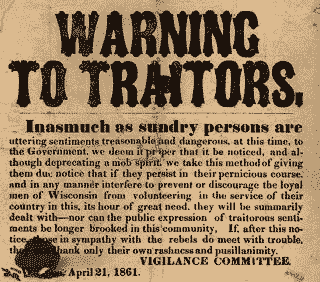
Traitors Among Us?

I know that there will be a lot of objection and offense because of this column. The problem is, it will be misdirected, because it will be directed at me.

I will give myself some cover first, it's inspired by Mark Loundy's April 2007 column Common Cents: Traitors - The Fifth Column of Freelancing, in which he writes, in part:

"Every day brings news of more casualties. Media company business managers literally laugh about photographers who assist them in turning a highly skilled profession into a commodity....Yet there are those who suggest that even using the term "war" only creates an unpleasant relationship with the same folks who are unapologetically lowering rates and imposing all-rights contracts....Although there are no RPGs or IEDs aimed at us, this is no less a war. The weapons are contracts, lies and our own willingness to work "for glory." The defenses are good business practices and the courage to say no. The traitors can be found no further than the shooters who say yes."
Thirty years ago, Nixon declared war on cancer, yet no real cure exists, and many people have resigned themselves to the notion that no cure will be found. War has been declared on poverty, and on countless other worthy causes. War, as defined by Dictionary.com, lists, under the several different definitions, definition #5 "aggressive business conflict, as through severe price cutting in the same industry or any other means of undermining competitors: a fare war among airlines; a trade war between nations;", and #6 "a struggle: a war for men's minds; a war against poverty;", and #12 "to be in conflict or in a state of strong opposition." To me, the war on many things is a state of mind for the combatants, and in some cases, actual actions are taken by those combatants beyond just complaining about what's going on. As a nation, we were at war with the the Axis Powers during WWII. Yet, many a citizen continued on with their lives, Others engaged, to varying degrees, in the war effort. I do see that we are at war, under the definitions above, and in using common notions to ascribe our circumstances to such.

Those that shoot assignments just "for glory" are doing the tradecraft and art of photography a grave disservice. Is is any wonder that "Pride" is one of the Seven Deadly Sins, "In almost every list Pride is considered the original and most serious of The Seven Deadly Sins, and indeed the ultimate source from which the others arise," like "Envy" (man, *I* WANTED that assignment!), "Anger" (I CAN'T BELIEVE s/he got that assignment), "Greed" (I WANT more assignments that are exciting, I don't want to do the run-of-the-mill assignments), and so on.

Those that sign off on egregeous contracts that demand WMFH and pervert the intent of the originating language as it was applied to employees, are giving aide to the enemy. Those that lie about whether or not they've signed or are working under those terms, are giving comfort to the enemy that it's ok to do what they are doing.

Ed Greenberg's Top 10 List - "My Top 10 list of things experienced photographers insist upon doing (or not), despite logic, law, money, advice and screaming" over at EP, includes, in part "Treating clients and prospective clients as if they are buddies and pals who share your self interest;"

Look around. When I would do something stupid, and my mom would call me on it, and I'd say "but mom, so-and-so was doing it too!" she would respond (and I grew up on an island in the SF bay, so this made perfect sense to me) "if so-and-so jumped off the Golden Gate Bridge, would you do that too?" To which the obvious response is, of course, "No, mom." Do you know people around you who are saying "come on, it'll be fun to jump off the bridge...let's go!"?

Just because others are signing WMFH, doesn't mean it's ok to do that. Just because people are accepting assignment fees below what will sustain anyone's business, doesn't mean it's ok to do that -- even when you'r starting out. Just because many many people are loosing this war on photographers, and succumbing to a life that does not include being a professional photographer, doesn't mean that on other fronts, for other photographers, there ar those that are continuing to succeed - and win - beyond what you could imagine.

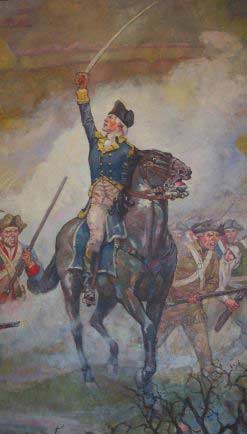
Dictionary.com defines traitor as "a person who betrays another, a cause, or any trust." It sure sounds to me like there are a lot of photographers who fit this bill. Sadly, at a pittance of an assignment fee, and with no ownership of their creative endeavors, they won't be around long enough to know the damage they have done. Well known traitor Benedict Arnold was a traitor because he sought to turn over command of West Point to the Brittish in return for money and fame as a Brittish General (That's him, on the right, seeking fame and glory).

Ants make an ant-hill one grain of sand at a time. Eventually, it becomes big enough that it's a problem. Each assignment completed under egregous terms is that grain of sand, that over time, becomes a problem. Yet, inserted properly and with care into the right vessel, a single grain of sand (and each assignment) can become something very valuable, a pearl, or an image with resale value. A single decent-sized pearl takes from 3 to 5 years to cultivate. During the process, 50-60% of oysters die, and only 5% of the pearls from the surviving oysters will have a gem-like quality to them. So too does it take time to cultivate clients who respect your work and rights, and will pay you a fair fee for your endeavors. And, as with pearls, it's worth the wait.

Don't shoot the messenger here. If you're really angry with my criticism, it might be because it's hitting too close to home. It might be that the traitor you're looking for is staring you back at you in the mirror. To requote Mark "The traitors can be found no further than the shooters who say yes" to the bad contracts. Is that you?

Despite all this doom and gloom, there is hope. Despite the fact that there seems to be a huge void of traitors-turned-heros (and by void, I mean, I couldn't find a reference to one), if you've signed bad contracts, you can turn the corner, you can improve your lot in life. Stop working for those multi-national multi-million dollar corporations. Don't go to the folks that are the photo editors and assignment editors and who have been friendly, helpful, and understanding, and be unpleasant. When they presented you with their contract, and apologized as they were for it's content, that apology doesn't change the facts as to what they were asking for. It's not personal for them, and you should not take it personally either, it's business. Yelling at a photo editor "I won't sign this crap", or otherwise being rude is just not productive. A simple:
"I'd love to work for you, but I can't sign a WMFH contract, it's against my personal policy to do so, but I will include a fair rights package to suit your needs commensurate with appropriate fees ",
or
"I'd love to do this assignment, but my fees for this are going to be a bit higher than what you've outlined you're willing to pay. I will send along my estimate, but understand if it's too high for you. If you can't find someone at that lower figure, I will do whatever I can to make the assignment happen should you call back."
is all that is required of you as an upstanding professional. Operate your own business with good business practices. Do turn down egregious demands. Do take the time that you're not shooting those assignments for low or no pay and use it constructively to do self-assignments to improve your portfolio and then to locate the appropriately paying and non-rights-demanding clients.

And, take a guess as to how the now endangered staffer feels about you? When what the company is paying you is 1/2 of what it costs the company to keep the staffer, whether they admit it or not, they see you as a threat. Back in the days where unions would strike when a corporation would not increase pay commensurate with the annual cost of living increase or how well the company was doing, those that crossed the picket lines and minimized the strike's impact, were called scabs, (see def#4) , because they were protecting the "wound" that the strike was trying to inflict because they were looking out for their own self-interests (a short term benefit), and not the good of the workforce (a long term benefit). As photo department staff are reduced, and more freelancers are hired, I have heard of more than one staffer refer to the freelancers who work for their organizations as "scabs." You are a threat to them, and whether or not you know it, to your own well being.
Please post your comments by clicking the link below. If you've got questions, please pose them in our Photo Business Forum Flickr Group Discussion Threads.


[More: Full Post and Comments]

Just Desserts (Or, you Get What You Pay For)

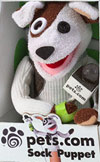
Over at Black Star Rising, Scott Baradell highlights the latest from an imaging debacle, where a pet website owner wrote to Inc Magazine. Apparently, a microstock license by this store owner has become a problem, because a competing site is using the same image, and the writer wants to know about stopping it, as the photo is now the unofficial mascot of the site(Something akin to the deliberate decision years ago by Pets.com to make the sock puppet, at left, their official mastcot, but that's not the site that the pet store owner is objecting to). Scott, in his review cites several points, and also an interesting WSJ article, which you should click over to read. In addition, the piece notes "branding, by contrast, is like dressing for the Academy Awards: Off-the-rack won't cut it...Another option is to ditch your stock image, commission an original photo, and buy the rights..." but cautions about infringement, "...Trying to duplicate the stock photo is dangerous territory."

Over at ASMP, their article on RF shows an example of a college-age girl that clearly is getting both a Dell AND a Gateway computer! I have many other examples of these mishaps, but that's for a future article.

The arguments continue to flow for why commissioning a photographer to produce original assignments - especially for marketing purposes - is the best way to ensure the uniqueness of your visuals that are used. There are many times when news photos - especially a single strong image of a current news event, makes it to the front page of several newspapers. This happens, of course, when the photo was not produced by a staffer, but rather a wire service or photo agency. It is then hoped that whatever text the paper runs provides a unique perspective, or, over time, readers might consider the papers interchangable, and thus, only subscribe to one.

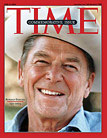
A sidebar in this PDN article notes about Time's photo editor "At some point over the weekend Time editors found out Newsweek was going to run the same cover, but Stevenson says, "It wasn't going to make us change our minds." I would, however, submit that there were countless other strong photos of Reagan, and a change should have been made. These two photos made a point that the two magazines are interchangable (to a small degree), and diminishes the uniqueness of each.

When you commission your photography, you pay a premium - and rightly so - for an original creation by the photographer that you, as the commissioning party, have first rights to use. When you license an image, as our pet store owner learned, make sure you obtain an exclusive license from the image provider, or risk consumer confusion after your advertising dollars and visual-brand-investment have already been made.

Otherwise, you get what you pay for.
UPDATE: What the duck has a funny take on this general issue:


Please post your comments by clicking the link below. If you've got questions, please pose them in our Photo Business Forum Flickr Group Discussion Threads.


[More: Full Post and Comments]

Wednesday, April 11, 2007

The Marketplace is now Open

I have, for some time, maintained identical collections of images on both PhotoShelter and Digital Railroad. I have not drawn a conclusion that one is better than another, because each has had something different to offer. PhotoShelter, for awhile, has had their own global search capability, and today Digital Railroad has launched their comparable service, which they term Marketplace. Following on the heels of Adobe's Lightroom and Photoshop CS3, Flickr, and many Google services, they have launched in "public beta." In many cases, I think that this is a way of cushioning a product launch in case there are problems, the company can eek by by saying "oh, it's still in beta."

So, let's take a look at a few things. First, take a look at my two "store fronts", both my customized DRR front end http://Archives.JohnHarrington.com, and my PS front end, http://Images.JohnHarrington.com . Both are very customizable, including graphics, links out, and so on.

How do the PhotoShelter and Marketplace offerings compare? Conducting a search for white house (not in quotes or any other delimiters), on MY own site with the DRR back end yields 195 images. Yes, all mine, no one elses. Executing the same search for white house, (again, not in quotes or any other delimiters) on my my own site with the PS back end yields 139 images. This difference of 56 images is my more my own error in not having completely identical groupings, as I may have been remiss in posting those missing images, something I intend to correct in short order.

On the PhotoShelter site, searching for white house dc harrington yields just four images, while white house harrington yields 140 images. 127 images appear for just White House DC (not in quotes or any other delimiters), and "White House" DC (with quotes) yields 105 images. Mine don't appear until the second to last page, on the bottom.

Comparatively, A search on Digital Railroad's Marketplace for white House ( no quotes), yields 9,796, again, many images that are of houses that are white, or which include the color white in the photo, or are a black and white photo of a house. Searching for "white House" within the quotes yields 11 of my images on page 1 (with 24 images) of a refined result of 8,362. Continuing the search for "white house"+dc with quotes yields 7,002 results. Finally, searching "white house" harrington yields 159 images.

What this does, I think, is illustrate the critical value of the proper use of keywords by the searching client. My purpose for including my name in each set of searches was simply to validate that MY images were within their databases.

So, where does this leave us? There's good customization for both, and both return satisfactory results for search terms. Search terms that we must teach ourselves to refine even for a search that seems to be so simple as "White House."

First, let's go through pricing an image in the DRR Marketplace. Let's assume I am a photo buyer looking to secure an image of the white house at 5:30pm, EDT. I locate my image, and next to the image, under "Actions" I click "Request Photo", and the process begins.

I've chosen Express Pricing, and through a series of drop-down menus, with just a few mouse clicks, I finish my selections. I've chosen "Internal Company" use, "6 months or less", and "local", and then I click "Get Price Estimate", four clicks total, and $325 pops up. If I needed to refine my use, I could, and when done, I just click "ok". Had I wanted to, I could have chosen more complex pricing, under the "Custom Licensing" tab, which allows me to specify file size, duration, and set the start date specifically, as well as the language, and any other relevant use details - "circulation, publication name, placement" and so on. Because of these additional parameters, (and rightly so), there is no "get Price Estimate" button, because this is a custom license. Once I've made all my decisions, under either Express, or Digital, I move on to the next screen.

I am presented with the following, under "Actions":

You will be contacted by a Marketplace representative shortly regarding pricing. Once an image is priced you can add it to your cart.
For immediate service, please contact us.
That link gives you a sales department phone #, and e-mail address. Below that, I can enter in specific information like my PO#, Job#, and so on that is send along with my request, to assist me when I get an e-mail response from their sales department, and then a block of text says "Digital Railroad Marketplace requests will be answered within 3 hours during standard EST business hours, Monday through Friday." And there's a box where I can enter in an additional message. So I entered "I need this photo now."

Over at PhotoShelter, while I was waiting, I went in, and set up my pricing structure, consistent with FotoQuote pricing, including adjustments. The PS setup screens show:
Rights-Managed profiles are powered by fotoQuote®, the industry-standard price guide for stock and assignment photography. You can select usage categories and regions for your images, and if desired specify a percentage adjustment to the fotoQuote-suggested prices.
I can also check the box "Review all offers before allowing purchase" if I did not want the process to complete without my approval. This would, of course, preclude people from gaining immediate access to your image file after payment until you approved it. This would certainly affect transactions significantly outside of your time zone.

Here's how the image looks when I click from the thumbnail to the preview page:

The important text on the right reads:

Until my pricing setup was done, each image indicated:
"This image has not been licensed for online sales. Contact the photographer if you are interested in this image."
So, here's how it looks to set it up. The "100%" (and variations thereof) in the FotoQuote section is where I choose, how much I want images that are priced in this profile to be priced at, relative to FotoQuote's pricing structure.

Once I have set up my account, that text then changes to "Buy/License" and clicking on that link takes you to the following pages.

Once you click the "Buy It Now" button, you click "Yes" to a button asking you to confirm your purchase, then a window where you enter in your contact information, and then this window comes up (opens in new window), which includes the language of the license - "TERMS: United States, Corporate, Newsletter Corporate.Internal, 1/2 Page, Up to 10,000 ** Licensed to John Harrington - Single Use License **" (in this instance) and then you end up at Paypal, (also note, on the pop-up window the text "NOTE: You may pay the photographer using a credit card on PayPal's site. A PayPal account is not required to make payment", which is nice that it doesn't require a paypal account.

Upon completion of the paypal process, you are returned to the PhotoShelter site, where they (on the back end) prep the image to the size specs, and embeds the license that was granted and rights agreed to into the USAGE TERMS metadata field, and is also saved to a sidecar XMP file, as well as a plain text (TXT) file titled "rights.txt", and combined with the file (TIF, or JPEG, Raw, PSD, etc) into a folder specific to your purchase, and then that folder is saved as a ZIP, and you then access that ZIPed file from your "My Downloads" section of the Photoshelter account, all within about 5 minutes.

Ok, so, back to Digital Railroad. What about Purchase Orders? Photo Shelter is not set up now (but I'd guess they might, for an additional fee do so in the future) to deal with billing, and that is certainly something that corporate photo buyers will want. Organizations like McGraw Hill, and Thomson Learning, both of whom DRR cites in their press release, will want to be able to bill to accounts rather than racking up credit card charges. PS also does have a way for you to make your images available to "trusted clients". You are able to set them up with pemission to download, and PS generates an invoice that gets sent to the client (cc'd to you) and you can bill them sperate from PS.

What about metadata? I can't factually tie the search results above to metadata issues, but Digital Railroad is using what's termed "Legacy" metadata formats, and not the new IPTC Core (if you want to see this in action, go to Bridge, and see both fields side by side, there is more robustness in the newer schema than the old one). Photoshelter has transitioned over to the new IPTC metadata schema. Tom Tinervin, Director of ASP Sales for DRR says that "DRR understands the significance behind XMP and the implementation is already in development."

What about redundancy and archives security? Each does have redundancy. But they are different types. As you upload a file to PhotoShelter, each bit of data you upload - at the time of upload - is mirrored to two seperate locations on opposite sides of the country. The redundancy system of Digital Railroad is one where images are uploaded to a North American location, then mirrored, then replicated to DRR's European datacenter within minutes. The workflow that PS uses is the same that I use when I ingest a CF card. In PhotoMechanic, and other ingestion applications like Image Ingester Pro, the CF card gets ingested to my working/production drive, and to a physically seperate drive simultaneously. I am not ingesting the images to the working drive and then copying those files to the backup drive.

What about the photo buyers? DRR is talking about a large private beta pool of photo buyers that will grow as the public beta launches today. DRR's press release talks about a library of over a million images, and certainly, with just under 10,000 being returned as I noted in my search above for "white house" variations, there will be lots for photo buyers to choose from. I don't know how many are on the PhotoShelter system, but it's proably less, but less in quantity, or less in quantity and quality? I don't have the answer to that, only the photo buyers will. They will certainly vote with their feet, (or mouse clicks).

What about the commission rate for a rights-managed image? Well, for their automated/immediate/get-it-now, no interaction process, PS is taking 10%. For DRR, where they have an account rep who assists the photo buyer (during normal working hours), sets up corporate billing accounts, and pays you:
Net Sales will be remitted to Subscriber within fifteen (15) days after each transaction period has ended, as long as the total Net Sales are greater than $25. Net Sales totaling less than $25 will accumulate and roll over to the next transaction period until Net Sales have surpassed the $25 minimum. Digital Railroad will remit payments via ACH (funds electronically credited to Subscriber’s bank account or by check, based on the preferred method selected by Subscriber. Subscriber selecting the ACH remittance process will have two transaction periods per month, representing the transactions occurring between the 1st – 15th and the 16th – 31st days of the month. Subscriber selecting the live check process will have only one transaction period for the entire 1st – 31st days of the month.
and for that, they take an additional 10% on top of that (so their commission is 20%). Both these options are far and away better than the 50%+ that all the other agencies take.

Both offer RSS feeds, but there aren't that many photo editors who even say they use them. Both offer multiple currencies, and each photo buyer can see their preferred currency when reviewing pricing. Both offer workspace that you as either the photographer or photo buyer can save, and access from any web browser, so you are not tied to your specific desktop or laptop.

DRR is also excited about their "Community Ratings" feature, and currently, this is not something that PS does. For DRR users, "You can rate the images you love and record your quality assessment for each image. Your assessment — combined with search terms, proprietary metrics, and Marketplace activity — will deliver the best images to the top." They've recruited veteran editors to get that ball rolling. This is a little like how Yahoo started their search engine -- with actual eyeballs rating sites. I think that it's a good idea, and whatever algorythm they apply with this, against individual image sales as a ranking feature, as well as ranking of photographers who have lots of sales, and other considerations could proove to be a useful system.

A call from DRR's VP of Sales, Mark Ippolito, fleshed out a concern I had about "working hours." DRR is currently looking to fill sales team positions on the West Coast, Midwest, and the UK, greatly expanding their "working hours" to include many many more than those that fit in the Eastern seaboard time zone.

Yes, DRR is in beta. Yes, it's a work in progress. DRR is being transparent about the process, and open to feedback and criticism. PS got out in front two years early, but what I am most excited about is that they will continue to innovate - both of them - and we, the individual photographers who choose to utilize their services, will be the ultimate winners.

NOTE: To format the content of the DRR and PS sites for this blog, I took the liberty of reformatting the text and layouts to fit a 430 pixel wide layout and to highlight specific features of each page I felt were worth noting. None of these formatting changes affected the content or comparative value of their respective pages.

Please post your comments by clicking the link below. If you've got questions, please pose them in our Photo Business Forum Flickr Group Discussion Threads.


[More: Full Post and Comments]
Tuesday, April 10, 2007

Bill Gates and Micro...stock?

More than one person was kind enough to alert me to an interesting article about microstock and Corbis and their soon to be new CEO. In today’s New York Times article by Katie Hafner, A Photo Trove, a Mounting Challenge, there are a few interesting excerpts:

What Corbis did not foresee was the rise of so-called microstock agencies like Fotolia and iStockPhoto. These sites take advantage of the phenomenon known as crowdsourcing, or turning to the online masses for free or low-cost submissions.
True. Corbis was somewhat blindsided by this, but it was Getty who’s acquisition of iStockPhoto gave the model credence. You can slap a dress and some lipstick on a sow, but a pig’s a pig, regardless of the shade of lip gloss.

Please post your comments by clicking the link below. If you've got questions, please pose them in our Photo Business Forum Flickr Group Discussion Threads.


[More: Full Post and Comments]

Your Work as Corporate Art

So, over in the Flickr forum, (which I must admit, I visit FAR FAR to infrequently), and interesting discussion was started by a photographer who wanted to know how to price his work - as art - for a hospital, or if he should just give it "on loan".

I proposed to the inquirier -

"If you're getting something out of it -- say a placard next to each image that is yours citing it's title, your name as the artist, like this:

Title: Moon over Mountains
Artist: John Smith, (www.JohnSmith.com)
or
Title: Moon over Mountains
Artist: John Smith
The artist may be reached at www.JohnSmith.com
or, perhaps, it's art that is for sale:
Title: Moon over Mountains
Artist: John Smith, (www.JohnSmith.com)
Available for sale. Asking: $430 framed.
These placards would give you marketing outreach. If, however, the hospital is just looking to fill it's empty walls with your work, that's why they have a corporate art budget. (And if they don't, they should, and you should take it upon yourself to assist them in establishing a reasonable one.)

A calculator over at Art4Business suggests "There is a simple rule of thumb for art acquisition projects. Most companies spend between $.75 and $1.75 per square foot of space." And they go on to say that the "number of pieces is estimated at 60 per 100,000 sqare foot area." What exactly does this mean?

First, let me get a little technical. There are three types of office space. Class A, Class B, and Class C. From a commercial real glossary comes "Class A... is an extremely desirable {property with} significant architectural features, the highest quality/expensive finish and trim, abundant amenities, first rate maintenance and management; usually occupied by prestigious tenants with above average rental rates and in an excellent location with exceptional accessibility...A building meeting this criteria is often considered to be a landmark, either historical, architectural or both. It may have been built within the last 5-10 years, but if it is older, it has been renovated to maintain its status and provide it many amenities."

Class B "offers more utilitarian space without special attractions. It will typically have ordinary architectural design and structural features, with average interior finish, systems, and floor plans, adequate systems and overall condition. It will typically not have the abundant amenities and location that a class A building will have...The maintenance, management and tenants are average to good, although, Class B buildings are less appealing to tenants and may be deficient in a number of respects including floor plans, condition and facilities. They therefore attract a wide range of users with average rents. They lack prestige and must depend chiefly on lower price to attract tenants and investors."

Class C "is a no-frills, older building that offers basic space. The property has below-average maintenance and management, a mixed or low tenant prestige, and inferior elevators and mechanical/electrical systems. As with Class B buildings, they lack prestige and must depend chiefly on lower price to attract tenants."

With these details in mind, consider that an average building's square footage for one floor in Chicago is 23,000 square feet. A brand new building near the US Capitol has a floorspace of 50,000 square feet per floor.

Most places that will want to use your photography as art will be Class A, some might be Class B, but not many.

When you choose a space that is 10,000-50,000 square feet, it proposes:
"These budget estimates are for ART SERVICES ONLY. The estimate does not include any charges for artwork, framing or shipping."
And then they go on to say:
"Estimated Number of Pieces: 30
Estimated Square Footage: 10,000 to 50,000
NOTE: This estimated expense does not include expenses for creating an art inventory for purchases of 30 or fewer pieces. For purchases of more than 30 pieces, the cost of creating an art inventory is included; however, no in-house training time has been included.

Project Type: Acquisition

Estimated Budget Required: $7,100.00 - $7,800.00
Tele-Con Presentation, On-site Art Review, Coordinate Shipping, Research/Curation, Presentation Preparation, Blueprint plotting, On-site Art Placement, Installation, Installation Coordination, Inventory, Photography/Download, Program sheets, Generating bar codes, Applying bar codes, SKU plotting, Create corporate mission statement, Determine Art Locations & Qualify Art, Site Walk, Administration/Accounting
Meaning, this is what this service will charge JUST for them to research, choose/recommend, and otherwise facilitate the art.

A search of their Art catalog for photographs, using the term "abstract", yields one image, at 24" x 30", for a price of $625, unframed. Searching without any restrictions other than checking the "photography" box yields almost 200 images, of varying sizes and prices, all unframed, none in limited editions.

So, if you've got a really compelling marketing reason to make 30 images available, "on loan", to a hospital, then perhaps it's worthwhile. However, it may be worth considering that at an average price of about $500 per 16x20, that's $15,000 the hospital should have paid for your unframed prints, and another $4,500 to frame them at $150 for a commercial grade framing job, anti-glare glass, matte, and so on.
Please post your comments by clicking the link below. If you've got questions, please pose them in our Photo Business Forum Flickr Group Discussion Threads.


[More: Full Post and Comments]

Sunday, April 8, 2007

PLUS + You + Client = Clarity and Understanding

Brochure? Sales Sheet? What’s the Difference?

Is it a transit ad, or a bus back? Does POP really mean Point of Purchase? The way in which we have, for years and years, described the types, sizes, media, and locations of where our photography is used, is dizzying.

Enter the PLUS Coalition, a non-profit international multi-industry organization that has created image and illustration licensing standards applying to assignment and stock photography and illustration. PLUS is the Picture Licensing Universal System, a system of standards for use by photographers, illustrators, stock agencies, designers, publishers, ad agencies, museums, libraries, educational institutions and others.

Photographers may access and view the PLUS glossary and licensing codes for free, making it a no-cost system for you to integrate into how you license your work.


[More: Full Post and Comments]
Newer Posts Older Posts