Monday, August 4, 2008

Conde Nast, Encyclopedia Britannica - Selling "Their" Images

Over seventeen years ago, I was a young upstart photographer, and I was approached by Washington Life Magazine, a brand new magazine, to shoot for them. And I did. Black and White, color if it was to be a cover story. After a year or two of steady work, the publisher, who ran the business out of her home in DC sat me down. She did so seperately with every photographer. Divide and conquer. She explained her position quite simply.

Washington Dossier, a magazine that was started in Washington DC in 1975, and which folded in the late 80's, did not own any of the assignment photography it commissioned. She did not want to make that same "mistake", and wanted to own, outright, all the images she commissioned me, and others to produce.

I sat on her couch, in her living room, and contemplated my situation, as the grandfather clock ticked off the seconds, and the minutes passed. What should I do, I thought. Tick-tock, tick-tock. Tick...

(Continued after the Jump)

I said to her that I understood her position as a business, wanting what she had been paying for for one use, and re-paying for re-uses, and further, to have an asset to value. But, I relied on my re-licensing to her, and I did not want to be in a position where she would become a photo agency, selling, re-selling my images - especially if I wasn't going to get a portion of those re-uses.

"We're not going to do that", she responded.

"But you could." I noted.

"We just don't want to have to deal with photographers in the future to re-use photos we hired them to take in the first place", she said.

And, on that point, I said "well, we'll have to agree to disagree, and while I respect your position as a businessperson to require this, as the person who would be responsible for providing that content, I just can't do that." That, is exactly what I said. And that was the end of the conversation. They've surely had a collection of photographers over the years who have signed those agreements, and that's fine for them. Not for me.

Over the years, I've seen many photo credits outside of Washington Life. An example By photographer Tony Powell, seen in this brochure for the Shakespeare Theatre.

They frequently appear on blogs, like TV Newser, here, and also of Sen. Harold Ford, in an an image here.

And when the Smithsonian had a fiasco on it's hands with a senior staffer who had allegedly abused her expense account, the cover photo and other images of their cover girl Pilar O'Leary got re-used with the photo credit of "Washington Life.", in many places, including the Washington Post, as seen here, and other places.

I have seen and heard colleagues try to justify their work for the likes of Vanity Fair, and other Conde Nast publications. Now, starting slowly, VF is selling prints from their past assignment work in their Vanity Fair Store, as shown here:
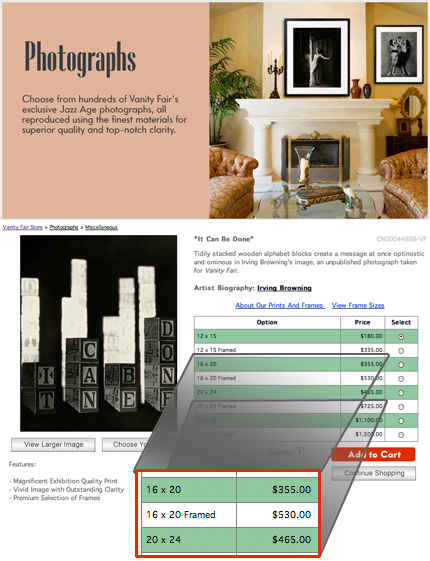
Those are very respectable prices - yet the photographers, atleast under the terms of the agreements they sign for assignments now, are not entitled to a dime from the sales of those prints. Next up will be more recent prints, you can bet on it.

So too, are images available for sale from the Encyclopedia Britannica image archives, as About The Image reported here. 55,000 images, over two-thirds digitized, and ready to e-mail to you!

When clients tell you they need all rights, copyright transfers, work-made-for-hire, and so forth, and tell you they'll never do anything with them "we just need to get all the rights...", it's highly likely they are mis-informed, or just not telling the truth.

Please post your comments by clicking the link below. If you've got questions, please pose them in our Photo Business Forum Flickr Group Discussion Threads.



[More: Full Post and Comments]

Enter Laforet: Game On!

It is with pleasure that I highly recommend you check out my friend Vincent Laforet's blog - titled - what else? - Vincent Laforet's Blog! Calling something that Vincent has engaged in something as basic as that belies it's future potential. Consider something titled 17, or, The White Album.

Vincent uses this as the graphic lead-in for his blog - a very cool aerial:

So what's he got over there?

(Continued after the Jump)

Before leaving for the Olympic Games, he's posted tech tips, a link to his piece "The Cloud is Falling", and it's an opportunity to dialog direct with Vincent.

He's also got a list of his mentors (in case you were wondering), his favorite blogs and websites, and a list of friends and colleagues. I'm guessing that since he listed this blog on the Blogs I Read Daily section, I didn't make it onto the Photographers Friends & Influences section. Who knows, maybe that will change!

So, head on over there, and see what he's got to share. Bookmark it, and follow along as Vincent blogs from Beijing! (Censors permitting!)

Please post your comments by clicking the link below. If you've got questions, please pose them in our Photo Business Forum Flickr Group Discussion Threads.


[More: Full Post and Comments]

Saturday, August 2, 2008

A Must Read - ASMP's Professional Business Practices in Photography

If you're looking for a resource for information on the business of photography, this book must be on your bookshelf. I've had several previous editions, and now the 7th is out, and available for pre-order. The last one - ASMP Professional Business Practices in Photography: Sixth Edition, was published on September 1st, 2001. We all know, A LOT has changed - in fact, the world changed just 10 days later. This edition - the 7th, will rock your world, right now - guaranteed.

So - hit this link: ASMP Professional Business Practices in Photography, 7th Edition and go get it!

If you're an ASMP member, check your e-mail, or log-in to the ASMP website members area for a special discount code to get it from the publisher at a discount, and get it from the publisher direct - ASMP Professional Business Practices in Photography, 7th Edition.

So, why, you might be wondering, would *I* promote another book on the subject of business practices for photographers?

(Continued after the Jump)

It's simple - I want you to have as much knowledge on the subject as possible. Am I concerned that you might buy this book instead of mine? Not at all. First, my book lists for just under $30, and on Amazon it's just under $20. This book lists for the same price, and I'd guess that Amazon's price will be somewhere around mine. If, combined, you don't have about $50 to spend getting your business practices in order, then you're not thinking straight. You'll easily earn that pittance of an expense back within two weeks of having spent the dough.

On Amazon, my book frequently gets paired with Michael Grecco's book,and Joe McNally's book,as well as Dick Weisgrau's book,and others. Nothing would be better than if this book, and mine, got that pairing.
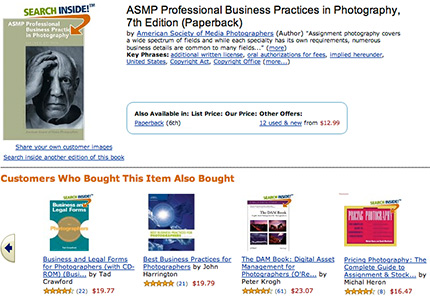
Natch - it is!


Here's what ASMP wrote about the book:
This classic guide is the ultimate source on key business practices and industry standards from the foremost authority in professional photography.

From standard practices in stock and assignment photography to special one-time decisions such as acquiring a digital workstation, this “business bible” provides the latest answers to any legal or business question an aspiring or professional photographer can ask.

With in-depth chapters, over two dozen industry experts offer practical guidance on such topics as estimating prices, formalizing agreements, using electronic technology, and much more. This completely updated Seventh Edition also features dozens of ready-to-copy legal and business forms, helpful checklists, and an extensive cross-media bibliography.
Here's the Table of Contents:

PART I THE BASICS

Section 1 Understanding Licensing
Chapter 1 Industry Overview: Understanding Licensing—the Key to Being a Professional Photographer by Susan Carr
Chapter 2 How to Price Professional Photography by Susan Carr
Chapter 3 How to Write a License by Jeff Sedlik
Chapter 4 Selling Your Pricing Structure by Susan Carr
Section 2 Copyright—Protecting your Assets
Chapter 5 Understanding Copyright by Richard Weisgrau and Victor Perlman
Chapter 6 Registering Your Work by Stan Rowin
Chapter 7 Metadata Basics by Judy Herrmann
Chapter 8 Using Metadata is Key to Photographic Professionalism by Ethan Salwen
Chapter 9 Enforcing Copyright: Dissecting the Infringement Case by Nancy Wolff
Chapter 10 Smoking Guns—How to Handle Clients Who Exceed Prior Licenses by Henry W. Jones, III
Chapter 11 Frequently Asked Questions by Stan Rowin
Section 3 Assignment Photography
Chapter 12 The Assignment Photographer by Susan Carr
Chapter 13 Interviews with Assignment Photographers by Leslie Burns-Dell’Acqua
Chapter 14 Making Strides with Your Fine Art Career by Amy Blankstein
Chapter 15 Moving into Motion by Ethan Salwen
Chapter 16 Book Publishing by Shannon Wilkinson
Section 4 Stock Photography
Chapter 17 A Brief Explanation of the Business of Stock Photography by Betsy Reid
Chapter 18 Stock Licensing Models by David Sanger and Betsy Reid
Chapter 19 Editorial + Commercial Stock: Worlds Apart by Rivaldo Does
Chapter 20 Stock Contracts: Look Before Your Leap by Robert Rathe
Chapter 21 Going Portal: Clearing Defi ning Stock Photography Portals by Ethan Salwen
Chapter 22 Interviews with Stock Photographers by Leslie Burns-Dell’Aqcua
Section 5 Paperwork
Chapter 23 Why These Forms are Critical to Your Business by Richard Weisgrau and Victor Perlman
Chapter 24 Sample Forms—Estimate, Confirmation, Change Order, Delivery Memo, Invoice, Indemnification
Chapter 25 Terms and Conditions for Your Business Paperwork by Richard Weisgrau and Victor Perlman
Chapter 26 Smooth Sailing: Avoiding Business Conflicts by Jay Asquini
Section 6 Releases
Chapter 27 Why You Need Releases
Chapter 28 What’s In a Release
Chapter 29 Property Releases
Chapter 30 Special Considerations for the 21st Century
Chapter 31 Trademarks
Chapter 32 Ideas For Getting Signatures
Chapter 33 Frequently Asked Questions About Releases
Chapter 34 Sample Releases
Chapter 35 Your Professional Team: Attorney, Accountant, Estate Planner and Insurance Agent by Alan Rabinowitz
Chapter 36 Preserving Your Visual Legacy: Estate Planning for Photographers by Aaron D. Schlindler
Chapter 37 ASMP Prosurance by Scott Taylor
Chapter 38 Is Your Assistant an Independent Contractor or an Employee? by Mark Tucker
Chapter 39 Guidelines for Assistants by Pamela Kruzic
Section 8 Digital Business Essentials
Chapter 40 Digital Asset Management by Peter Krogh
Chapter 41 Universal Photographic Digital Imaging Guidelines
Chapter 42 Digital Technicians by Ethan Salwen
PART II CRITICAL SKILLS

Section 9 Marketing
Chapter 43 7 Steps to an Effective (and Doable) Marketing Plan by Leslie Burns-Dell’Acqua
Chapter 44 Websites by Leslie Burns-Dell’Acqua
Chapter 45 Website Success Case Study by Blake Discher
Chapter 46 Website Usability Considerations by Blake Discher
Chapter 47 Art Directors Voice Their Do’s and Don’ts by Elyse Weissberg
Chapter 48 Reps and Marketing Assistants and Consultants, Oh My! by Leslie Burns-Dell’Acqua
Chapter 49 Reinventing Yourself by Elyse Weissberg
Section 10 Negotiating
Chapter 50 Negotiating Principles by Michal Heron and David MacTavish
Chapter 51 Negotiating the Assignment Deal by Richard Weisgrau
Chapter 52 Negotiating Quick Tips and Telephone Cheat Sheet by Blake Discher
Section 11 Customer Service
Chapter 53 Working WITH Clients by Leslie Burns-Dell’Acqua
Chapter 54 Turning Projects into Relationships: Give Them an Experience by Leslie Burns-Dell’Acqua
Section 12 Managing Change
Chapter 55 Value Your Work: An Educated Photographer Is Your Best Competition by Emily Vickers
Chapter 56 The Sky is Falling, Grab Your Camera by Judy Herrmann

So, what's stopping you? Go - hit this link: ASMP Professional Business Practices in Photography, 7th Edition and get it! I did - the second I read the e-mail.

Please post your comments by clicking the link below. If you've got questions, please pose them in our Photo Business Forum Flickr Group Discussion Threads.


[More: Full Post and Comments]

Thursday, July 31, 2008

OrphanWorks Being Held - For Now

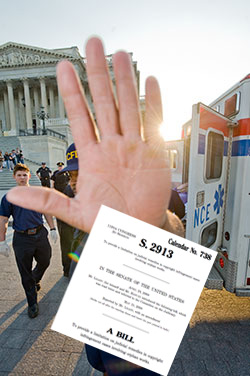
According to this statement by Sen. Leahy, his beloved OrphanWorks bill "is being stalled from Senate passage by an anonymous Republican hold." It is believed that the hold was placed by Sen. Sam Brownback, not so much because of his love for photographers' rights, but because of his interest in "assuring fair rights and rules across platforms", as Senator Leahy put it.

Ironic, in-fact, maybe approaching pathetic, that Sen. Leahy would write "I anticipate that this hearing will move us closer to considering legislation that ensures artists are compensated fairly when their work is performed, regardless of the platform over which the performance takes place", when, while he's speaking about musicians in that statement, artists - in the form of photographers - will be denied fair compensation when their work is performed (i.e. published) under the guise of it being an orphan, despite the various platforms that will use them.

This should not delay you, as ASMP urged, to contact your Senator. ASMP has provided a sample letter here, and contact information here. The APA too has urged you to take action - and you can use their resouces to contact your Senators - BOTH OF THEM - immediately. Visit here for that information. Go now.

This session's version of the bill is on it's death bed, and Sen. Leahy has called in the paramedics and he himself is charging the paddles now to try to revive his malformed work of art. Do the right thing and assist in pulling the plug by building a groundswell of oposition from other Senators to this bill.

(Comments, if any, after the Jump)


Please post your comments by clicking the link below. If you've got questions, please pose them in our Photo Business Forum Flickr Group Discussion Threads.


[More: Full Post and Comments]

Wednesday, July 30, 2008

PDN/Billboard Photo Contest - Fair Terms

We were critical of PDN for their recent contest terms (No Confidence Vote for the PDN/NGS Contest, 1/28/08), which were explained away as just boilerplate text that someone wrote, and weren't thinking, and which they fixed. Well, thankfully, the attention that those terms recieved ensured that this contest they have ongoing now (and one can only hope - future contests), will have better terms for the submitting photographers that are much more inline with what they actually need.

Here are the terms:

(Continued after the Jump)

By participating, ALL ENTRANTS grant Sponsors and their designees, licensees and affiliates (the "Authorized Parties") a non-exclusive, worldwide license, through December 31, 2008, to post the entries online so that viewers may view all competing entries. In addition, each WINNER grants to the Authorized Parties a license for use of his/her winning entry in connection with The Summer Music Moment Photo Contest and promotion of The Summer Music Moment Photo Contest, in any media now or hereafter known, including but not limited to: publication in PDN and/or Billboard magazines showcasing the winners; The Summer Music Moment Photo Contest live gallery; the Summer Music Moment Photo Contest Web site (www.billboard.com/photocontest) and on PDNOnline.com and billboard.com; and in exhibits and promotions related to the Summer Music Moment Photo Contest. The license is a non-exclusive, worldwide, 24 months (beginning the date winners are notified) license to reproduce, distribute, display and create derivative works of the entries. Authorized Parties will not be required to pay any additional consideration or seek any additional approval in connection with such use.
Now that's a reasonable request. Thank you to PDN and Billboard for being responsive to the concerns outlined by others (and here) about a photo-centric publication having terms that are fair to photographers!

Here's the one challenge, and it's not PDN or Billboard's fault - it's a fact of life, and the rights of those being photographed. The contest (appropriately so) requires photographers to have releases from the subjects in the photos. So, good luck submitting the images you made covering Van Halen's reunion tour, or any other major act. I've heard it can be done, but it's a major hurdle that you'll have to surmount. Here's the language:
If the photograph contains any material or elements that are not owned by the entrant and/or which are subject to the rights of third parties, and/or if any persons appear in the photograph, the entrant is responsible for obtaining, prior to submission of the photograph, any and all releases and consents necessary to permit the exhibition and use of the photograph in the manner set forth in these Official Rules without additional compensation. If any persons appearing in any photograph is a minor in their state/province/territory of residence the signature of a parent or legal guardian is required on each release.
That means that you'll have to talk to Billy Rae Cyrus if you have photos from Miley's concert you're looking to submit, since she's a minor.

Folks, this is a commercial use by PDN/Billboard, and appropriately so, releases have to be in hand for their use. Good luck entrants. For more details on the contest, check out: Summer Music Moment - About the Contest.


Please post your comments by clicking the link below. If you've got questions, please pose them in our Photo Business Forum Flickr Group Discussion Threads.


[More: Full Post and Comments]

Tuesday, July 29, 2008

Royalty-Free's Decline, and Jupiter Images' Demise

Paul Melcher's blog - Thoughts of a Bohemian -Jupiter is Not Responding, talks about the decline in the Royalty-Free market:


Without significant numbers, it is hard to figure out why Jupiter is having such a hard time. Guess is that they are suffering from the same effect as Getty Images : a declining rights manage market, a suffering traditional RF demand, and a microstock division not covering for the losses.
And that got me to thinking that it might be time to dust-off an old perspective that needs to be re-visited.
(Continued after the Jump)

Simply put - if you need a photograph of a man waving a flag with fireworks behind him, and I sell it to you for one time, or a limited rights package, when you need it again, you'll pay me again - and likely pass that expense on to the client. If, instead, I sell it to you once, for an unlimted amount of time and uses, I only get paid that once (and often a fraction of the charge of the first time) and you can use it forever - still likely to pass the "standard rights-managed charge" to the client - obstensively for "access to your image library" (of RF images.)

What flunkie accountant didn't see that this well would eventually run dry? Lots of up-front one-time CD sales for $249 with 100 images, organized by theme - all you can eat/use. There's no back-end resales of those images to that client - ever.

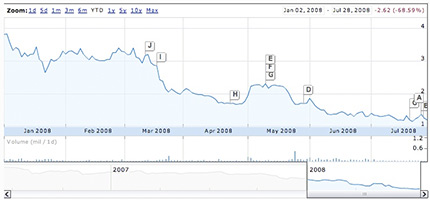
In the quest for Wall Street appeasement, Getty rolled-up many smaller companies, and slashed and burned their way through the industry. Jupiter Images (Nasdaq: JUPM) has watched a similar fate appear. Meckler points to the chart below (a 68% decline in 6 months, and heck, a year ago it was $8.14, now it's down to $1.20), and it sure looks like Getty's chart:


Should we be surprised? Nope.

Fortunately, things can begin anew, without the Gettys and Jupiters of the world (in their current form), once they're gone. The images of people using cell phones will become dated, so too people with cars, hairstyles, clothing styles, and other things that make a photo look old. When was the last time a stock image of a CRT television was used? In a few short years, the image to show was a flat-screen TV, and with the 2009 shift to digital by the broadcasters, CRT televisions are done and gone for - so to images that include them. A Motorola flip-phone? So 90's!

August 7th, when much of New York is vacationing in the Hamptons, Jupiter will have their 2Q financial results (MarketWatch reports here), and Meckler suggests they're reveal there a slashing of upwards of 100 employees. When you run into once of these employees, remind them that the historical excuse for why they were attempting to devalue the business by selling microstock/Royalty-Free - "I was just doing my job", or "I was just following orders", just doesn't excuse their behavior.


Please post your comments by clicking the link below. If you've got questions, please pose them in our Photo Business Forum Flickr Group Discussion Threads.


[More: Full Post and Comments]

Monday, July 28, 2008

BusinessWeak - Amateur vs. Pros?


I've written about BusinessWeek before ( Diversification and A Variety of Clients, 2/11/07), and usually in more positive terms. A piece datelined July 28, 2008 - Cheap Photo Sites Pit Amateurs Vs. Pros - sub-titled "Graphic design and photography pros are scrambling to stay viable as barriers to entry fall and stock agencies buy from hobbyists", misses it's mark in several places.

When author John Tozzi writes:

Affordable digital cameras and desktop design software unlocked the tools of these trades, but the dilemma isn't unique to visual professionals.
He misses an important point. Unlocking the "tools of these trades" is like handing a pipe wrench from aisle 3, or a voltmeter from aisle 18 of your local Home Depot to a weekend warrior, and then calling those Jacks a plumber and an electrician. Fortunately, because their work runs the risk of flooding a basement, or burning down a house and killing someone, both fields have licensing requirements for them to practice their trade, and the sides of their vehicles read "Licensed, Bonded, and Insured."
(Continued after the Jump)

Where's the license to call yourself a photographer? We should consider the idea (most recently) put forth by New York State, that wedding photographers obtain a license to do their jobs, and put up a $5,000 bond. (Proposal here).

Then the article goes on to suggest:
The line separating professionals from dabblers blurred a little more on July 8, when leading stock photo agency Getty Images partnered with photo-sharing site Flickr (YHOO) to bring select Flickr users into the Getty collection.
No, that's not quite right either. The line that separates professionals and dabblers wasn't blurred, the professional business of Getty Images sought to sell (i.e. monetize) the images of these dabblers. The dabblers aren't all of a sudden (even slightly more) professionals, a professional business is now looking to sell the works of "select Flickr users".

Instead, it might have been said "The largest stock photography business in the world sought to pick the best images from the dabblers who upload their images to Flickr, allowing Getty Images to round out their library with images they don't have sufficient holdings of, and incorporate images that are already ready to be licensed, and who's producers are not as knowledgeable about what their images are worth."

Then the article just doesn't get it, when they write:
So how much do the new Web offerings really hurt these pros? Defenders argue they've created a new market at a lower price range for customers who never would have paid the fees professional designers or traditional photo agencies charge. "The great thing that we see in the emergence of microstock is that it's significantly expanding the pool of people paying for imagery," says Getty Chief Operating Officer Nick Evans-Lombe.
Nor does Getty get it. Yes, I agree that a person working on a term paper will now be able to incorporate a photo for $1 that they might not have. But gone is the inquiry "is this for a term paper, or an annual report?" This contemplating that the production of the term paper takes the image producers photograph and it benefits one person, and for the annual report, that image benefits tens of thousands (or millions) of people. If I could be certain to a significant degree that my images priced at $1 (maybe $5?) would only go to term papers, and in a family scrap book because they just couldn't find a postcard (or take their own photo) to memorialize how they remembered a location they visited, and my image did that for them, I might just consider that license - provided that I didn't have to make any of my own effort to affect the transaction.

Evans-Lombe is just missing the point here. If there were 100 people licensing images before, and now there's 1,000 because the per-image price has dropped from an average of $200 to an average of $1, those additional 1,000 people won't make up for the lost revenue from the 100 people from before. In fact, stories about about photo buyers who are buying those $1 images and charging the same to their end client as before - pocketing a difference that is rightfully due the photographer.

Here's where the article really starts to go downhill in it's credibility (no, it hadn't hit rock-bottom yet) - they cite Derek Powazek, who identifies himself as "designer, photographer, and CEO of Pixish". All Powazek has to do is add Ms. Daisy's driver, Beatnik, and rabble-rouser to his list of things he "is", and I think he's got a double trifecta. Maybe though, it depends on the meaning of what "is" is?

We previously wrote about Pixish (Pixish - Stupid Is, As Stupid Does, 2/12/08), and the article notes that "Powazek argues that the people posting jobs on his site, who generally offer rewards of $100 or less...", but did the author bother to check some of the silly "job" postings? Powazek himself offered:
"Fray's Geek Issue - Winners will be published in Fray issue 2. Winners will get a few copies of the book, credit and promotion on the website, and our eternal thanks."
ETERNAL THANKS? But wait - it gets more laughable. Another request from Powazek -
A Leaf in the River Tattoo - The Details - I want your work on my body - I will paypal the winner $100 and email them a photo of their work on my arm upon completion.
Other "rewards" we highlighted
"The winner will get a hearty pat on the back"; and then there's "The prize is priceless: My love and admiration. ... But really, do prizes and goodies drive your craft? Are you in this game because you love to see a grown man smile?"; or try this one - "You'll bring serenity, hope and joy to people who really need it. Isn't it great?"
No, actually, it's not great, Derek. Yet no doubt, Dereks' venture capitalists will be pleased to see their little gem (my VC friends, that's CZ you're admiring, not a FL/4Ct/D/Trillion you've spotted) cited in BusinessWeek. Yet, Pixish will be a part of the roadkill of Web 2.0. Bet on it.

Then, on a (supposedly) hopeful note, they cite PhotoShelter (yes friends, an advertiser here on the blog)
"One company positioning itself as a photographer-friendly alternative to microstock sites with its PhotoShelter site is Bitshelter."
Yet after citing it, they are more than happy to find the photographer who hasn't made a sale, " San Francisco freelancer Lane Hartwell said she never made a sale on PhotoShelter, nor had any colleagues she knew of."

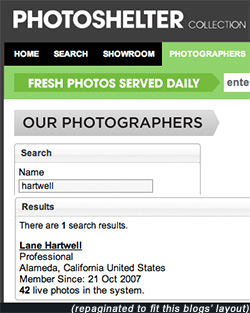
Yet, Hartwell's site shows she has 98 images (search results here) on her personal site, and just FORTY-TWO available for sale/licensing on the PhotoShelter site she's complaining about (see graphic). but of course She has 24 of Barack Obama (here), 14 of Ted Kennedy (here), and FOUR random others (here). The search of ALL of her images can be seen here.

Apparently, Hartwell could well find herself a Flickr/Getty Images photographer? Or, perhaps not. This Wired Article (Why Lane Hartwell Popped the 'Bubble' Video, 12/14/07), refers to her as "A constant chronicler of the local technology and art scenes, she's about as "wired" as a photographer could be, documenting everything from colorful geek parties to the annual Burning Man festival."

The article starts "When one of Lane Hartwell's photographs showed up without her permission in a popular viral video, she wasn't flattered. She was frustrated... she switched her Flickr account to private, pulling most of her 5,000 images out of public view.", because prior to that "A magazine plucked an image from her Flickr account, and many websites have stolen her images"
, and "Gutting her public Flickr account was a simple act of self-protection, said Hartwell."

I will say this though, in defense of Hartwelll, when the article suggests "She admits some people react like she's a "crazy cat lady" when she stands up for her right to protect her works, an unpopular stance in certain online circles", I say go get more cats. Go get more crazy. But she'll have to have a lot more than 42 cats up for sale to generate revenue from PhotoShelter, so complaining when you have that few isn't a valid complaint - especially for subjects so over-photographed as Obama and Kennedy! Worse, why didn't the BusinessWeek reporter ask her questions like "how many photos do you have up for sale?" That would seem like an obvious question to ask.

Grover Sanschagrin, Co-Founder and VP of Business Development of PhotoShelter notes, "if people expect to sell images like crazy and take business away from Getty, they're gonna have to whole-heartedly participate in the movement that displaces them. Photographers who stand on the sidelines with a 'wait-and-see' mindset have no right to complain about the state of the industry."

Sounds to me like somebody's got some keywording, captioning, and uploading to do, post-haste.

Dan Heller, who's blog (Dan Heller's Photography Business Blog) has gone dormant since mid-May, noted at the end of the piece "Selling yourself is not selling your photos," Heller says. "You can't say, 'My images are worth a premium,' but you can say, 'I am worth a premium.' " Well said, Dan.

Please post your comments by clicking the link below. If you've got questions, please pose them in our Photo Business Forum Flickr Group Discussion Threads.


[More: Full Post and Comments]

Sunday, July 27, 2008

Evaluating A Memory Upgrade

I was talking recently with Eric Chan, of Adobe, who’s one of the Adobe guru’s on Camera Raw. Since we use Camera Raw to convert all our camera’s proprietary Raw files into the DNG open format (created by Adobe and given to the world) , for many many reasons (see here and here for several why), and I asked him about Camera Raw’s memory usage, and optimizing for that.

I asked Eric what the optimal memory would be for my G5 Quad 2.5. I was considering switching to a faster machine, but first wanted to know about optimizing my current system, and improving speeds and throughput, if possible.

(Continued after the Jump)

I told Eric that my Quad had just 2GB of ram in it, and he suggested I upgrade to 8GB, if possible. He said that much more than that, he thought, wouldn’t do much more for me.

Currently, my machine can process a raw file into DNG in 7.45 seconds, fresh restart, only Photoshop running. I ordered my memory (yes, SimpleTech), and paid $292 for the additional memory. When the chips arrived, we installed them, ran a memory test, and re-processed the exact same files the exact same way. The results? 3.28 seconds per image – a reduction per image of 4.17 seconds per image.

So I did some calculating. You should too.

Remember those high school match questions that went something along the lines of:
“a train traveling 65 miles per hour leaves Albuquerque headed to Abilene non-stop, and a train traveling 80 miles per hour leaves Abilene headed to Albuquerque, and the trip is 487 miles, at what point will they meet?

Extra Credit: what is the closest city they will meet in?”
Here’s where that type of math plays out in your real life.

Assuming you’re paying $20 an hour for a post-production person, and that person can process an image in 7.45 seconds per image. By spending $292, you can increase that person’s productivity by 4.17 seconds per image. How many images much you produce before you can break even on the memory expense?

Show your work.
$20 = 60 minutes = 3,600 seconds, or $0.0055 paid per second. (That’s 6-tenth’s of a cent per second.)

Current Configuration: 7.45 seconds per image – staffing costs - $0.041 cents per image processed. (that’s 4.1 cents per image processed.)

New Configuration: 3.28 seconds per image – staffing costs - $0.018 cents per image processed (that’s $1.8 cents per image processed.)

Savings: 4.17 seconds per image, staffing costs savings - $.023 cents per image (that’s 2.3 cents per image.)

Next, divide the price paid for the memory - $292, by $0.023, and you arrive at 12,696 images.

Answer: By spending $292 on a memory upgrade, the cost of that upgrade is covered by a more productive post-production person after just 12,696 images.
For Extra Credit:
If I shoot an average of 4 assignments a week, with a range of between 200 and 400 images per assignment, approximately how long before I arrive at that cost savings?

Show your work.
4 assignments a week averages 300 images per assignment, or 1,200 images per week.

Answer: By the eleventh week, the cost savings will be realized. Since a common calculation for businesses to make is to determine if an investment in plant or equipment will pay off in 18 months of less, this investment, which pays off in under 3 months was an obvious investment to make.
Now, look at your CPU speed - is it a dual G5? A Single G5? For you PC users out there - check your own speeds too. These type of investments can really pay off. Here's Apple's calculator to see if you should upgrade: Apple Mac Productivity Calculator. When you go to that calculator, the number you'll need to know is how many images you process in a day (on average is fine), and the amount of time each image takes to process on your current machine, in seconds. Once you have these figures, multiply them, and divide by 60, to get the number of minutes each day you spend waiting around. For example, waiting 7.45 seconds per image, processing 1,000 images a day, is 124 minutes spent waiting around. Choosing the G5 Quad, Adobe Photoshop, entering in 124 minutes into the "Estimated time you wait while using the above application (minutes/day)" line, and then entering in $20/hour, and 1 workstation, results a savings each month of $164.92, and annually, a savings of $1979.09. Very interesting, indeed.

Please post your comments by clicking the link below. If you've got questions, please pose them in our Photo Business Forum Flickr Group Discussion Threads.
http://


[More: Full Post and Comments]

Tuesday, July 22, 2008

SEO and Stock Photography Research

More and more, prospective clients are searching for imagery on the internet, and, more specifically, Google Images. Yes, the other search engines have image search, but for today, we'll limit this discussion and comparison of capabilities to Google's systems.

How do we compare SEO (that's search engine optimization if you're living in the dark ages) between the industry behemoth Getty (and their ankle-biter brands) with Digital Railroad, PhotoShelter, and, for kicks, our own SEO efforts.

It gets interesting fast.

(Continued after the Jump)

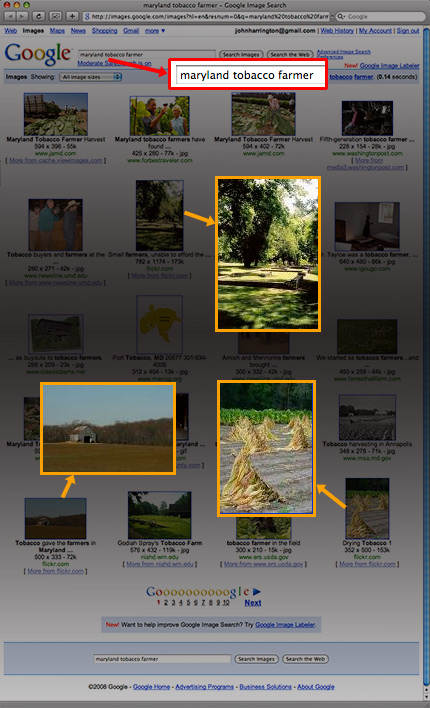
First, let's look at the results from a search for "maryland tobacco farmer":

Notice that Jamd is Getty's consumer media website (About the Image - reported here, 7/11/08). Jamd appears in position #1, #3, and #13.

On that same page, and for the same search, Flickr returns:

Flickr returns images in positions #6, #17, and #20.

This is a remarkable way to leverage the search tool that people are already using. So, how am I doing?

Several years ago, I obtained several URL's for this purpose. One of them is www.Stock-Photography-Research.com. Going there, you can browse though several thousand of my images, but they're not designed for you, the individual, to browse. They're designed in a way to maximize their ability to be returned on the search engines.

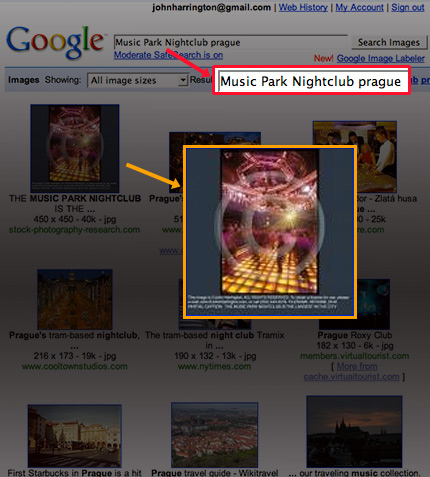
Suppose you were working on a travel book on Prague, and were looking for an image of the nightlife there - specifically the Music Park nightclub. A Google Images search would return:

Yes, that would be my image, in position #1.

Of great importance is the contact information that is not only embedded in the metadata of the image, but also added to the bottom of the large version of the image, as seen here:


Of critical importance to any client visibility and marketing service is for online services like PhotoShelter and Digital Railroad to do the same thing. So, how are they doing?

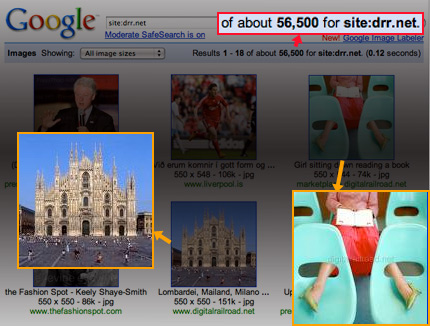
First up, Digital Railroad. Criticised here previously, they're doing well with SEO placement. Maris Berzins, President of Digital Railroad commented "SEO is a key focus area for us. Buyers have told us that they are increasingly using search engines to source photographers and images for licensing. As a result of our efforts and evolving buyer behavior, a growing percentage of traffic to the DRR platform— Member Archives and Marketplace— as well as competitor sites comes from search engines. Here are just a few examples of how DRR is driving buyer traffic to both our member archives and Marketplace." Here's a link showing that over 56,000 images on the DRR system are indexed:


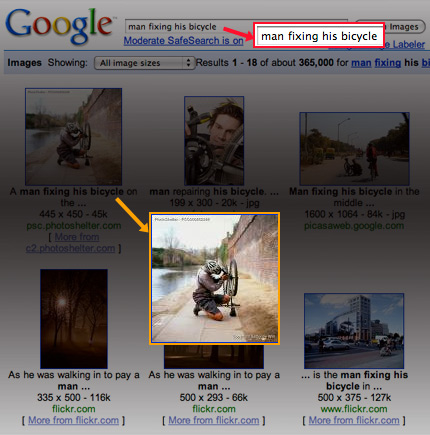
So too, here, is a PhotoShelter 1st place result:


According to Grover Sanschagrin: "Search engine providers have told us that heavily watermarked images provide a 'poor user experience,' and they receive a lower search ranking or are not included in search results at all. They've also told us that larger images receive a higher search ranking.

So, photographers who insist on adding watermarks to their images, and
photographers who are making their images small, and especially
photographers who are doing both, are doing themselves a disservice if their goal is to show up high in search engines."


To that end, you can see how PhotoShelter (above, on the "man fixing his bicycle" search) and Digital Railroad (left) are unobtrusively watermarking their images with information.

DRR's watermark appears with a center- aligned one, while PhotoShelter has the photographer's copyright information, and PhotoShelter ID# in opposite corners.

Here are several #1 results from PhotoShelter:

Digital Railroad has respectable results as well - check this link for "beijing Cheering practice" which returns this result, for example:


So, how deep does Google go into them? "well before the end of Q3 our total number of images indexed by Google is expected to well exceed 2.8 million images," said Tom Tinervin Sr. Director of Platform Sales and Support for Digital Railroad, and Sanschagrin reports that "Right at this moment, 41% of all the pages on PhotoShelter's site map are indexed by Google."

Sanschagrin went on to say: "We take search engine optimization very seriously. Over 25% of our traffic on the PhotoShelter Collection originates from search engines, and we monitor the efficacy of our SEO efforts on a daily basis.
"We've taken several step in order to allow the pages and images for the PhotoShelter Collection to be indexed by automated web spiders. Most importantly, all images on the site can be reached from pages without the use of Javascript or Flash via our photographer and term directories. Many sites that use AJAX to power their sites do not include the information in a manner accessible by search engines.

We also provide summaries of a page in the meta-description header and, when available, include keywords about the image. Our photographer and term index pages include links to RSS and Atom feeds that provide another mechanism for finding images. We provide sitemaps to the major search engines. The sitemaps are updated on an hourly basis to provide pages as quickly as possible to search engines, and by registering our domains with the major search engines we can monitor our site for any problems that may prevent indexing.

In addition, we are working with search engine vendors to prepare other forms of sitemaps that provide more information about our images."
Whew, that's a lot of information, but really shows how committed to SEO PhotoShelter is, and DRR's CEO's comments before echo the importance of getting their images to appear in the of Google Images.

So, if you're wondering just what you're shelling out your percentages of each of your sales for, SEO optimization of your images into the Google Images organic search results, and the ongoing efforts of both PhotoShelter and Digital Railroad, are a clear indication that this effort to reach the eyeballs of photo buyers continues.

Please post your comments by clicking the link below. If you've got questions, please pose them in our Photo Business Forum Flickr Group Discussion Threads.


[More: Full Post and Comments]

Sunday, July 20, 2008

Surviving the Downsizing in Photography

With thanks to PDN (here) and MediaPost (here) for bringing this to my attention. I wrote about this in my book - essentially, if you're a staff photographer you must be prepared to become freelance unexpectedly. 3500 people (and counting) are being forced into the freelance world (from all areas of the media newsroom) without notice. Back in April, I wrote Staff Photographers - An Endangered Species, which is worth a re-read.

What does this mean, exactly? And more importantly, what should current members of the freelance community do as those that are the talented photographers that are a part of these layoffs enter the freelance world?

(Continued after the Jump)

For staffers, your first thing to do will be to have a website. I know of several current staffers who have their own websites. that means having your own business cards to hand out where appropriate. This means knowing how to send a contract and figure out rates and rights.

Oh, and if you're one of those staffers who used to look at a $200 freelance job as gravy to complement your meat-and-potatoes staff job revenue, and now you're out of a job - those clients you have expecting you at $200 you can no longer afford to work for. This alone should be an argument for why you - as a staffer - shouldn't be doing these jobs at side-job rates, not to mention how doing this affects your freelance brethren's ability to charge a living rate in your community.

What must be done by the freelance community these photographers are joining? I know it sounds counter-intuitive, but you need to get them work. Really. The question is - how?

If your normal rate for a wedding is $3,500, or a press conference coverage is $750, or your family/pet/child portrait sitting rate is $350 and an enlargement is $950, then rather than trying to convince your newfound friend to charge those rates - book the job on their behalf - at those rates. By doing so, your friend will soon realize that that is what they're worth, and will apply that same rate structure to people calling them directly. Everyone, from time to time, gets a call for a period that they are double-booked. Don't forward on the job, and hope your friend does things right - do it right for them by taking the job and then you hiring your colleague to do the assignment, and you passing through the assignment fee to them. What chance to do it right do they have if they've never negotiated an assignment rate, or a rights package, before?

By embracing, and helping these talented people out, not only are you doing a nice thing, but you're also ensuring that your community will remain robust and survivable amidst the constant downward pressure on rates.

Here's a partial list of where they might need some assistance:

Contracts - If a photographer has been a staffer for awhile, it's likely their last agreement to provide photography was done on a handshake. If a photographer has only been on staff for year or so and came straight from school, they too don't understand the importance of a contract - signed by them and the client. Offer to give them a copy (prefably in a Word document so they can edit it) of yours to get themselves started.

Equipment - They likely need help getting their equipment setup. They may have been given their old equipment from their place of work, but in most cases the gear is on it's last legs. Redundant camera bodies, and lenses ranging from ultra-wide - 14-24mm Nikon, or 16-35mm Canon, all the way to 200mm lenses for each, plus two strobes, and a Jackrabbit/Quantum battery pack will be sufficient. In the rare case that they are going to do sports, or major news events, a 300mm with a 1.4x or 2x teleconverter is useful, but freelancers headed that direction with a need to sustain themselves are not going to find a lot of success chasing sports.

Software - They may have their own laptop, but are unclear about the importance of backing up their images, and acquiring legal copies of the software they'll need. Don't start them off on the wrong foot by giving them copies of your software. We recommend they get full versions that are registered in their own name of Photoshop, Photo Mechanic, FotoQuote, Microsoft Office 2008, QuickBooks Pro. They should also read: © Infringements - Don't be a Hypocrite.

Dealing With Clients - Send them this link - Lies, Lies, and More Lies , Traitors Among Us?, and this link - Top Ten Lies Told to Naive Photographers, and encourage them to read the posts - the first two are mine. Then, be sure to tell them that when the client says "oh, you're the first photographer I've talked with that has a problem with __________....", where the blank is either "work-for-hire", "wanting to be paid", "charges for post production", or "wanting a contract signed"; they they're being dishonest at best, and more than likely, lying.

Marketing - This one's tricky, because if you're not careful, you'll teach your newfound freelancer to compete for your own work - and will be doing so without the understanding of the true costs of being in their new shoes as a self-employed person, and so may well undervalue themselves (they did just get laid off, remember? Their self-worth wounds likely need a bit of time to heal before they remember that they're worth a lot.) About two weeks ago, I wrote a piece titled Getting Clients - A Few Options, that could be helpful. Most important is to get a website that you can get online fast, and is easy for you to make changes to - Effective SEO - Please Welcome liveBooks, talks about the solution we recommend highly (and yes, they're an advertiser here too). Once they get a website, they can begin their marketing campaign. The notion of having a printed portfolio these days applies maybe to 10% or less of the assignment work out there (much of which is in the advertising field) so the online version of that is the best route to go.

Pricing and Rates - The FIRST thing you should do is send them to the NPPA's pricing calculator. This calculator works for the vast majority of photographic fields, and gets your colleagues thinking about the true costs of being in business - which in turn, will assist them in calculating what they should charge. Reading Good, Fast, and Cheap - Pick Two, that I wrote in May is probably a good place to send them, also Selling Something You Don't Own is a cautionary tale. Cautionary to the person doing the helping is that neither of you say "we'll agree to charge $X for this..." because that could get you in a bit of hot water with the anti-trust folks. Discussing what an assignment could cost is one thing, agreeing what you both would charge is another. The biggest problem with photographers rates is not that they've been artificially inflated to a price that's too high, it's that photographers fail to contemplate the total costs of being in business, and thus price jobs too low.

Longevity - I sat at dinner three nights ago with a colleague who had thought he'd gotten his golden ticket - a staff job at a community newspaper. Just under three months later, he was laid off. Guess what? He wasn't eligible under the rules that applied to him, to even collect unemployment. Everyone is replaceable. No one is safe.

Then there's Where Does All Your Time Go?, that's all about time management and why $100/hr does not multiply by 8 hours a day, 5 days a week, and 52 weeks in a year to become a photographer that's paid $208,000 a year, and how $100 an hour isn't enough.

Lastly, I'd suggest they read: The Conundrum of Doing Nothing, that I wrote about how to get things going, and getting a few of the books that are at the right of this page - they are the tools that I used as I was growing my business.

Please post your comments by clicking the link below. If you've got questions, please pose them in our Photo Business Forum Flickr Group Discussion Threads.


[More: Full Post and Comments]
Newer Posts Older Posts