Wednesday, April 9, 2008

Selling Something You Don't Own

If I consent to being photographed while at an event, or for a portrait for a magazine, the photographer can do certain things with that photo, and cannot do other things. What they can do, is license that image, as stock, for editorial purposes only, provided that that editorial use is not libelous. What they cannot do, is license that image containing my likeness for commercial/corporate uses, without my expressed written consent to do so, usually codified in the form of a model release.

Yet, so many photographer I know sell something they do not own, and they could well get sued to within an inch of their lives if they're not careful.

(Continued after the Jump)
If you convey to a client "all rights", inherent in that rights package, under the definition of "all" is, in fact, the right to use that image for advertising and marketing, for corporate and/or commercial clients.

Think I'm kidding? Think again. You do not own the right to exploit someone's likeness for commercial gain without their permission - period. In fact, the legality of even placing images of a subject online - released or not - for the purposes of stock licensing of that image - even for editorial purposes - may be deemed commercial exploitation, and subject to restriction. Carolyn Wright over at Photo Attorney writes about the estate of James Brown, who "...filed suit against Corbis in Illinois claiming that Corbis violated Brown's right of publicity for "commercial use of his image on the Internet" by selling/licensing photos of him." (Legislature May Resolve Issue in James Brown v. Corbis Action - 3/31/08).

When you transfer "all rights" to a client, the least you must do is say "...all rights are conveyed for which no model releases are required, and photographer hereby stipulates that he has not secured model releases from any subjects." While I certainly suggest that clients who are asking for "all rights" don't need "informational kiosk displays in Minsk", that's what you're giving them, and you should work hard to define a clients rights packages by geography "United States Only", by language "English Only", by duration "for a period of 10 years", and by liability, as noted above.

Don't sell what you don't own, and don't kid yourself that you are not going to get sued, that's like playing with fire - you will get burned. IF you still don't believe me, call your insurance agent, and say:
"if I license to my client 'all rights' and then my client uses the photos I gave them for advertising, even though I didn't get a model release, since I licensed to my client 'all rights', do I have any liability?"
When they say 'yes', then you'll know. If they say 'no', then ask them to put that in writing, and ask them if they will, in the event you are sued, be willing to defend you, pro bono, if that advice is found to be faulty. They will then do some more research, and likely come back with the 'yes, you're probably either completely, mostly, or somewhat liable...", and then you'll have your honest answer.

Fair warning folks.
--------
disclaimer: I am not an attorney. Talk to one about all your legal advice!

Please post your comments by clicking the link below. If you've got questions, please pose them in our Photo Business Forum Flickr Group Discussion Threads.


[More: Full Post and Comments]
Tuesday, April 8, 2008

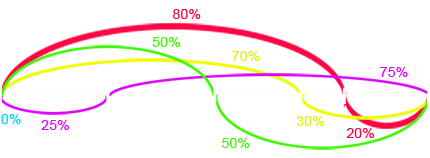
50/50, 70/30, 25/75, 80/20, 0 - What's in a number?

I'm sitting onboard a United Airlines flight from Savannah back to DC after an assignment down South. I was catching up on my BusinessWeek reading, and ran across a series of advertisements from Accenture. These are great ads featuring Tiger Woods. Interestingly, each ad runs double-truck, full bleed, with a single message point - one message point per entire issue. Since I read several during the flight, I've got five to share/discuss/dissect for your consideration.

The message points apply equally to photographers in business as well as those that the ad is targeting.

The message points are:

(Continued after the Jump)

Their first message point:
50% seeing things simply, 50% seeing things fully I.e. Combine razor sharp focus with a through command of the details.
How does this apply to you? It is akin to being driven to be (or remain) a photographer, but realizing, for example, that you need to be skilled in things like image management systems, resources for the various toners and inks and why UDMA is the next step in throughput.

Their second message point:
70% plan, 30% backup plan. Distinguish yourself not only through the astuteness of your strategy but also by your readiness to nimbly change course should circumstances dictate.
Today, on our assignment, we had a plan, and a backup plan, and then a backup to the backup. One other way to put it - from a military perspective, is "no plan survives first contact with the enemy." Knowing, for example, what you will do if your equipment misses the flight, or minimizing flights that are connecting and chosing non-stop flights will decrease the chance that the gear will miss the connection when there is a flight delay. And lastly, where can you rent your lighting once in your destination location if the gear still is missing come shoot day.

Further, I almost NEVER book the last flight anywhere. I always have the ability to catch the next flight if something goes wrong with my current flight. This happened last week on a flight from Oakland to Los Angeles for an assignment, and I needed to engage my backup plan. Thankfully, my assistants, whom I had left in Las Vegas, has the same separate experience, and knew enough to do the same thing enroute LA.

Their third message point:
25% risk, reward 75%. Continually recalibrate the balance of opportunity and threat for your enterprise.
Do you take the more frequent lower paying jobs, or do you "hold out a little" for the bigger fish? What risk level are you comfortable with?

Their fourth message point:
80% improving yourself, 20% proving yourself. High performers aren't defined by what they do to reach the top but what they do to stay there.
This is akin to the notion of reinventing yourself, don't rest on your laurels, don't get complacent, and so forth. This suggests continuing your education and learn - be coached, seek those smarter than you.

Their fifth message point:
0% distractions. Peripheral issues may divert the attention of some competitors, high performers maintain unrelenting focus on their highest priority goals no matter how tumultuous the business landscape. Check their research- http://www.accenture.com/research.
I can say that I have seen more than my fair share of distractions, and it's a challenge to avert my eyes and focus on what's most important.

These are well tested messaging points, and Accenture certainly should be commended for their efforts. What you should take away from these is a rededicated effort to focus on business - all aspects of it.

Please post your comments by clicking the link below. If you've got questions, please pose them in our Photo Business Forum Flickr Group Discussion Threads.


[More: Full Post and Comments]
Sunday, April 6, 2008

Starting Out - Taking A Second Job - The Right Way

One recurring conversation that I hear taking place is about photographers and second jobs - you know, the ones that make it possible to pay the bills.

The problem is, this is bass-ackwards from how it should occur.

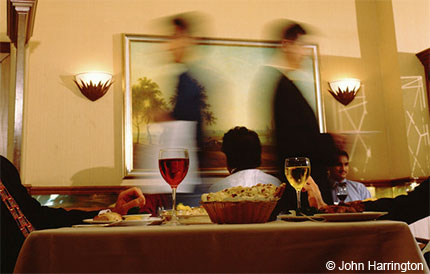
Take, for example, the waiter. A waiter has figured a way out to pay their bills (even if just barely) from month to month. A waiter in this position has a great opportunity to start a business in the field of photography out right. How so?

(Continued after the Jump)

Someone in this position can do an honest assessment of what it costs to be in business, and also what it costs to earn a living doing photography.

Say, for example, as a waiter you earn $150/day with wages and tips. An honest assesment of your cost of doing business (CODB) as a photographer might reveal that it would cost you $350 a day for every day you're shooting. So, even though a call comes in for $200 a day - more than your waiter income, but less than your CODB were you a photographer, you can - and should - decline the assignment.

Why?

Well, being a waiter, your CODB is just a pen, paper and a decent outfit. In fact, you may even have a uniform, but nothing more. Your CODB as a photographer would include costs for computers, internet, cameras/gear, business insurance, and so forth. The declination of the $200 assignment leaves you free to do business in paradigm which keeps you profitable, and moreover, leaves you free to seek out the proper paying clients that you not only can do your first assignment for, but also grow a solid relationship with - enough so that you can afford to leave your waiter job.

IF you have taken a second job to sustain your CODB as a photographer, then you're likely going to fail. It's really not a matter of if, it's most likely a matter of when.

In other words, your second job should be that of photographer!

Please post your comments by clicking the link below. If you've got questions, please pose them in our Photo Business Forum Flickr Group Discussion Threads.


[More: Full Post and Comments]
Wednesday, April 2, 2008

SI Pictures Boards A Sinking Ship

So, you can add (as descibed here on the Time Life Archive page) to the "... iconic moments of the 20th century, where you will find Alfred Eisenstaedt's sailor kissing nurse in Times Square, Margaret Bourke-White's Chrysler Building gargoyle and Gjon Mili's picture of Pablo Picasso "painting" with light, to name a few...." all of Sports Illustrated's imagery. It too is now in the hands of Getty Images (NYSE: GYI), with an announcement imminent by SI Pictures, but the deal was signed last month. I'm guessing they didn't want to announce it too close to April Fool's Day, because they'd have egg on their face as people laughed and said "oh come on, it's not 4/1 yet!"

(Continued after the Jump)

It seems that SI's archive has been languishing a bit, so the geniuses that thought they could monetize the collection are now looking to Getty and their rapidly diminishing interest in editorial/creative (as reported here - Fool's Gold - Getty Images' Future, 4/1/08) to somehow save them. Let's see, Captain Smith, where would you like those deck chairs again? Just substitute deck chairs for server blades full of sports imagery, and you begin to get the point.

Truth be told, the deal, inked in early March, was held off because they wanted to spring the H&F purchase announcement first, without causing a ripple in the sale of GYI. Interestingly enough, this is more about protecting the imagery (supposedly) from others, BUT, Getty has some major sales goals they have to meet. Don't think though, that Getty won't intersperse the search results with their own wholey owned content, and maybe, just possibly, goose the results to "just meet" their sales objectives/requirements. I wouldn't put it past them, that's for sure.

Interestingly enough, Getty has in their deal with the sports leagues rights that allows them - with certain restrictions - to sell their sports imagery for commercial/advertising purposes. Why? Because the leagues get a cut. And, this was one of the things that Getty was holding over the SI folks' heads - that SI could only sell editorially, but through Getty, those images - at-least of major league sporting events (which GYI has contracts with) - could be sold in a commercial fashion, for big big dollars.

It's amazing that SI Pictures would take a premium brand and allow it to be dilluted by Getty's flacid pricing structure. Anyone who needs sports imagery of the caliber of SI's already knew where to get it.

Good Luck SI, you'll need it. Remember, when push comes to shove, and there's a shortage of lifeboats, it's women and children first.

Please post your comments by clicking the link below. If you've got questions, please pose them in our Photo Business Forum Flickr Group Discussion Threads.


[More: Full Post and Comments]
Tuesday, April 1, 2008

I Call Shenanigans! - Nice Try

It's a crazy world we live in these days that some people believe whatever is in a "press release". Today, the prankster's favorite day, a prank was attempted on the stock photography industry.

Norway and the US are among the countries that celebrate April Fools Day, and one Norwegian company has taken to spoofing those in the US with the "news" that Crestock has aquired Corbis for $625 million. In fact, they even list it in their "news room" section, here. Yet, a review of the Corbis news room, here, shows no news reported. Me suspects tom foolery all around!

Biggest give-away? At the bottom of the Crestock release is reads "Additional information concerning these and other risk factors is contained in Crestock's and Corbis's most recently filed Forms 10-K and 10-Q." Yet, neither company files these forms.

Other things like typos "The revenue for 2006 was $251 million." Who cites two-year old revenue? In fact, Corbis doesn't even cite it's own revenue! Further, "...not the least because of the growth..."; "...but a new head quarter will be established..."; and the biggest laugh of all- "it's simply 'non stocky stock photography'..." even I know that that's a stupid thing to say. (By the way, for all you who constantly critisize my typos, I recognize the irony in my pointing out the typos of others!)

UPDATE: While not to be believed, supposedly, Corbis was contacted by Crestock to say their site was hacked (yeah, right) and someone posted this "news" blurb, and they haven't been able to get rid of the blurb all day. Mmmm Hmmm. What idiot writes site code and then loses sysop access? I've been writing code since 1984, and that was a basic principle of every program I ever wrote - don't get locked out of your own code.

Methinks Corbis is enjoying this little trickery. Maybe I should have titled this post - "I call Shenkanigans!"

(Comments-if you have nothing else to do-after the Jump)


Please post your comments by clicking the link below. If you've got questions, please pose them in our Photo Business Forum Flickr Group Discussion Threads.


[More: Full Post and Comments]
Fool's Gold - Getty Images' Future

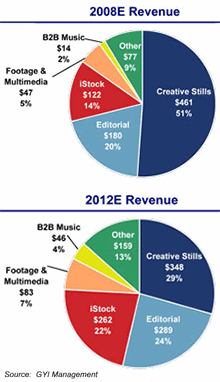
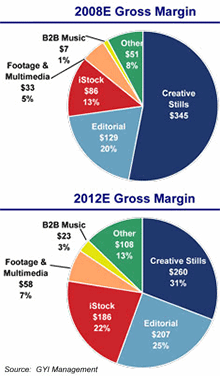
My colleague, Stan Rowin brought to our attention a Goldman Sachs slide about Getty Images (NYSE: GYI), sourced from GYI Management, which projects the future of Getty. Let's have a look-see at these thoughtful projections, and be sure to check out the article on the WashingtonPost.com website -
Getty Images: The Long Road To A Sale; Interest Waned As Process Went On.

Revenue
In 2008, Getty projects that 51% of their revenue will come from Creative Stills, and that, four years from now, that will plummet 43%, to 29%. So, if you're a Getty image producer in this department, this means that your income over the next four years will drop by 22%, even so as your cost of doing business increases over that same period.

In 2008, Getty projects that the editorial department will only see growth of just 4% over the next four years, for 20% in growth. Not so good when you look at the margins below. Consider that this is one of those departments likely to disappear.

In 2008, iStockphoto accounts for just 15% of Getty's revenue, which will grow about 50% over the next four years, to 22%.

Between 2008 and 2012, the music and footage/multimedia sees astronomical growth - relatively speaking. Music grows by 200%, Footage/Multimedia grows by 50%.

(Continued after the Jump)

Gross Margins
Worse yet, In 2008, the Gross Margin (that is, the gross difference between total income and net sales) will plummet from 53% to 31% by 2012 for Creative Stills as well, a comparable figure. In other words, don't look to efficiencies to apply to your business of creating images that go to Getty to offset your 22% revenue loss, you'll still be on the losing end of a losing proposition.

In 2008, for Editorial, the gross margin will only increase by 5%, comparable to that of it's revenue. In other words, there will not be a substantial leap from revenue to margin for this division. That's not likely to be sufficient for the new owners to keep it around.

On the other hand, there will be a 70% increase in margin for iStockphoto (moving from 13% to 22%), as more and more people contribute, and the costs associated with paying out $0.20 or so per image will decrease. This is remarkable, as Getty will also see that 57% growth in revenue (from 13% to 22%), meaning that iStockphoto will command more and more attention of those rearranging Getty's deck chairs.

Further, there will be a 200% margin growth in B2B Music, and a 50% margin increase in footage/multimedia between 2008 and 2012.

Take a hint from what happened with AOL and Time Warner. Back in the heady days of the dot-com 1.0 era, AOL was the one who bought Time Warner. Now, it's Time Warner who is looking to jettison AOL, or, at the least, the losing propositions/divisions of AOL's from days gone by. Beware the day that Hellman & Friedman trashes everything that does not meet it's margin standard, and sells off iStockphoto/Pump Audio/et al along with much of the wholly-owned Getty imagery as a nicely wrapped up deal under the iStockphoto brand.

Don't think so? 11 months after iStockphoto.com was registered as a domain name, iStockaudio.com was registered - check here. It was renewed January 9th of this year.

You see - PumpAudio becomes iStockaudio.com, iStockphoto.com gets an infusion of the best of Getty Images, and oh, their video footage gets wrapped up in iStockvideo.com, which was registered late back in 2003, but was renewed on the same day as iStockaudio.com was - January 9th of this year. Check the Network Solutions registration information here.

All if it, of course, wraps up nicely and neatly into the iStock.com URL, which will likely serve as the central clearing house for all three. Registered way back in 1995, it was renewed on, you guessed it, January 9th, 2008, as seen here.

Thus, this April Fool's Day the only true fools will be those that fall for the Getty Images line about how great things are, or will be in the future. I see the light at the end of the tunnel, but know enough to lay between the tracks to avoid the freight train that will crush anyone standing in it's way.

Related Stories:

Please post your comments by clicking the link below. If you've got questions, please pose them in our Photo Business Forum Flickr Group Discussion Threads.


[More: Full Post and Comments]

Monday, March 31, 2008

On Being a Professional

So many Idiots With Camera (IWC) go out, and make our lives more difficult. Whether acting up on TV, or being unprofessional in the execution of our photographic duties, the world sees us as less and less a professional, and more and more a nuisance.

Recently, I received information on two separate, and distinct demonstrations where professionalism was lacking, or simply devoid.

(Continued after the Jump)
The first was the fisticuffs that took place while paparazzi were covering the arrival of do-nothing heiress Paris Hilton in Turkey. Paris was busy trying to recover her image, as if she had one to begin with. Yet, the assembled photographers and videographers can be seen here throwing fists, and if you look carefully, you can see one TV cameraman using his $30,000 camera as a weapon, hammering down on an unseen victim.

The second is the situation where a wedding photographer was found to not deliver professional results - in fact, results not consistent with the portfolio they presented. (PhotoResearcher, by Joel Hecker, Esq) Further, the photographer did not deliver on the terms of the contract. Specifically, they did not bring an assistant they had said they would. Thus, they were found to be in breach of contract for this, and other reasons.

In an odd way, there are benefits to these incidents. Perhaps, people will become more discerning when they select a photographer. When I get a call from a 5-star hotel who wants to send me their "vendor agreement", which dictates how we may act, and comport ourselves while on site for the event (press conference, wedding, and so forth) and they require us to provide proof of insurance, I smile and send along the appropriate documentation, knowing that at-least 75% of my competition just got nixed from consideration, or, perhaps, when it's a last minute call for an event at those same venues, it's because other photographers (among that 75%) got nixed after the client had signed them because they could not meet the terms of that vendor agreement. It's surprising that I am among the minority of photographers who have liability insurance. One lost job is more than enough revenue to carry that insurance in the first place.

Over the years, I have covered countless movie premieres and events, and worked with many many A-level celebrities. It's easy to illustrate how we are different - ney professional - and clients fear the possibility of hiring an unprofessional photographer who does not know how to co-exist amongst the VIP's at their event. I recently received a call to travel to five countries this Summer over 12 days, for a premiere project. The client has indicated to me, when I asked "who have you used in the past..." responded about the trials and tribulations of working with an unprofessional photographer. This five-figure assignment was won not because I was the most talented with a camera, or because I had the best eye/vision, but because I have a track record with this client of being professional as I make my images.

Would I love to have all my assignments conveyed to me because of my unique vision? My creative capabilities? Absolutely! But, in the end, I am more than happy to that the assignments that come to be because I am 1) the only one available; 2) I was the only one who called back; or 3) I was the only one who had the right professional attitude to accomplish the assignment.

I see often clients who come to work with me, and then, for no apparent reason, stop calling. Then, they start calling back again. Over time, I've learned that these clients get lulled into a false sense of security thinking that the service level I deliver is comparable to that of others in my community who deliver at a price 30%-40% less than me. So, for a few hundred dollars, clients go elsewhere. Soon, they learn that there is a difference, and they return, with a new understanding and respect for a level of service that they expect on a continuing basis. These clients remain, over time, and are among my favorite long-term clients. Some of them have been calling on me for over 15 years.


Please post your comments by clicking the link below. If you've got questions, please pose them in our Photo Business Forum Flickr Group Discussion Threads.


[More: Full Post and Comments]

Monday, March 24, 2008

When A Shoot Goes Bad

All to often, I hear stories about shoots gone bad. Not bad as in, the photos were horrible, but bad as in "the model tripped", or the lightstand crashed into that antique table..." bad. These are the kinds of incidents that turn the shoot from profitable to you into an expensive debacle that you'd just as soon have stayed in bed for instead of shooting it.

Enter photographers working for the upstart Desi Life magazine, launched under a year ago by the Toronto Star in Canada, serving the niche South-Asian community in the area.

Many photographers who find themselves working for startups are conned into accepting "startup" pay scales. These are photographers who, in many cases, don't have their act together when it comes to having their bases covered when things like insurance and so forth. I don't know the photographer who shot the cover in question, he may well have his insurance in line, but many many others don't.

Insurance? Who needs insurance?

(Continued after the Jump)

You do, when you're on set and the lion that is your prop attacks (even playfully) the human subject for your cover! To see the video (via RobGalbraith.com) of the attack, click here. It seems that four broken ribs occured during the lion's throw-down if it's prey.

I previously wrote about liability insurance as it pertains to sports photographers (10/23/07, Speculative Photography - Risks and Liabilities for Leagues, Venues, and Teams) where I outlined the risks of taking to the field without the proper insurance. In fact, there is a huge risk to the players and the league when individuals without the proper insurance coverage are allowed to be near multi-million dollar players where they could injure them and then not be accountable.

So too, when you're working on an assignment in a museum near priceless paintings, or with a celebrity where a wayward light stand could strike them, you have to have insurance. You need only read this report (and see the accompanying photo!) about former supermodel Lauren Hutton's shiner which happened recently on a photo shoot to get the idea!

If you don't know what a COI is, call your insurance provider and ask about them. If you don't have insurance for your business, what are you doing in business? You could lose your house, your savings, and everything you've ever worked for if something goes awry!

Please post your comments by clicking the link below. If you've got questions, please pose them in our Photo Business Forum Flickr Group Discussion Threads.


[More: Full Post and Comments]

Sunday, March 23, 2008

Chicago Magazine Report Retort - Come Again!?!

I recieved a retort from a Chicago area photographer a week or so ago about an APA/Apple Store presentation he'd seen by Brittney Blair, Photo Editor of Chicago Magazine from back on February 11th. APA's website reports the presentation as "...Brittney’s Pro Session discussion focused on the best ways to break into photography, how to catch a photo editors attention, and steps to landing your dream assignment." However, one glaring issue arose. Ms. Blair is reported to have said, either exactly, or very near exactly, "You know that nobody can make a living off of editorial magazine photography."

I'll share what the attending photographer was infuriated about. He noted in his missive to me:

(Continued after the Jump)

  • Is she poisoning everyones expectations to keep their idea of how much they should charge lower?
  • Secondly, don't magazine writers earn a living?
  • Don't magazine editors and PHOTO EDITORS earn livings?
  • Doesn't the publisher of a magazine earn a living?
  • Don't the ad sales team earn livings?
  • Doesn't the printer of a magazine earn a living?
  • In fact they would EXPECT to.
  • Why should editorial photographers have to believe they can't earn a living????
  • Isn't a photo on the cover what sells a magazine to the casual shopper?
  • Are not photos the "stoppers" that capture something like 1.7 seconds of a page flippin' reader's attention and get them to read the article?
The attending photographer goes on to object:
"She later went on to say that she know sometimes that with pre-production and expenses a photographer might only break even or lose money on a shoot but that the exposure in a regional publication is worth it. Would she accept breaking even or losing money on HER job to be worth the exposure?? Maybe for an intern, but not a professional. Are the guest "experts" we as photographer flock to for advice telling the truth or building the walls of a ghetto?"
Well said, well said.

I will note that I was a previous speaker at an APA/Apple Store Presentation in that same store in Chicago just over a year ago, and my message was exactly opposite this one. Further, Friday I completed a profitable editorial assignment, and today, Monday, I am completing both a profitable editorial assignment as well as an even more profitable corporate assignment.

I will say, APA nor Apple vetted these message points - they surely did not vet mine before I presented. I know that APA's thought process is 100% contrary to several of the points reported out above. Further, the good folks at Apple are truly committed to helping photographers succeed, hence not only this APA seminar series, but also, their ASMP seminar series, both of which have been extremely well received.

Even if this photo editor did not say this (and I believe this photographer's reporting that she did), it stands as a common mentality amongst many photo editors who believe we should all be blessed to have our work appear in their publications. Think again - its' our work that will enhance the otherwise blank or text-filled pages you are printing on those presses of yours.

You, dear photo editors, should be fighting to pay us assignment fees that you know will allow us to sustain ourselves. I know many that do, and I work for a substantial subset of that group. I appreciate the photo editors that I work for, and who look out for the creatives that supply art for their pages.

Further, the good folks over at Editorial Photographers, EP President Brian Smith among them, would also take issue with her suggestion of how the world turns for photographers. Or, perhaps, I am sounding a bit like the Bitter Photographer now?

To those of you who are content in your full time, self-sustaining jobs where you know the assignment fees you are paying photographers do not sustain your talent pool, I say, bollocks to you.

Please post your comments by clicking the link below. If you've got questions, please pose them in our Photo Business Forum Flickr Group Discussion Threads.


[More: Full Post and Comments]

© Infringements - Don't be a Hypocrite

I'm really getting tired of this. Colleagues, both highly respected and prosumer alike, who have no regard for copyrights. I recently watched an amazing presentation of work by a noted photographer, who's work was enhanced by the aural addition of music by Enya. I know just how next to impossible it is to get permission for uses like this, as I have tried, so I am almost certain that she was infringing on Enya's copyright. I also continue to watch as a other photographers continue to promote videos/presentations where music I know to be popular, but which are on YouTube with music that it is almost certain to be infringing uses. I wish they would just take a pause and realize what they are doing.

(Continued after the Jump)

The hypocrisy continues. Friends who "share" a Photoshop or PhotoMechanic serial #, yet complain when their own work is stolen.

Interestingly enough, were I to provide a photograph that was not my own to an organization for their presentation, or to a website/blog to grow traffic/hits, the infringing party would be the organization or website/blog. It is the "publication" of the material, by the "publisher" that is the infringement, in large part. For a public performance, it would be the corporation or organization that provided the forum/programming that would likely be held accountable.

Several years ago, I was working a product launch for a pharmaceutical company for the sales reps who visit doctors offices to give them samples, and promote the product. The music that started the event was the Red Hot Chili Pepper's song "Give It Away Now", perfectly appropriate in terms of theme, inappropriate in terms of the infringement of the band's intellectual property by a company with IP of it's own in the form of the medicine they sell.

I am not a lawyer, but here's a good rule:
Unless you're commenting on the music itself, as in "listen to the multiple downbeats", or "the refrain here is repetitive...", making a claim that your use is "fair use" is likely not to hold water. When you use music to accompany your images, you need to get permission, or don't use it. Period.

Please post your comments by clicking the link below. If you've got questions, please pose them in our Photo Business Forum Flickr Group Discussion Threads.


[More: Full Post and Comments]
Newer Posts Older Posts