Monday, December 7, 2009

Washington Spaces - Empty Space Earns Smiley Face

Former media company turned educational company Washington Post Co (NYSE:WPO) has axed one more of its under-performing assets, under the guise of blaming the economy. Washington Spaces will cease publication with the November/December issue. In an e-mail sent to clients by CEO and President of Greater Washington Publishing Company Becky Loker (LinkedIn: Profile), she refers to this as a “very difficult and painful decision.”

Suffer on, I say. Loker's publication was built upon a faulty premise that you could con photographers to give free use of photographs and cover expenses on assignments. Here is the laughable, and ill-written agreement that they attempted to foist upon contributors:

(Continued after the Jump)

GREATER WASHINGTON PUBLISHING, INC.
AGREEMENT FOR USE OF SUPPLIED PHOTOGRAPHY AT NO COST


I grant a copyright to Washington Spaces magazine to publish the said photos one time at no cost in an issue of the magazine and for use on the Web site in the context of the article. I also grant permission to Washington Spaces magazine to use the photos forever in the context of the article, on the Web site, and to promote the magazine.

I have permission from the homeowners, if applicable, and/or business owners to supply the said photos to Washington Spaces for publication.
Setting aside the illusory phrase "I grant a copyright to" (hint - you grant a right, or, you transfer copyright) it is far and away poor business to demand of your vendors "no cost" products or services. It is not sustainable, period.

Another contract they put out read as follows:
AGREEMENT with FREELANCE CONTRIBUTORS

This Agreement is intended to cover any and all Works (hereinafter “the Work”) you create for use by Greater Washington Publishing, Inc. (hereinafter “GWPI”), or otherwise license for use by GWPI.

You and GWPI agree to the following terms:

1. In exchange for payment to you for each Work accepted by GWPI, you agree to give GWPI exclusive, first-time print publication rights to the Work (if applicable), as well as the subsequent non-exclusive right to reproduce, distribute, adapt or display the Work for any purpose and in any manner or medium worldwide during the copyright term of the Work, without additional compensation. The non-exclusive rights granted may be exercised in any form or media in which the Work may be reproduced, published, distributed or displayed (including but not limited to compilations, microfilm, library databases, videotext, computer databases, CD-ROM and the Internet). Provided, however, this non-exclusive license limits GWPI’s use, transfer or sublicense of the Work to inclusion in works that are marketed, distributed and/or grouped under or in association with GWPI’s name or brand.

2. Other than the rights granted to GWPI set forth above, you own the rights to and are free to sell or license the Work elsewhere following publication in Washington Spaces magazine. Any income from such sale or licensing belongs to you. Third-parties contacting GWPI for permission to use individual Works will continue to be referred to you for purposes of such sale or licensing.

3. You represent and warrant that the Work is your creation and that GWPI’s reproduction and distribution of the Work will not violate any copyright or other right of any third party.
The magazine, which published every other month, had a circulation of 80,000. It has not been stated (yet) how many layoffs will result from this, however, it's almost sure to happen, given this closing.

Here's a tip for future publications - you will attract the top creative talent (for both photographic and writing aspects) which will produce compelling content, and you will sustain that talent over time, if you pay them fees and cover expenses that are fair and reasonable. As a result, advertisers will want to be adjacent to other compelling images as they promote their own products. When planning your budget proposals for your new ventures, don't think you know what a photographer should be paid - contact a number of them whose work you respect (as seen in reputable publications) and ask them what they would charge for a variety of assignments. On more than one occasion, I have been called upon for just such a query.

Upon hearing this, more than one photographer whom you (Washington Spaces) asked to provide "no cost" photography wrote to me: "this made my day"; "more room on the news stands for the good publications"; and other even more colorful missives.

Good riddance, Washington Spaces.

Please post your comments by clicking the link below. If you've got questions, please pose them in our Photo Business Forum Flickr Group Discussion Threads.


[More: Full Post and Comments]
One-Stop Shopping for Photo Buyers - Too Complex and Fractured

One of the questions that continues to surface like so much floatsam and jetsam on the sea of discourse about photography licensing, is why there isn't one centralized location to license images. Dan Heller recently tried to answer the question in his blog post here - Why there's no one-stop shop for photo buyers - (11/29/09), and he compares the business of photography to that of electronics, suggesting that the reason that there is a "viable, stable market for electronics (unlike photos) is because there are mechanisms in place that help establish price points, distributors, manufacturers, and so on. In short, it's a mature industry." There are two problems with that position - #1, photography has been in the marketplace for far and away longer than electronics even existed, and further - is is extremely easy to search for electronics because they have model numbers. It is exceptionally easy to compare two products with the same model numbers, and to enumerate even the most nuanced of differences between models when there is even one or two characters that change (example: Nikon D3 and Nikon D3x, or Canon 5D as compared to the Canon 5D II). Even though, if you don't know exactly what you are looking for, there is a very limited universe of variations on each type of electronics. However, if you try to search for a "cell phone cover" you are hosed. 75 millions results. Iphone cover: 110,000,000 results.

The problem is the nature of the medium. Not the maturity of the industry.

In photography, search is most often not for a particular object or product, but for a concept, which may be expressed by the state of a particular object.

(Continued after the Jump)

For example, If you want to find a dog photo, not a particular photo but a photo that expresses a certain concept, there is no possible answer (other than wading) but reliance on keywords. And when you do that search, if the results have not been edited for quality, you are going to waste time wading through though thousands of images to find a gem. Supplementary keywords added by viewers might improve keywording accuracy, however, it will be decades - at least - before a computer can parse the difference between a person smiling and showing their teeth - and that same person with a angry teeth-barring scowl, not to mention the micro-facial-expressions that differentiate happiness as compared to attraction.

Visual search can help with color, orientation, pattern, but not concept.

Image recognition can help with finding an exact image if you already have one, or an image with similarly structured feature points if you already have the image that you are looking for.

Object recognition can help with finding photographs of clearly delineated, unambiguously rendered objects, such as a bicycle, but will have a tough time distinguishing between a terrier and a cat. This will improve with time, but it takes a pair of eyes and a brain to distinguish subtleties, and this will not change. A combination of object recognition and contextual search will yield better results than either type of search alone.

But if you are conducting a search at a search engine like google, the results are images IN USE, not images FOR SALE. Big difference.

The problem is, there is almost always, as those attempting to solve licensing problems, a failure to recognize the fundamental differences between different types of products, and different types of intellectual property.

Searching for music is easier than searching for photos because there are relatively *few songs*. Searching for music -- a "mature" industry -- is a big headache, if you don't know the artist or the name of the song, but are just looking for a song that expresses a certain concept. However, lyrics can be of some assistance, beats per minute, genre, and so on. Yet, in the end, to be able to actually experience - by listening - to a song, will provide you with the final answer. So too, by seeing concepts in images, you really do have to either see it, or have had someone see it and keyword in conceptual keywords.

Heller, among others, suggest that even the big fish (Getty/Corbis/etc) can't/won't even attempt to solve these problems, because their results are absent images they don't represent. Yet, as noted above, it's more than that - these results would not include images that are for sale, yet not in a stock agency or indexed by Google.

Further, the licensing of images is a challenge too. If I told you that someone needed an aerial photograph of a football stadium, but they only wanted 200 copies for a printed brochure, how would you price that? Well, it's one thing if the brochure is for a local realtor to show how protected a home's traffic access is to the seasonal traffic jams on nearby roads, and completely another if that brochure will be what sells the NFL owners on having the next Super Bowl at that stadium.

Photography (and illustrations, for that matter) will continue to be far too complex and fractured an industry for there to be any one place to centralize the licensing of it


Please post your comments by clicking the link below. If you've got questions, please pose them in our Photo Business Forum Flickr Group Discussion Threads.


[More: Full Post and Comments]

Saturday, December 5, 2009

Monkey Business & Photography

Q: Why is a monkey smarter than 98% of all microstock photographers?

A: Because the monkey can feed herself by taking photos.

Sadly, this isn't a joke, it's the truth. Paul Melcher, over on his "Thoughts of a Bohemian" blog (here), shares the news that a 33 year old Orangutan earns a raisin for every photo taken.

Let's see - why don't we do the math: reports from some photographers suggest a ratio low ratio of images "snapped" to images "accepted", and it's not unreasonable to believe that 100 or more images are taken at a shoot. So, you shoot, say, a gross of 500 images and get, say, 10 accepted. Your monkey competitor has earned 500 raisins. That's about equivalent to 9 15 oz boxes of Sun-Maid raisins. A 15 oz box of Sun-Maid raisins sells for $2.50 at Safeway.com. So, after 500 photos, the monkey has earned $37.50 in raisins. In order for a microstocker to have $37.50 to spend on food (i.e. a personal item), they have to have earned $75 in taxable income because between federal, state, and self-employment/social-security taxes on their microstock income, they are paying 50% taxes on their profits, and we all know that microstockers argue that it doesn't cost them a thing to make photos, so whatever they earn is profit, right?

(Continued after the Jump)

How long does it take for those 10 accepted photos to make $75? Quite awhile, when the average per-sale figure is about $2, according to Jim Pickerell, in this article.

The numbers could be even worse. According to the iStock Contributors site here, the TOP contributor, Yuri Arcurs, in 4 years only has 5,006 files uploaded, which equates to 104 images a month, on average, that are accepted. the site lists Arcurs as having 136 new files in the last 30 days. In his profile here, it is suggested he shoots "hundreds of 39mp files per day...", so assuming he shoots 5 days a week, and let's say 200 images a day, that's 1,000 a week, 4,000 a month, and he's only getting 136 accepted - and he's the TOP guy? That's a 3.5% shoot-to-acceptance ratio.

So yes, this generalization of math and microstock income provides the rough estimation that even a monkey is smarter than almost all microstock photographers.


Please post your comments by clicking the link below. If you've got questions, please pose them in our Photo Business Forum Flickr Group Discussion Threads.


[More: Full Post and Comments]
Friday, December 4, 2009

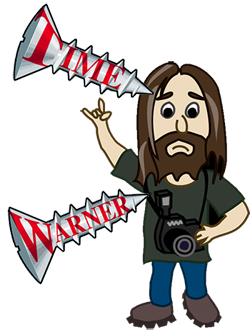
Time Warner - Letting Freelancers Screw Themselves

If you're a freelancer, and Time Warner owes you for assignments, for a fee you can get it paid in 25 days after it's approved. Want it in 10 days? The fee quadruples. Again, this is an acceleration of "approved payments", not the acceleration of payment. Reports of 60 to 90 day payment cycles abound,(despite claims that you are getting paid in 30 days) so at what point are they approved in the system? I highly doubt that you could actually get paid 10 days after sending your invoice, for example. The concept of "2/10 net 30", while common in the business world, assumes that you're actually getting paid in 30 days in the first place.

We all can understand the concept that if you have $100 owed to you, it is better for you to be paid that $100 immediately, than to have to wait a year for it. If you get that $100, compounded interest could mean that after a year in your bank account earning interest, you'd have $105 (or more). However, if you wait to be paid the year, your debtor has earned that same $105. This concept is called Time/Value of money, and you can read more about it here. While you may not be able to leverage a $5,000 early payment of a bill for an assignment (including expenses) into more than a few dollars, imagine JP Morgan (Time Warner's payment vendor) being able to leverage 100 of those $5,000 bills by delaying payments a month or two? That's called "the float." Banks used to delay making the funds available for upwards of 7 days even though they got the money within 24 hours. A long time ago, it might have taken 7 days to get a check drafted on a New York bank validated by a California bank. However, long after those days had passed, the delays were still in place, giving banks a 5-6 day "float" on your money, so that tens of millions of dollars could earn interest for just a few days, and you would be none-the-wiser. Laws were enacted to force banks to change.

Here's the "Happy Holidays" memo sent to Time Warner's freelancers:

(Continued after the Jump)


Happy Holidays!

If you are receiving this email, you are the JPMorgan Xign administrator and you, or someone from your organization, is submitting electronic invoices or receiving electronic payments via the JPMorgan Xign solution on behalf of Time Inc. I apologize for the blind distribution but I wanted to protect everyone's privacy while sharing this important information.

As year end approaches I wanted to ensure that you were aware of the PayMeNow functionality, which allows you to _accelerate payment for invoices that have already been approved_ by TIME. This is an excellent tool to help with your cash management at year end! This does not change your payment term on future invoices, it simply accelerates the payment on the ones you specifically request.

* If you are receiving this email, it means you have approved invoices that are pending payment and can be accelerated for payment this week or any day before year end. *


This is a purely optional service that is available to you by following these easy steps:

1) Log into your JPMorgan Xign account at xign.net.

2) Look for the green $$ and click the link.

3) This will display all available invoices

4) Either select the fastest date to be paid, or select "Lower rates" to schedule payment later in the month, but still before your year end.

Thanks very much and please let me know if you have additional questions related to cash acceleration. For all other inquires, please contact our Support Team at 800 485 XXXX.

Sincerely,

Linda Piazza
JPMorgan

Vice President, Relationship Management
It seems that a survey done by the JPMorgan Business Settlement Network, as reported by Financial Services Technology - Early payment discounts – a lucrative cash management tool - suggests that "faster payment" represents "one of the great earnings opportunities in corporate finance." The article encourages "You need to consider the amount of discount ‘leverage’ you have with a particular supplier." Then (and here's where the lowly freelancer comes in):
"There is another large pool of suppliers...the non-strategic suppliers. These suppliers are typically small to mid-size suppliers...they are also the hungriest for cash and much more likely to accept discounts versus strategically sourced suppliers. Understanding your supplier’s need for cash is a key to success."
So, the next time you think that that Time Warner employee is your friend, or cares about you, remember, they are fronting for a payment system that wants you to be the "hungriest for cash and much more likely to accept discounts."

Gawker reports - Time Inc. Will Pay You Promptly, If You Pay Them for the Service - "Given how desperate freelancers are to be PAID NOW, largely because companies like Time Inc. never pay them on time, this is a pretty genius idea."

If you'd like to know more about the author of that missive, Linda Piazza's LinkedIn profile is here, and you can send her an email via LinkedIn, if you are so inclined.

Photography is business. Keeping your money longer and then giving you discounts, (as Gawker accurately describes it "charging its freelancers for the privilege of being paid for their work in a timely fashion") is Time Warner's business. So, you freelancers who fall into Time Warner's "non-strategic" category of vendors, remember how much they care when they won't pay you in full on time, despite your mortgage and credit card bills all being due in 30 day payment cycles, and you can't pay your bills.


Please post your comments by clicking the link below. If you've got questions, please pose them in our Photo Business Forum Flickr Group Discussion Threads.


[More: Full Post and Comments]

FLYPMedia - The Future of the Magazine Experience

For some time now, FLYPMedia has been creating some really really cool interactivity, building it not only into existing content with publications you know, but also their own original content. So, it was with great anticipation that when I saw the new Sports Illustrated Tablet Demo, I had expectations that a FLYPMedia-like interaction was in the offing. Nope, not so fast. Something similar is in play for the advertisers, and the SI Swimsuit Edition, but Gizmodo sums this tablet idea up pretty well "...How is this different from a web page? Other than costing ten times as much to produce, that is...Never mind, I will tell you how: It’s a lot worse. It’s just pasting an old medium into a new one, painting the resulting clusterfuck with two layers of thick varnish."

Why Time Inc, who is slashing and burning staff these days, and seems to have forgotten that content is king, isn't embracing FLYP as they should is a big mystery.

(Continued after the Jump)

Here's the SI experience on the tablet:


Here, however is the FLYPMedia experience of a Sports Illustrated story. First - it's in your browser (full screen), so no tablet needed. Second, it is FAR AND AWAY more interactive than the tablet. Browse around, and check them out. They've got some really amazing - and engaging - stories. The FLYP technology isn't, as Gizmodo put takes the tablet to task, a "... resulting clusterfuck with two layers of thick varnish." FLYP gets it right.

I am not alone in this. TechCrunch cautiously reviews the tablet here, saying "...it is not exactly a glorified CD-ROM, but adding more links would breathe some life into it", which would create a bigger problem because the tablet then becomes a Time Inc computer, which is a really really bad hardware business for them to get into. Instead, as TechCrunch cites the leader of the project to bring this to fruition, Josh Quittner, (who is also an editor at Time and the TechCrunch writers' former boss, hence maybe the tepid criticisms?), suggesting Quittner "thinks of it as an app. If people are willing to pay for apps on the iPhone, why not deliver magazines as apps also?" An app would be a better idea, and keep Time Inc out of the hardware business, letting the expected iTablet and whatever Microsoft tablet comes along, handle the hardware. TechCrunch ends their piece suggesting, of the name "Manhatten Project", that "Hail Mary might be a better name."

Further, Rob Haggart over at A Photo Editor (Time Inc’s “Manhattan Project” Is A Tablet Magazine, 12/2/09) thinks the tablet is a bit limiting too, however he points out the repeated highlighting of original/exclusive SI photography as a selling point of the tablet.

The concensus is, this Time Inc Tablet idea is like putting lipstick on a pig - it's still a pig. Go get yourself some real Kobe Beef, in the form of FLYPMedia - it's a far more satisfying experience, and doesn't cost you. As FLYP's tagline says, they're "more than a magazine", and you can see their own video about how FLYP is re-imagining the magazine experience here.


Please post your comments by clicking the link below. If you've got questions, please pose them in our Photo Business Forum Flickr Group Discussion Threads.


[More: Full Post and Comments]

Tuesday, December 1, 2009

Illyria with Others, Bidding for PDN's Parent Company

In an era where the printing presses are becoming dinosaurs of a (soon to be) bygone era, the value of niche media with a target audience, delivered in an online platform is becoming the new standard for content, and a valuable one at that. Almost since their arrival online, Photo District News, one of the several valuable properties owned by Nielsen Business Media, has delivered a partial set of their valuable content for free, with a greater set of content behind a firewall, accessible only to those with paid subscriptions to the print edition. This "nibble for free, pay for the whole thing" approach is one that is attractive to the prospective owners of Nielsen. The principal lead for Illyria is Lachlan Murdoch, son of Rupert Murdoch, who is not only known for continuing the same nibble-then-pay model at the Wall Street Journal, but is also looking to make a strong deal with Microsoft and their Bing search engine for new business models online.

Nielsen has a strong portfolio of publications, including The Hollywood Reporter, Billboard, and others. Of concern though, is this quote, by Nielsen, as cited by the Financial Times, “For assets that don’t hit the mark, we’re always looking to work them out of the portfolio.” PDN is not insulated from drop in print subscribers or drops in advertising revenues. However, it would be foolish for the Nielsen number crunchers to judge PDN on print subscribers alone when their online content is not only robust, but also pre-designed to continue the nibble-then-pay model that the Murdochs (rightly) see as the future of publishing.

(Continued after the Jump)
One interesting model is that used by The Hollywood Reporter, touted by them as "...an exact replica of the print edition with page turner technology...", and that may be one model that could spread to the rest of the Nielsen-cum-Murdoch lineup, post-acquisition. Interestingly, this model just may allow some of the high per-page advertising rates to be maintained, as opposed to the poorly established low per-pixel rates being paid for online ads that was set across the board years ago, and is not sustainable nowadays (actually, it was never sustainable, just underwritten by the print ad revenues).

As noted at the beginning, broad coverage, in an attempt to serve the masses, is not the future, niche media is. TechCrunch reported on a survey that showed that small town newspapers showed an increase of 4.3% in advertising, as well as local classified ads. Considering that a local newspaper is one example of niche publishing (i.e. local news for the local reader), this makes sense. One example (and apologies in that the town's name escapes me) showed that local (i.e. niche) focus pays well, with a circulation of over 100%, because the subscribers were giving their papers to friends in neighboring towns to read. While this may be an extreme example, consider the value of the free subscriptions given to doctors offices, in terms of the number of actual readers per issue.

In the end, it makes sense for Nielsen to not only utilize and expand the PDN nibble-then-pay model, but also to keep the quality of content and reporting that PDN has delivered for years and expand on it where printed page-counts are not the limiting factors to great stories, articles, and insights.

Please post your comments by clicking the link below. If you've got questions, please pose them in our Photo Business Forum Flickr Group Discussion Threads.


[More: Full Post and Comments]
Newer Posts Older Posts