Saturday, October 24, 2009

PhotoPlus Expo 2009 - Day 2

The second day of the PhotoPlus Expo in New York City was a little less hectic, but still very fulfilling. We were not so overwhelmed with all the things to see and people to talk to (and learn from) because we had our bearing by now. Yet, we still have a lot we want to see tomorrow, Saturday, the last day.

Below once again is the combined video of interviews with the Copyright Office, Orbis Ring Flash, Photoshelter, and we finally got some more information about the product similarities between the Sun Sniper (interviewed yesterday), and the Black Rapid company, which we interviewed today.

Following the jump are the individual videos, if you'd just like to watch one.

Combined Video (RSS readers visit here):

Photo Plus Expo Day 2 from John Harrington on Vimeo.


(Continued after the Jump)


Copyright Office interview (RSS readers visit here):

US Copyright Office at ASMP Booth during Photo Plus Expo 2009 from John Harrington on Vimeo.


Photoshelter interview (RSS readers visit here):

Photoshelter during Photo Plus Expo 2009 from John Harrington on Vimeo.


Orbis Ring Flash interview (RSS readers visit here):

Orbis Ring Flash during Photo Plus Expo 2009 from John Harrington on Vimeo.


Black Rapid interview (RSS readers visit here): 7230657

Black Rapid Camera Strap Company during Photo Plus Expo 2009 from John Harrington on Vimeo.


Please post your comments by clicking the link below. If you've got questions, please pose them in our Photo Business Forum Flickr Group Discussion Threads.


[More: Full Post and Comments]

Friday, October 23, 2009

PhotoPlus Expo 2009 - Day 1

The first day of PhotoPlus Expo was filled with lots of interesting insights. Of surprising note was the abundance of camera strap solutions, which we hope to look into further just because it seems interesting that there are four solutions we've found on the show floor, one of which we demo from Sun Sniper in the videos below. Also worth noting was that while Adobe announced their public beta of Lightroom 3 (more info here ) - they did not have a booth on the show floor, because they pulled out. Further, rumors of Aperture 3 being announced here at the show have turned out to be false, but as with Apple, rumors and whispers often mean something is afoot, so who knows what their timeline is.

Below are the videos for the day. The first video is the entire days' interviews, about 15 minutes or so long. However, after the jump are the individual segments for each of the booths we visited - Think Tank, Visible Dust, Photo Mechanic, Sun Sniper, and Vimeo, who we are happy to say, we're using also to demonstrate these videos here as well.

REMINDER: Tomorrow, Saturday, from 8:45 - 11:45 I will be presenting.

Photo Plus Expo Day 1 coverage from John Harrington on Vimeo.


(Continued after the Jump)


Following are the same videos from the full day report, by subject/vendor interviewed:

VISIBLE DUST (RSS Readers, click here):

Rola Hamad of Visible Dust Interviewed at PhotoPlus Expo 2009 from John Harrington on Vimeo.


PHOTOMECHANIC (RSS Readers, click here):

Photo Mechanic interviewed at PhotoPlus Expo 2009 from John Harrington on Vimeo.


VIMEO (RSS Readers, click here):

Vimeo interviewed on the show floor of PhotoPlus Expo 2009 from John Harrington on Vimeo.


THINK TANK PHOTO (RSS Readers, click here):

Think Tank Camera Bags at Photo Plus Expo 2009 from John Harrington on Vimeo.


SUN SNIPER (RSS Readers, click here):

Sun Sniper Camera System at Photo Plus Expo 2009 from John Harrington on Vimeo.


Look for another report from day 2, at the end of that day.


Please post your comments by clicking the link below. If you've got questions, please pose them in our Photo Business Forum Flickr Group Discussion Threads.


[More: Full Post and Comments]

Wednesday, October 21, 2009

Canon USA vs. Canon Inc - Don't Eat Your Own


In a bizarre turn of events, Canon USA has been taken out to the woodshed and given a whoopin' by Canon Inc in Japan because - get this - Vincent Laforet's Nocturne video showcasing the new Canon EOS 1D Mark IV was "too good" according to Fake Chuck Westfall, and Canon USA made Canon Inc look bad. Thus, Canon USA has directed Laforet to remove the video. (why we told Vincent Laforet) and on Laforet's blog he notes - Canon Has Requested....

Really?

(Continued after the Jump)

Instead of Canon Inc saying "hey, good job Canon USA for making Canon look good", Canon Inc is mired in the antiquated notion of that by Canon USA doing so good, Canon Japan looks bad because either that don't have the talent to make the same type of content, or people in Japan are now looking bad because it looks like they're not doing their job.

Within minutes of these videos being formally pulled down from Laforet's sites, they popped up on YouTube and are still there. What does this accomplish because it makes Canon USA look bad?

Fake Chuck Westfall has nailed this - so much so that I wonder if FCW isn't actually the real CW! - that it's worth reading FCW's post. (On Canon Taking Down Nocturne).

It's remarkable that Canon - poised on the verge to trump the Nikon D3s because of the chip and video capabilities differences - have stumbled over their own potential for greatness and now look like bumbling fools. It's like the prima ballerina being honored for her grace, tripping on the way up to the stage to accept the award.

This camera finalizes the concept of game changer that began with the 5D (that Laforet kicked off with Reverie), much like, frankly, the Nikon D3s will be a game changer - Bill Frakes did an amazing video with - yes - ballerinas - in Austrailia, see here. Canon Inc needs to see all of its' subsidiaries as it's children, and give them all the same amount of love, instead, Canon USA is being treated like the bastard step-child from a weekend fling, relegated to the basement, with an I-don't-care-about-the-possibilities attitude. No doubt, on the eve of PhotoPlus Expo, the Nikon folks will be chuckling under their breath at this catastrophic faux pas.


Please post your comments by clicking the link below. If you've got questions, please pose them in our Photo Business Forum Flickr Group Discussion Threads.


[More: Full Post and Comments]

Tick...Tick...Tick...Getty Images Cuts More Staff

When it was learned that Getty Images was shuttering its' entire wholly owned creative stock division, it didn't come as a surprise to me, in fact, it was expected. What is really disappointing is the "kum-ba-yah" message that Dunce-In-Residence CEO Jonathan Klein wrote, and which we posted recently, about how proud he was of his Getty team. He once again seems to have lulled people into a false sense of (job) security, only to pull the proverbial rug out from underneath the staff department that creates Getty's wholly-owned content.

By far though, the happiest person to see this department shuttered is likely to be well known baby photographer Penny Gentieu. Why?

(Continued after the Jump)


Gentieu sued Getty Images in January of 2000 because, well, she alleged that Getty was copying her best-selling images of babies that Getty had to split the royalties with, and re-created them with their wholly-owned creative content division so that they didn't have to share that revenue, and could keep the entire stock sale. (Indepth story/legal commentary here: Corporate Injustice: An Interview with Penny Gentieu).

Where I first learned of this today, was PDNPulse - Getty Images Comments on Creative Stock Layoffs - and one thing stood out for me - the Getty Statement that they likely begrudgingly made because "As a private company, we are not able to share any specifics as to the number of employees", they noted " the roles are global in nature..." Yes - sources have previously reported to me that some of Gettys' global staffers for the creative division were involved in studios in the Far East, where photographers cost only a few dollars a day, and who were busy creating wholly-owned content based upon the track record of images that required a split. These images were then integrated into the search results with higher placement, pushing further down the page (or even onto a secondary page) so that the sales where all the money went to Getty were more likely to be bought. Likely, if these staffers still existed, they're gone now.

As underperforming divisions continue to be analyzed, look for more Getty cuts/redundancies, and departments shuttered. Don't count it out of the realm of reality that, just as AOL purchased Time Warner and then Time Warner took over and is giving AOL grief for earnings these days, Getty Images - which bought iStockphoto, could wind up being the Rights-Managed step-child of iStockphoto in the future, answering to the penny-stock gods.


Please post your comments by clicking the link below. If you've got questions, please pose them in our Photo Business Forum Flickr Group Discussion Threads.


[More: Full Post and Comments]

Tuesday, October 20, 2009

Laforet's Latest - Nocturne - The Embodiment of Motion Pictures

First there was Reverie from friend and colleague Vincent Laforet, which blew the doors off of video in the guise of a still camera. Then, like the wayward ingenue who makes her way to LA to become an actress, Laforet heads West to seek out visual stimulation in the form of motion pictures, yet he has a plan, and a laser-like focus, unlike the starry-eyed dream girl now waiting tables. Few people I can think of embody "motion pictures"- really, truly - like Vincent. His stories are absent dialog - yet compelling. Now, he presents Nocturne:

Nocturne from Vincent Laforet on Vimeo.


Some might say he's a night owl, and that's why he's working at night. I say that he's demoing the technology at a time when everyone criticizes a cameras failings - low light. It does help that he's a night owl too, of course. Put Vincent's creative mind to the test - low ambient light - no additive light, and then let lose a storyteller who is used to thinking in still images, and he makes every frame count - literally, and it shows in the final piece. Watch the piece once, and then watch it again for all the subtleties you missed the first time around. In fact, make sure you watch it in HD atleast once! (Full 1080p at SmugMug here). Vincent's blog has more details here - Lights Out, Camera, Action. Check it out, and watch the servers melt - this one's a game changer.
(Comments, if any, after the Jump)


Please post your comments by clicking the link below. If you've got questions, please pose them in our Photo Business Forum Flickr Group Discussion Threads.


[More: Full Post and Comments]

Monday, October 19, 2009

Re-Tooling the Message of Antipiracy Content Protection

Word matter. Fortunately, photographers have other creatives - musicians, movie-makers, and the like with far better organization that we can muster, and thus they can commission research about how to best convey the message that stealing intellectual property is bad. ASMP NY did a good job of illustrating the similarity between analog and online image theft, as we discussed recently. Yet, more can be done.

(Continued after the Jump)

Examples about in how, simply by making something sound and read differently through a linguistic change can make things more effective or appealing. Dr. Frank Luntz, author of one of my favorite books - "Words That Work", discussed this in great detail. "Gambling", for example, was changed to "Gaming" industry-wide. Liquor, as Luntz points out, has a negative connotation, and is now more positively referred to as "Spirits." The Republican's Contract With America was a brilliant move, including acts patriotically titled "The Taking Back Our Streets Act", and the "Personal Responsibility Act". Whether or not you like the Republicans, you have to give them their due for brilliant word-smithing on that front. Thus, just the momentum that comes from "helping orphans" is the basis for those on the "pro" side of the "Orphan Works Act", whenever it resurfaces.
Perhaps we should get it re-branded as something like "Photos for Free At the Expense of Artists Act" and see how far it goes? Maybe that's a bit wordy, but photographers are mis-percieved as cold because, well gosh, how can we be against something that's good for "orphans"?

As you work on your own branding and messaging to clients, be sure to be thoughtful in the words that you use and make sure they not only say what you mean, but also, that they work.

With thanks to Gail Mooney for the MPAA messaging tip.

Please post your comments by clicking the link below. If you've got questions, please pose them in our Photo Business Forum Flickr Group Discussion Threads.


[More: Full Post and Comments]

PLUS, No Minuses

PLUS - the Picture Licensing Universal System, has been busy, of late, they just haven't been tooting their horn. Despite Paul Melcher's perspective on "Plus or Minus?", suggesting they've been quiet, they've been busy. Unlike spotlight seekers, who tout the arrival of a 1.0.1 to a 1.0.2 release like it's the second coming, PLUS continues to move forward with little fanfare or spotlight seeking. Melcher is a bright guy, so perhaps his focus has been elsewhere and not had PLUS on his radar, so here's a review and different perspective for everyone's benefit.

Almost a year ago, PLUS quietly achieved a major milestone, getting the three major publishers - McGraw Hill, Houghton Mifflin Harcourt, and Pearson to announce "they will adopt the PLUS Picture Licensing Glossary definitions in their contracts, and that they encourage image suppliers to begin embedding PLUS license metadata in all images within one year." At that time, Maria Kessler, President of the Picture Archive Association of America said, “We are very pleased that these major publishers – the largest image licensees in the industry – are aligned in their support of the PLUS standards.” While this may not have been on Melcher's radar 11 months ago, getting his new agency, Picture Group, to have PLUS-compliant licensing should be priority #1 if he hopes to license images to these publishers given their adoption schedules.

(Continued after the Jump)

In March of this year, IPNstock committed to integrate PLUS licensing standards, and with Getty and Corbis having been substantial supporters of PLUS over the years, you can bet that they are focused on meeting the needs of their major clients - the publishers above - as they work to integrate PLUS compliant licensing in time to effectively service those clients. In the coming years, look to see PLUS compliant drop-down menus in licensing modules at major stock agencies.

In June, Jim Cooks' Hindsight Software became the first software solution for photographers to create PLUS licensing with drop-down menus and metadata that was both cut-and-paste as well as exportable.

In July, the Professional School Photographers Association (PSPA) joined PLUS, "ensuring that school photographers and their customers will benefit from simplified communication of rights information and automated recognition of image licenses by photofinishing services, photofinishing machines and consumer photo printers." This will make it easier for people to know what they can and can't do with their school portraits when they're thinking about going to Wal-Mart to copy the 2x4 proof with the big "PROOF" stamped across it, as if it wasn't obvious enough already.

My book, Best Business Practices for Photographers, Second Edition, uses heavily PLUS examples in the new chapter 26 of the book "Licensing Your Work", demonstrating how I have been using PLUS licensing for years, and which has been received with no objection by my clients over the years.

Melcher expresses concern that PLUS might feel beholden to ASMP because they have donated $85,000 and just announced a $150,000 contribution to PLUS. This is a small fraction of the monies PLUS has received from founders Getty, Corbis, Microsoft, and others, and further, PLUS has a 13 member board, only one of which is occupied by a photographers trade organization. Currently, that seat is occupied by ASMP, but it rotates to others over time.

Melcher also expresses concern about the PLUS-PicScout deal recently announced because it is an exclusive one. Right now, no other image tracking service is as big as PicScout in terms of images fingerprinted, and the integration between PLUS and PicScout requires a relationship exist for technology sharing and commitments of time and resources to make this happen. Further, just as Dell opted to go with Microsoft as the default operating system because it was needed to make the machines run, so too did PLUS need "someone" to do the fingerprinting, and PicScout apparently had the best to offer. Further, the exclusivity deal is not a "forever" deal just as Dell now sells other operating systems pre-installed, however the current deal certainly creates an atmosphere where PicScout can be candid with PLUS about capabilities to make this work - especially while PicScout is on the forefront of image recognition services.

What is not clear is how a PicScout image registry would compete with the PLUS image registry that is being funded by ASMP and APA, in part. What is clear though, is that there is no "mysterious agenda" on the part of PLUS. Melcher points to PLUS working with Creative Commons as one of their "strange relationships". Creative Commons, as much as I am not a fan of it, is popular among image users, and in order for PLUS to remain neutral in the advocacy arena when it comes to promoting photographers rights and income preservation, they must facilitate also what the end users of images need as well. PLUS makes things more clear and more concise when it comes to licensing, whether or not it is a $1M exclusive license of a celebrity photo from Picture Group, or a "for attribution" Creative Commons free license. In both cases, a PLUS license is the best way to make sure everyone is on the same page.


Please post your comments by clicking the link below. If you've got questions, please pose them in our Photo Business Forum Flickr Group Discussion Threads.


[More: Full Post and Comments]

NEWTECH - Cotton Carrier and SpiderPro Camera Carriers

The common refrain from photographers with a few years' experience lugging cameras with neck straps is how much their neck hurts. Sure, soft/plush/wide straps help, but the weight is still there, tugging at your neck.

Friend and colleague, Northern Virginia Photographer Mark Finkenstaedt, turned me on to these two cool solutions - the Cotton Carrier, and the Spider Pro carrier. The videos are pretty self-explanatory, and worth a watch:


For you RSS Feed readers, here's the SpiderPro video link, and here's the Cotton Carrier link.

In addition, you can check out their websites at CottonCarrier.com, and SpiderHolster.com. We hope to get a chance to put these through their paces in our shop in the future, and if we do, we'll get a video out on them.

(Comments, if any, after the Jump)


Please post your comments by clicking the link below. If you've got questions, please pose them in our Photo Business Forum Flickr Group Discussion Threads.


[More: Full Post and Comments]

Saturday, October 17, 2009

NBC sued for Copyright Infringement over Fonts


It may seem unusual, but yes, those fonts you are using are graphic designs, and copyrightable. In fact, while Adobe owns a great many of them, Font Bureau owns - and creates - custom fonts for clients. Enter NBC, and their copyright/trademark/breach-of-contract, and so on. As Softpedia reports here, and The Business Insider here has the actual copyright registrations on display, and Ars Technica has another take here. With apologies in advance to our non-US readers, Saturday Night Live, one of the shows that is alledged to have used the fonts without a license, cracked a joke about the $2M in damages that Font Bureau is seeking - suggesting that NBC doesn't even have $2M to pay out:


The SNL joking about not having $2M wouldn't be so laughable if

(Continued after the Jump)

the entire Business Week brand hadn't just been sold by McGraw-Hill to Bloomberg for a paltry $5M. Really? $5M? Yes - according to the Wall Street Journal (here), the 80-year-old holding of McGraw-Hill is now a Bloomberg property. But I digress.

This should remind you that you can't just copy software package X from one computer to three without paying for more seats. Photoshop "helps" you with this, by requiring activation of your software, for example.

In this case, a font was purchased for use on one computer, and was used on multiple ones, and even - allegedly - distributed outside of the company. This would be like someone licensing your photo for a brochure in English, and then printing it in Spanish and French as well, figuring you'll never find out - hence, the value of discovery.

What's that, you say? "It's just a font - big deal!" Really? Try saying it this way "It's just a drawing of the letters of the alphabet - no one owns the alphabet!" Then, try that logic on "it's just a photo of the sky and the mountains, you can't copyright those things - they belong to everyone!"

The font is an artists' rendering of the letters of the alphabet in a unique and creative manner, just as that photo of Half Dome by Ansel Adams is more than a photo of a sky and a mountain.


Please post your comments by clicking the link below. If you've got questions, please pose them in our Photo Business Forum Flickr Group Discussion Threads.


[More: Full Post and Comments]

Friday, October 16, 2009

Shepard Fairey v. AP ~ Fairey's Falsehoods and Fabrications

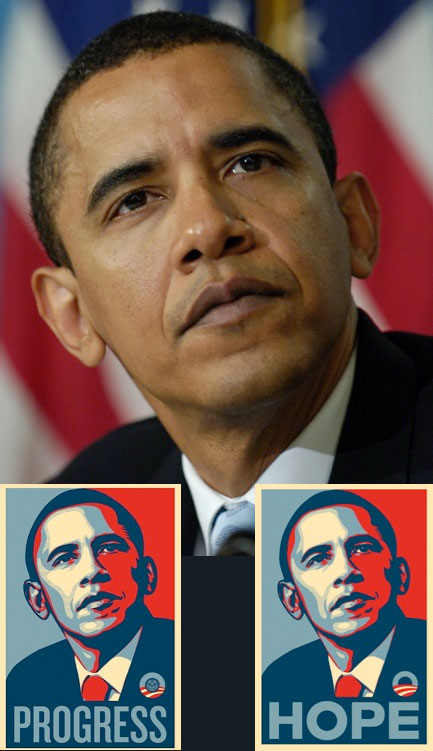
The Associated Press has released a statement regarding the case brought against them by Shepard Fairey. In a remarkable turn of events, according to the AP, "Shepard Fairey has now been forced to admit that he sued the AP under false pretenses by lying about which AP photograph he used to make the Hope and Progress posters." Further, the AP is stating that not only have Fairey's attorneys sought the permission of the court to withdrawl from the case, but that "Mr. Fairey has also now admitted to the AP that he fabricated and attempted to destroy other evidence in an effort to bolster his fair use case and cover up his previous lies and omissions."

Stunning.

Complete statement follows:

(Continued after the Jump)

Statement from Srinandan R. Kasi, VP and General Counsel, The Associated Press
Striking at the heart of his fair use case against the AP, Shepard Fairey has now been forced to admit that he sued the AP under false pretenses by lying about which AP photograph he used to make the Hope and Progress posters. Mr. Fairey has also now admitted to the AP that he fabricated and attempted to destroy other evidence in an effort to bolster his fair use case and cover up his previous lies and omissions.

In his Feb. 9, 2009 complaint for a declaratory judgment against the AP, Fairey falsely claimed to have used an AP photograph of George Clooney sitting next to then-Sen. Barack Obama as the source of the artist’s Hope and Progress posters. However, as the AP correctly alleged in its March 11, 2009 response, Fairey had instead used a close-up photograph of Obama from the same press event, which is an exact match for Fairey's posters. In its response, the AP also correctly surmised that Fairey had attempted to hide the true identity of the source photo in order to help his case by arguing that he had to make more changes to the source photo than he actually did, i.e., that he at least had to crop it.

After filing the complaint, Fairey went on to make several public statements in which he insisted that the photo with George Clooney was the source image and that “The AP is showing the wrong photo.” It appears that these statements were also false, as were statements that Fairey made describing how he cropped Clooney out of the photo and made other changes to create the posters.

Fairey’s lies about which photo was the source image were discovered after the AP had spent months asking Fairey's counsel for documents regarding the creation of the posters, including copies of any source images that Fairey used. Fairey's counsel has now admitted that Fairey tried to destroy documents that would have revealed which image he actually used. Fairey's counsel has also admitted that he created fake documents as part of his effort to conceal which photo was the source image, including hard copy printouts of an altered version of the Clooney Photo and fake stencil patterns of the Hope and Progress posters. Most recently, on Oct. 15, Fairey’s counsel informed the AP that they intended to seek the Court’s permission to withdraw as counsel for Fairey and his related entities.

The AP intends to vigorously pursue its countersuit alleging that Fairey willfully infringed the AP's copyright in the close-up photo of then-Sen. Obama by using it without permission to create the Hope and Progress posters and related products, including T-shirts and sweatshirts that have led to substantial revenue. According to the AP's in-house counsel, Laura Malone, "Fairey has licensed AP photos in the past for similar uses and should have done so in this case. As a not-for-profit news organization, the AP depends on licensing revenue to stay in business." Proceeds received for past use of the photo will be contributed by the AP to The AP Emergency Relief Fund, which assists staffers and their families around the world who are victims of natural disasters and conflicts.
Well, that about wraps things up for Fairey's claims - and now the AP will have a bunker full of ammunition against Fairey in seeking their countersuit.

AP Link to motions and exhibits here.


Please post your comments by clicking the link below. If you've got questions, please pose them in our Photo Business Forum Flickr Group Discussion Threads.


[More: Full Post and Comments]
Newer Posts Older Posts